







Definition & Meaning
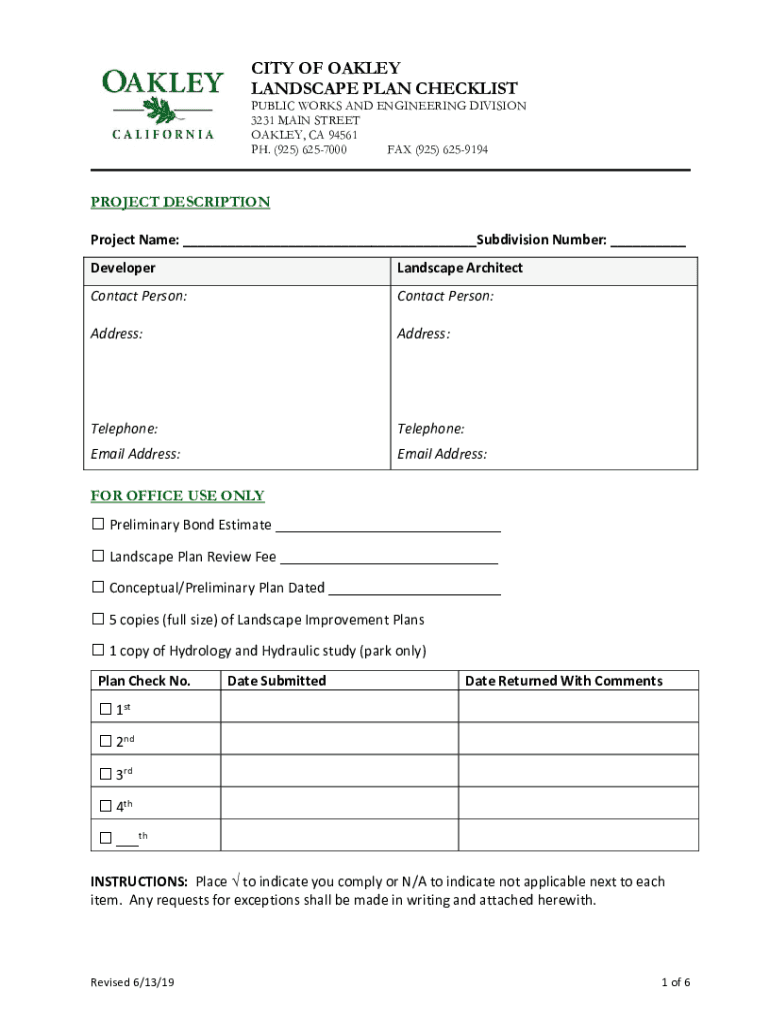
The "CHECKLIST - Landscape Plan Review doc" serves as a comprehensive guide for developers, architects, and engineers to ensure that landscape plans meet the standards and regulations set by the City of Oakley's Public Works and Engineering Division. This document details a systematic approach to reviewing landscape plans, ensuring they comply with state regulations and local ordinances, while effectively managing water resources and maintaining safety standards. The checklist acts as an essential tool in the planning phase, allowing for detailed consideration of sitework, planting plans, and irrigation systems.
How to Use the CHECKLIST - Landscape Plan Review doc
When using the Landscape Plan Review checklist, it is crucial to follow a proactive and organized approach:
- Download the Document: Obtain the checklist from the relevant city department or online portal that provides official city planning documentation.
- Initial Assessment: Review the checklist items, identifying the specific requirements related to your project.
- Complete Each Section: Address each item in the checklist, providing detailed documentation or explanations where necessary. Ensure accuracy in every detail to avoid compliance issues.
- Cross-Verification: Regularly cross-verify your plans with the checklist to ensure all requirements are met before submission.
- Final Review: Conduct a thorough final review of the completed checklist alongside your landscape plans to confirm compliance and readiness for city review.
Steps to Complete the CHECKLIST - Landscape Plan Review doc
Successfully completing the checklist involves a structured series of steps:
- Preparation Stage: Gather all relevant documents and information, such as site plans, architectural designs, and existing landscape features.
- Documentation: Ensure you provide detailed documents for sitework, planting plans, and irrigation systems that meet the checklist’s criteria.
- Compliance Check: Each element, such as plant species and irrigation methods, needs checking against state guidelines for water use efficiency and environmental considerations.
- Submission: Once all sections are completed and verified, prepare the submission package for the city's Engineering Division.
Key Elements of the CHECKLIST - Landscape Plan Review doc
Important components included in the checklist cover several critical areas of landscape planning:
- General Checklist Items: Addresses overall plan requirements, including full documentation and compliance with guidelines.
- Sitework Considerations: Details requirements for grading, drainage, and soil stabilization to prevent erosion and promote ecological balance.
- Planting Plans: Focuses on plant selection, ensuring species are appropriate for the local climate and sustainable water use.
- Irrigation Plans: Mandates design and operation standards for water-efficient irrigation systems.
Who Typically Uses the CHECKLIST - Landscape Plan Review doc
The checklist serves a variety of users within the urban planning and development sectors:
- Urban Planners: Use it to ensure community plans meet environmental and aesthetic standards.
- Landscape Architects: Refer to it for design plans that align with city requirements.
- Developers: Use it to ensure their projects comply with regulatory standards.
- Civil Engineers: Utilize it to confirm that structural and landscaping elements are integrated correctly.


Legal Use of the CHECKLIST - Landscape Plan Review doc
Legally, the checklist is a binding document required for planning approval from the City of Oakley. Failure to adhere to its guidelines can result in:
- Non-Approval of Plans: Plans not meeting the checklist criteria may be rejected.
- Fines or Penalties: Non-compliance with the local and state guidelines outlined in the checklist can lead to enforcement actions.
- Project Delays: Non-compliance can cause significant project delays due to resubmission requirements.
State-Specific Rules for the CHECKLIST - Landscape Plan Review doc
The checklist enforces rules specific to California:
- Water Efficient Landscape Ordinance: Ensures that landscape designs incorporate water conservation measures in compliance with local conservation codes.
- Native Plant Usage: Encourages the use of native and drought-tolerant plants suitable for the California climate to promote ecological sustainability.
Software Compatibility
While completing the checklist, compatibility with various digital tools enhances efficiency:
- DocHub: Useful for filling, editing, and signing documents online without conversion hassles.
- Google Workspace: Allows seamless integration to manage documents via Google Drive and Gmail.
- AutoCAD: Often used for detailed landscape planning and can complement checklist requirements through precision design tools.
Versions or Alternatives to the CHECKLIST - Landscape Plan Review doc
Different municipalities may offer modified versions of the checklist, adhering to local regulations:
- City- or County-Specific Checklists: Some cities may have additional or alternative requirements catering to local ecological or architectural needs.
- Digital Submissions: Many cities offer online submission methods, enabling streamlined compliance checks and reducing paper usage.
In meeting these guidelines, urban developers and planners can effectively utilize the checklist to ensure that their landscape plans not only meet regulatory standards but also promote sustainable and aesthetically pleasing environments.




