






Definition and Meaning of a Variation Contract
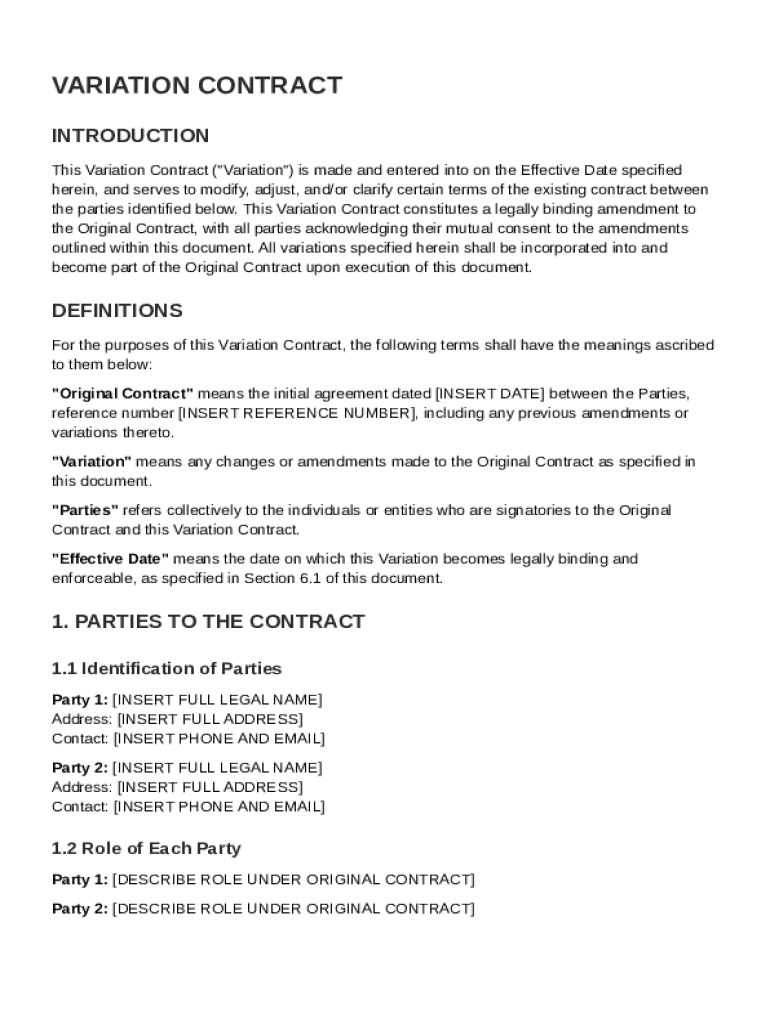
A Variation Contract is a legally binding amendment to an existing contract, used to modify specific terms such as the scope of work, fees, payment terms, and timelines between two parties. This document serves to formalize adjustments that arise due to changing circumstances or new mutual agreements, ensuring both parties have a clear and updated understanding of their obligations. It is essential to detail the reasons for the variation, incorporate new terms and conditions, and reaffirm that all other terms of the original contract remain intact. Such documentation is particularly important in business and legal contexts where precise agreements prevent misunderstandings and potential disputes.
Key Elements of the Variation Contract Template
When creating a Variation Contract, certain key elements must be included to ensure clarity and enforceability. These elements typically involve:
- Parties Involved: Clearly state the names and contact information of all involved parties.
- Reference to Original Contract: Include the date and pertinent details of the original contract.
- Details of the Changes: Precisely describe the variations being made, such as adjusted timelines, revised scope of work, or new payment arrangements.
- Rationale for Changes: Explain the reasons for the modifications, providing context and justification.
- New Terms and Conditions: Explicitly state any new terms that are agreed upon, ensuring they align with the overarching contract's intentions.
- Confirmation of Unchanged Terms: Reaffirm that any terms not mentioned remain unaffected and fully enforceable.
- Governing Law and Dispute Resolution: Specify the governing law and mechanisms for resolving potential disputes.
How to Use the Variation Contract Template
Using the Variation Contract Template effectively requires a step-by-step approach to ensure all relevant aspects are covered:
- Review the Original Contract: Begin by thoroughly reviewing the original contract to understand all terms and conditions that might be affected by the changes.
- Identify the Specific Variations Needed: Clearly identify what aspects need to be altered and why.
- Fill Out the Template: Use the template to document all necessary information, ensuring that each section is completed accurately and comprehensively.
- Consult Legal Counsel: It's often advisable to have legal counsel review the draft to safeguard against any potential oversights or vulnerabilities.
- Obtain Mutual Agreement: Ensure that all parties involved review and agree to the changes, and obtain their signatures.
- Distribute Copies: Provide signed copies to all parties and store them securely for future reference.
Important Terms Related to the Variation Contract Template
Understanding terms related to Variation Contracts is crucial for comprehension and effective usage:
- Amendment: The act of formally altering or adding to a document.
- Scope of Work: The detailed description of the work to be performed under the contract.
- Consideration: Something of value exchanged between parties, such as money or services, necessary for a contract to be binding.
- Mutual Consent: Agreement by all parties to the changes, essential for any variation.
- Force Majeure: A clause that frees both parties from liability under extraordinary circumstances affecting contract execution.
Who Typically Uses the Variation Contract Template
The Variation Contract Template is utilized by a wide range of professionals and organizations who require clear records of altered contractual terms. This includes:
- Business Owners and Managers: To adjust service or supplier agreements reflecting changes in project scope or timeline.
- Legal Professionals: Who draft or review contract amendments as part of their duties.
- Project Managers: Responsible for overseeing contractual work and ensuring agreements reflect the current status of projects.
- Financial Officers: Adjusting financial terms such as payment schedules or rates in response to evolving market conditions.


Legal Use of the Variation Contract Template
Legal compliance is critical when implementing contract variations:
- Ensure Clarity and Precision: Ambiguity in contract changes can lead to disputes. Specificity ensures all parties are aware of and understand new obligations.
- Adhere to Governing Laws: All changes should comply with applicable local, state, and federal laws.
- Include Dispute Resolution Clause: Provide mechanisms for resolving potential disagreements arising from contract modifications.
- Secure Proper Authorization: Ensure that individuals signing the variation are authorized to do so on behalf of their respective organizations.
Examples of Using the Variation Contract Template
Using real-world scenarios provides insight into the practical application of a Variation Contract:
- Construction Projects: Adjusting the scope of work due to unexpected site conditions discovered after signing the original contract.
- Service Agreements: Modifying the deliverables or timelines due to external factors such as supplier delays or client requests.
- Employment Contracts: Changing job roles or responsibilities reflecting corporate restructuring or role evolution within a company.
- Lease Agreements: Altering lease terms in response to tenant relocations or property upgrades.
Software Compatibility and Integration
Using digital tools like DocHub to access and manage Variation Contract Templates simplifies the editing and signing process:
- Compatibility: Ensure that the software used supports file formats like DOC or PDF for ease of editing.
- Integration with Cloud Services: Utilize platforms that integrate with Google Workspace, Dropbox, or OneDrive for streamlined document management.
- Electronic Signatures: Use legally binding electronic signatures to finalize agreements quickly and efficiently.
- Security Measures: Ensure the software protects documents with encryption and secure access protocols to maintain data confidentiality.
By integrating these guidelines and leveraging the right tools, users can effectively manage and implement Variation Contracts within their own professional contexts.