







Definition & Use of Schedule H (Form 1040)
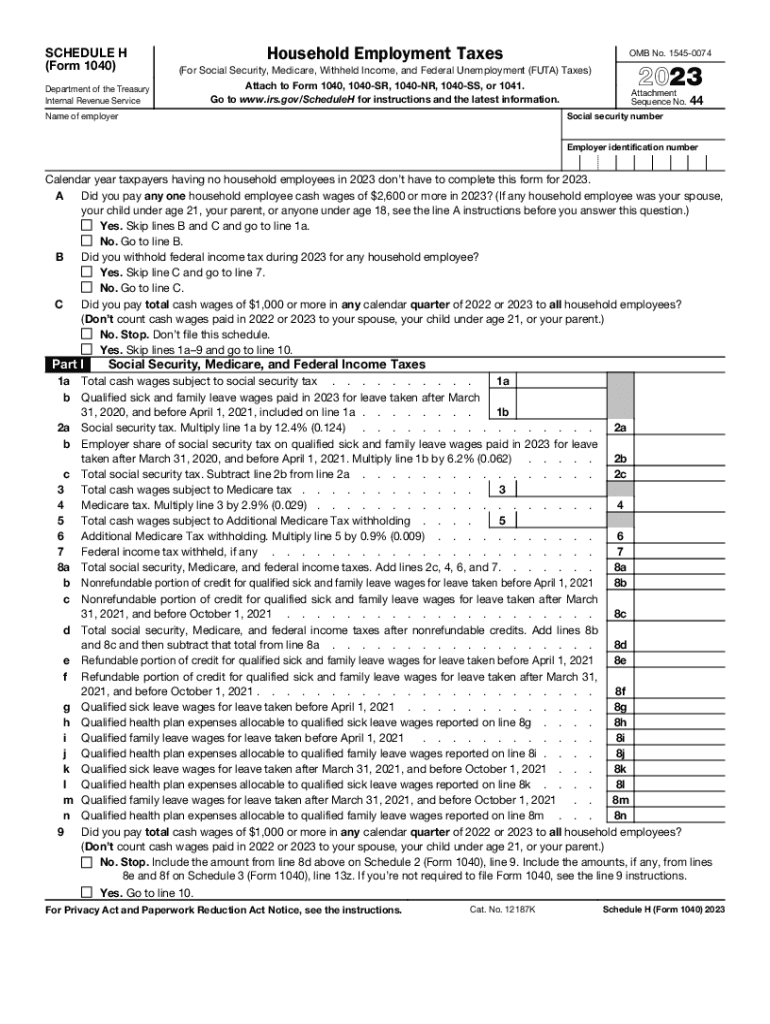
Schedule H (Form 1040) is specifically designed for household employers who need to report and pay employment taxes such as Social Security, Medicare, and Federal Unemployment Taxes. The form constitutes an integral part of the United States tax system, ensuring that household employers comply with their tax obligations. Common examples might include individuals employing nannies, housekeepers, or caretakers. Schedule H helps outline the taxes withheld and remitted to the IRS, ensuring that all necessary contributions are documented. This form should be attached to the employer's primary tax return, Form 1040.
Importance of Schedule H
The Schedule H form holds significant importance for household employers, as it formalizes the process of calculating and reporting taxes related to household employment. By using this form, employers can avoid penalties associated with non-compliance, ensuring all tax liabilities are paid timely and accurately. This form demystifies the process, breaking down complex tax obligations into a manageable framework, simplifying the responsibilities of the employer.
Steps to Complete Schedule H (Form 1040)
- Identify Household Employees: Define and document who among your workforce qualifies as a household employee.
- Calculate Total Wages Paid: Sum up the total cash wages paid over the year; consider thresholds that necessitate tax payments.
- Compute Tax Obligations: Utilize the form to calculate taxes such as Social Security, Medicare, and federal unemployment taxes.
- Attach to Tax Return: Schedule H should be attached to Form 1040. Ensure all information is correct before submission.
- Submit: File your Form 1040 with Schedule H attached before the IRS filing deadline to avoid late fees or penalties.
Who Typically Uses Schedule H
Schedule H is predominantly used by household employers in the United States. These individuals employ workers such as nannies, gardeners, drivers, and personal aides in a domestic capacity. While individual employers are primarily the focus, small estate administrators handling employment taxes in similar domestic employment situations might also use this form to comply with IRS regulations.
Key Elements of Schedule H
- Employer Identification Number (EIN): A unique identifier for tax reporting.
- Employee Information: Details about each employee, including total earnings.
- Tax Calculation: Sections to compute Social Security, Medicare, and unemployment taxes.
- State Unemployment Tax Contributions: State-specific details and tax contributions are included for compliance.
- Withheld Federal Income Taxes: Information on any federal taxes withheld from employee wages.
IRS Guidelines for Schedule H
The IRS provides comprehensive guidelines on completing Schedule H, emphasizing accuracy and thoroughness in tax recording. Employers should ensure they accurately fill out all relevant fields, calculating the appropriate taxes and following all stipulated guidelines. The IRS guidelines also detail filing deadlines and provide examples to assist employers in effortlessly navigating the requirements for Schedule H.
Filing Deadlines & Important Dates
Schedule H, being a part of Form 1040, follows the same filing deadlines. Typically, this means the submission deadline is on or before April 15 each year. However, in cases where this date falls on a weekend or holiday, the deadline may be extended. Employers need to ensure they stay updated with any adjustments to the dates to avoid late filing penalties.
Required Documents for Schedule H
To correctly fill out Schedule H, employers should gather:
- Payroll records detailing wages paid to each household employee.
- Employee W-2 forms, showing wages and any tax withheld.
- Employer's identification documents, including the EIN.
- Records of any state unemployment tax paid. Having these documents on hand will help ensure accuracy and completeness in tax reporting.
Penalties for Non-Compliance
Failure to file Schedule H when required can lead to significant penalties, including fees for late submission and underpayment of taxes. Interest on unpaid taxes may also accrue, adding to the financial burden. Household employers should be particularly diligent in completing and filing this form to avoid these repercussions. Compliance is crucial for both legal and financial security.
State-Specific Rules for Schedule H
While Schedule H is a federal form, state regulations can impact its completion, especially regarding unemployment taxes. Some states may have additional filing requirements or specific tax thresholds. Employers should check state-specific guidelines to ensure full compliance at both the state and federal levels. Understanding these nuances helps in avoiding state-level penalties.




