




01. Edit your schedule h online
Type text, add images, blackout confidential details, add comments, highlights and more.

Type text, add images, blackout confidential details, add comments, highlights and more.

Draw your signature, type it, upload its image, or use your mobile device as a signature pad.

Send schedule h tax form via email, link, or fax. You can also download it, export it or print it out.
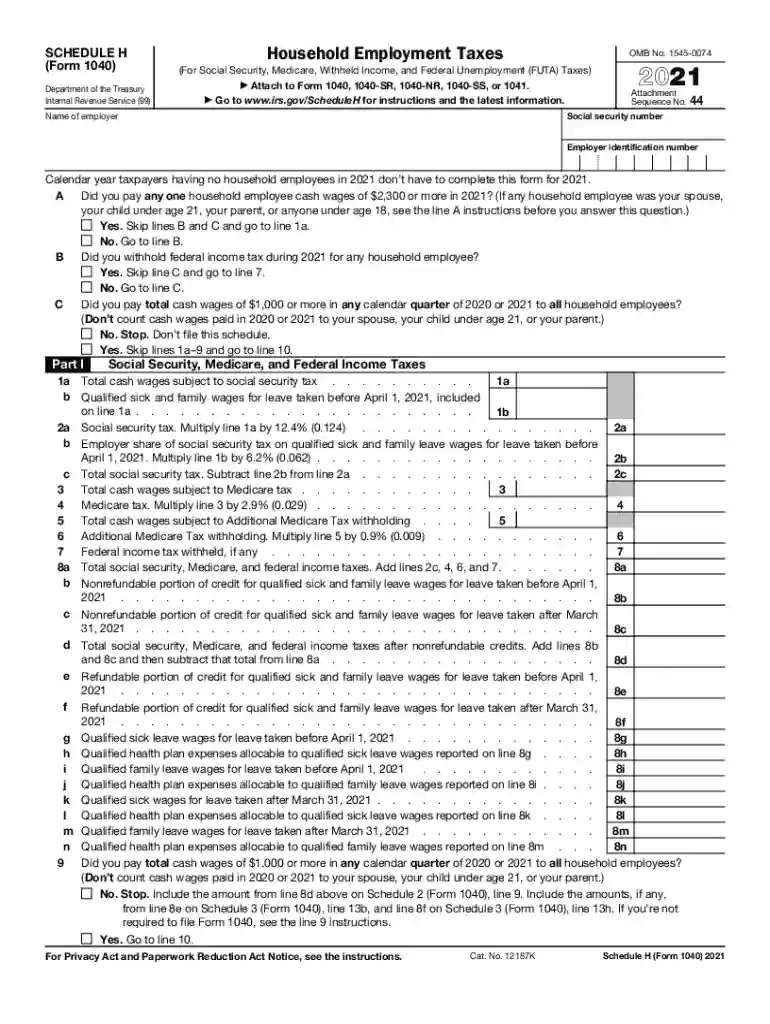
Schedule H is a vital part of Form 1040, aimed primarily at household employers for reporting payroll taxes related to domestic workers. These instructions help taxpayers accurately complete Schedule H, ensuring the proper handling of Social Security, Medicare, and Federal Unemployment Taxes (FUTA). Recognizing the complexities associated with tax law, the IRS provides guidance on these instructions to alleviate confusion and ensure compliance.
When engaging with Schedule H instructions, it's essential to understand the precise steps involved in fulfilling your tax obligations as a household employer. These instructions guide you through reporting total wages, determining tax thresholds, and calculating liabilities. By accurately following the instructions, taxpayers can avoid common errors, such as misreporting wages or overlooking exemptions.
The IRS provides several avenues for acquiring Schedule H instructions, ensuring accessibility for all taxpayers. You can download the instructions directly from the IRS website or request a physical copy through the mail. Additionally, tax preparation software often includes these instructions, streamlining the process for individuals who prefer digital methods.
There are several significant advantages for household employers who use Schedule H instructions. Primarily, these instructions help ensure all taxes are reported accurately, avoiding penalties associated with non-compliance. Additionally, utilizing these instructions can clarify roles and obligations, reducing the likelihood of audits or disputes with the IRS.
Schedule H instructions detail various critical components necessary for tax compliance:
The IRS issues comprehensive guidelines for Schedule H to ensure taxpayers fully understand their obligations and the correct reporting procedures. These guidelines provide clarity on:
Schedule H, attached to Form 1040, follows the standard federal tax deadline, which falls on April 15 each year. If the deadline lands on a weekend or holiday, it is typically extended to the next business day. Taxpayers can request extensions if needed, but it's crucial to remember that extensions apply only to filing, not payment, to prevent potential penalties.
Completing Schedule H necessitates specific documents and records, ensuring accurate reporting:
By adhering to these comprehensive sections, understanding and completing Schedule H using the IRS instructions becomes more manageable, ensuring compliance and clarity in household employment tax obligations.
We've got more versions of the schedule h form. Select the right schedule h version from the list and start editing it straight away!
| Versions | Form popularity | Fillable & printable |
|---|---|---|
| 2025 | 4.2 Satisfied (49 Votes) | |
| 2024 | 4.6 Satisfied (41 Votes) | |
| 2023 | 4.6 Satisfied (40 Votes) | |
| 2022 | 4.5 Satisfied (52 Votes) | |
| 2021 | 4.8 Satisfied (145 Votes) | |
| 2020 | 4.4 Satisfied (225 Votes) | |
| 2019 | 4.3 Satisfied (110 Votes) | |
| 2018 | 4.4 Satisfied (69 Votes) | |
| 2017 | 4.3 Satisfied (80 Votes) | |
| 2016 | 4.4 Satisfied (45 Votes) | |
| 2015 | 4 Satisfied (21 Votes) | |
| 2014 | 4.3 Satisfied (68 Votes) | |
| 2013 | 4 Satisfied (26 Votes) | |
| 2011 | 4.2 Satisfied (33 Votes) | |
| 2010 | 4.2 Satisfied (61 Votes) |
At DocHub, your data security is our priority. We follow HIPAA, SOC2, GDPR, and other standards, so you can work on your documents with confidence.
May 2, 2017 For more information, see Schedule H. (Form 1040), Household Employment Taxes, and its separate instructions. You must have an employer.Read more
If youre a calendar year taxpayer and have no household employees for 2025, you dont have to file Schedule H for 2025. If you have household employees forRead more


