
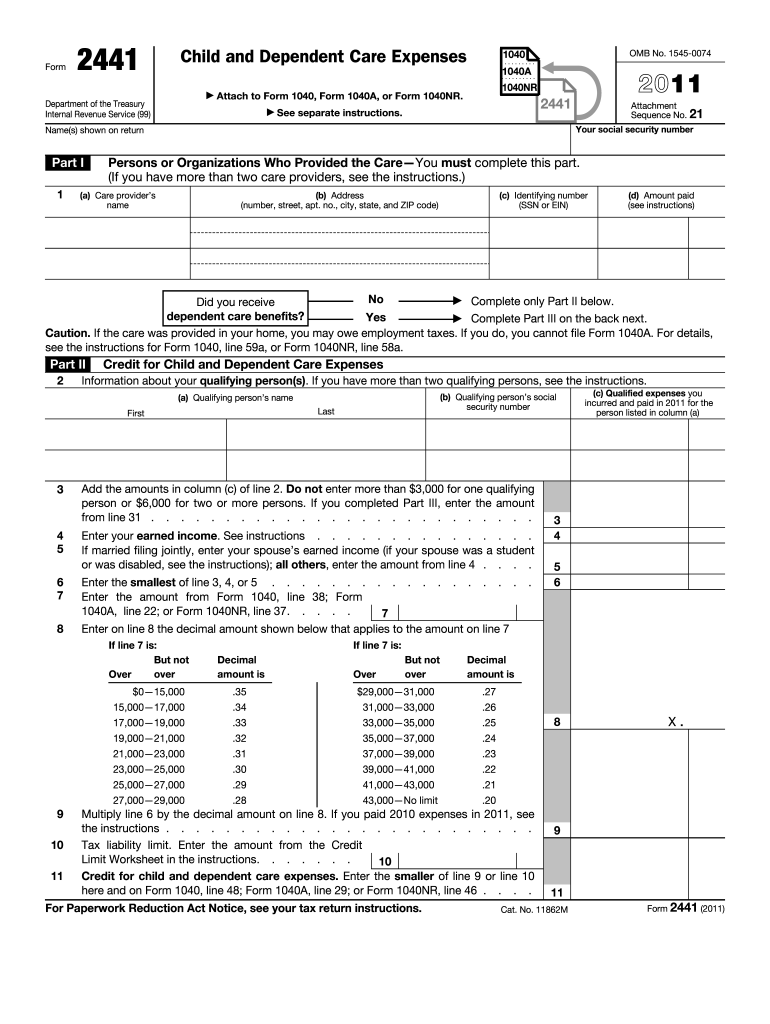







Definition and Purpose of the 2011 Form 2441
Form 2441, Child and Dependent Care Expenses, is an IRS form used by taxpayers in the United States to report costs incurred for the care of children or other dependents. Specifically, the 2011 form captures expenses that were paid to enable the taxpayer to work or actively look for work. The primary aim is to provide a tax credit for eligible expenses, thus reducing the overall tax liability of the taxpayer.
The form includes detailed sections for listing the care providers, the qualifying individuals for whom care expenses were paid, and an itemized account of the expenses. Filling out this form allows taxpayers to claim a credit that alleviates the financial burden associated with dependent care, as long as specific criteria are met.
Key Steps to Complete the 2011 Form 2441
Completing Form 2441 involves several critical steps. Here's a detailed guide:
-
Provider Information: Start by entering the care provider’s name, address, and taxpayer identification number. This information is necessary for verifying the legitimacy of the claim.
-
Qualifying Person(s): List the dependents for whom care expenses were incurred. Include their full name, date of birth, and relationship to the taxpayer.
-
Calculating Expenses: Enter the totals for wages paid to a domestic employee, if applicable, and other care expenses. Keep receipts and records for accuracy and potential audits.
-
Tax Credit Calculation: Use the total qualifying expenses to calculate the allowable childcare credit. This often involves multiplying the expenses by a percentage determined by the IRS.
-
Submitting the Form: Attach Form 2441 to your federal tax return and ensure all data is consistent with other submitted documents.
Completing these steps accurately ensures eligibility for the appropriate tax credits, thereby optimizing your tax benefits.
How to Obtain the 2011 Form 2441
There are several methods for acquiring the 2011 Form 2441:
-
Download from IRS Website: The IRS provides downloadable PDFs of past tax forms, including the 2011 version of Form 2441. It is accessible for free under the “Prior Year Products” section.
-
Local IRS Office: Visit a local IRS office to request a physical copy of the form if you prefer paper documents.
-
Tax Preparation Software: Many tax preparation tools, such as TurboTax, include historical forms that can be filled out digitally and printed for submission.
Using any of these sources, taxpayers can ensure access to the necessary documentation to report their dependent care expenses accurately.
Legal Use and Implications of the 2011 Form 2441
Form 2441 must be used judiciously to comply with IRS regulations regarding dependent care expenses. Taxpayers must pay attention to:
-
Eligibility Requirements: Only certain taxpayers—those who contributed to qualified care expenses to either work or seek work—are eligible to use this form.
-
Documentation: Accurate records and receipts for care expenses and provider information are mandatory. Failing to furnish these upon request by the IRS may result in penalties.
-
Penalties for Misreporting: Misuse or incorrect reporting on Form 2441 can lead to fines and back taxes. Consulting a tax professional if in doubt is advised to prevent errors.
Understanding these legal use cases and potential repercussions is crucial for lawful compliance and maximizing tax advantages.
Important Terms Related to the 2011 Form 2441
Several key terms are essential to understanding and completing Form 2441:
-
Dependent: Defined by the IRS as a qualifying child or relative for whom the taxpayer provides care and financial support.
-
Care Provider: The individual or organization rendering childcare or dependent services, whose details must be clearly documented.
-
Earned Income: Total income from employment; it is a determining factor for the allowable credit.
-
Tax Credit: A direct reduction of tax liability, as opposed to a deduction which lowers taxable income.
Grasping these terms ensures proper and accurate filing of the form.
Who Typically Uses the 2011 Form 2441?
This form is primarily used by:
-
Working Parents: Individuals with dependent children may use Form 2441 to offset care-related expenses incurred while working.
-
Single Guardians: Those acting as sole caregivers who require dependent care to maintain employment.
-
Dual-Earner Couples: Families where both partners work and depend on third-party care services for dependents.
These parties benefit from the tax credits claimed through this form, easing the financial impact of dependent care.


IRS Guidelines and Compliance for the 2011 Form 2441
Ensuring compliance with IRS regulations is vital when using Form 2441. Consider these guidelines:
-
Eligibility: Verify that your dependent care expenses qualify under IRS rules.
-
Accuracy: Double-check all calculations and information provided to avoid common errors.
-
Submission by Deadlines: Form 2441 should be submitted with your federal return by the regular filing deadline.
Following these guidelines helps secure the benefits without running afoul of tax regulations.
Filing Deadlines and Important Dates
Adhering to the following timeframes is essential for Form 2441:
-
Deadline for Filing: Typically, the filing deadline aligns with the annual federal tax deadline, which is usually April 15 unless extended by IRS notice.
-
Amendments: Should errors be discovered after submission, the taxpayer generally has three years from the original filing date to amend the return and claim adjustments, if applicable.
Respecting these deadlines avoids penalties and ensures timely processing of credits.
Required Documents for the 2011 Form 2441
Gather the following documents before completing Form 2441:
-
Receipts: Original and copies of receipts and invoices from care providers.
-
Provider Details: Documentation showing the provider’s tax identification number.
-
Employment Income Proof: W-2 forms or similar documents to substantiate employment income claims.
Having these documents readily available makes the filing process smoother and more accurate, reducing the risk of misinformation.




