







Definition & Meaning
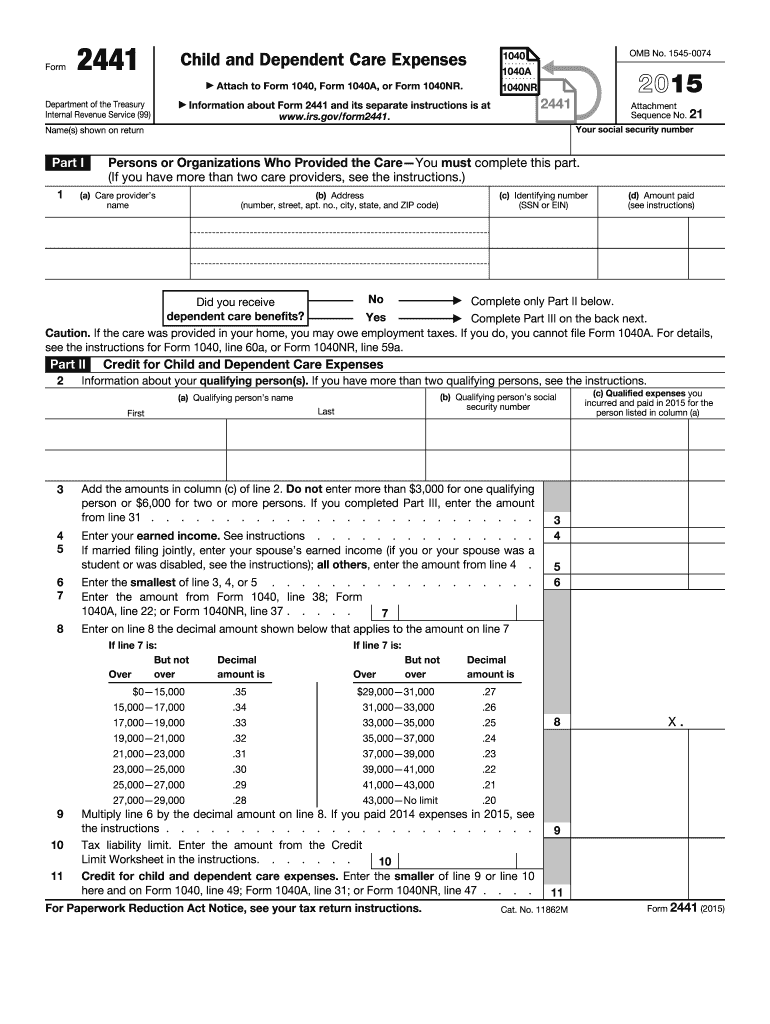
Form 2441, widely known for its role in addressing Child and Dependent Care Expenses, is an IRS tax form that assists U.S. taxpayers in claiming credits for qualifying childcare expenses. The core purpose of Form 2441 is to help offset the cost of necessary care for qualifying dependents while the taxpayer is working or seeking employment. Understanding the form's intent is crucial for proper utilization, as it impacts both federal tax credits and personal financial planning. Taxpayers need to report specific information including details about care providers, qualifying dependents, and any dependent care benefits received through their employer.
Important Terms Related to Form 2
Familiarity with key terminology used in Form 2441 is essential for accurate completion. The form frequently references terms such as:
- Qualifying Person: This refers to a dependent under 13 years or a spouse/dependent who is unable to care for themselves.
- Care Provider: The individual or organization offering care services, whose details must be provided, including name and tax identification number.
- Earned Income: This includes wages, salaries, tips, and other taxable employee pay, which forms the basis for calculating eligible expenses.
- Dependent Care Benefits: Benefits provided by an employer that may affect the credit calculation, such as a flexible spending account.
Steps to Complete Form 2
Successfully completing Form 2441 involves several critical steps:
- Gather Information: Collect the Social Security numbers of qualifying dependents and the Employer Identification Number (EIN) or Social Security number of each care provider.
- Determine Qualifying Expenses: Only expenses directly related to care while working or searching for work qualify.
- Complete Part I: Fill in details about the care provider, including their address and taxpayer identification number.
- Complete Part II: Calculate the allowable expenses and apply the Care Credit; ensure calculations are divided per qualifying person.
- Account for Dependent Care Benefits: If benefits are received through the employer, use Part III to report these and figure out how they affect the credit.
- Finalize and Review: Check calculations for accuracy, ensuring all necessary fields are filled.
Who Typically Uses the Form 2
Form 2441 is primarily used by employed individuals who incur expenses for the care of their dependents to enable them to work or actively seek employment. This form benefits:
- Working parents requiring daycare or after-school programs for children under 13.
- Taxpayers with a spouse or dependent who is physically or mentally incapable of self-care.
- Employers sponsoring Dependent Care Assistance Programs.


Filing Deadlines / Important Dates
Understanding the timelines for filing Form 2441 is crucial to avoid penalties:
- Filing Deadline: Typically due by April 15 of the following tax year unless an extension is filed.
- Extended Deadline: If an extension is granted, the return can be filed by October 15.
- Quarterly Deadlines: For self-employed individuals, keeping track of quarterly tax estimate dates is important as it affects the year-end tax situation.
IRS Guidelines
The IRS provides detailed guidelines to facilitate correct filing of Form 2441:
- Publications: Refer to IRS Publication 503 for in-depth explanations of allowable expenses and eligibility requirements.
- Eligibility Confirmation: Verify eligibility criteria to claim credits, ensuring neither spouse is a full-time student if filing jointly.
- Credit Calculation: Follow IRS rules to calculate credits based on earned income and actual expenses.
Required Documents
When preparing to submit Form 2441, ensure the following documentation is available:
- W-2 Forms: Reflects earned income from employers, essential for credit calculation.
- Receipts and Statements: Proof of payment for care services, including documented care provider details.
- Dependent Care Benefits Plan Documentation: For taxpayers receiving employer-sponsored dependent care benefits.
Legal Use of the Form 2
Legal compliance regarding the use of Form 2441 mandates precise adherence to IRS rules:
- Accuracy: All information provided must be substantiated by evidence; false information could result in penalties.
- Privacy: Protect sensitive information such as Social Security numbers of dependents and providers.
- Penalties for Non-Compliance: Failure to file or incorrect filing may result in fines or disallowed credits.
Penalties for Non-Compliance
Non-compliance with Form 2441 requirements can lead to significant repercussions:
- Fines and Penalties: Inaccurate or fraudulent filings could incur penalties ranging from monetary fines to audit repercussions.
- Disallowed Credits: Incorrect submission or failure to meet eligibility may result in the denial of the credit, impacting the taxpayer's final tax liability.
Who Issues the Form
Form 2441 is issued by the Internal Revenue Service (IRS), the federal agency responsible for overseeing U.S. tax laws and ensuring compliance. The IRS not only provides the form but also detailed instructions to aid taxpayers in completing it correctly. Forms can be downloaded directly from the official IRS website.




