






Understanding the 2023 Schedule B (Form 1040)
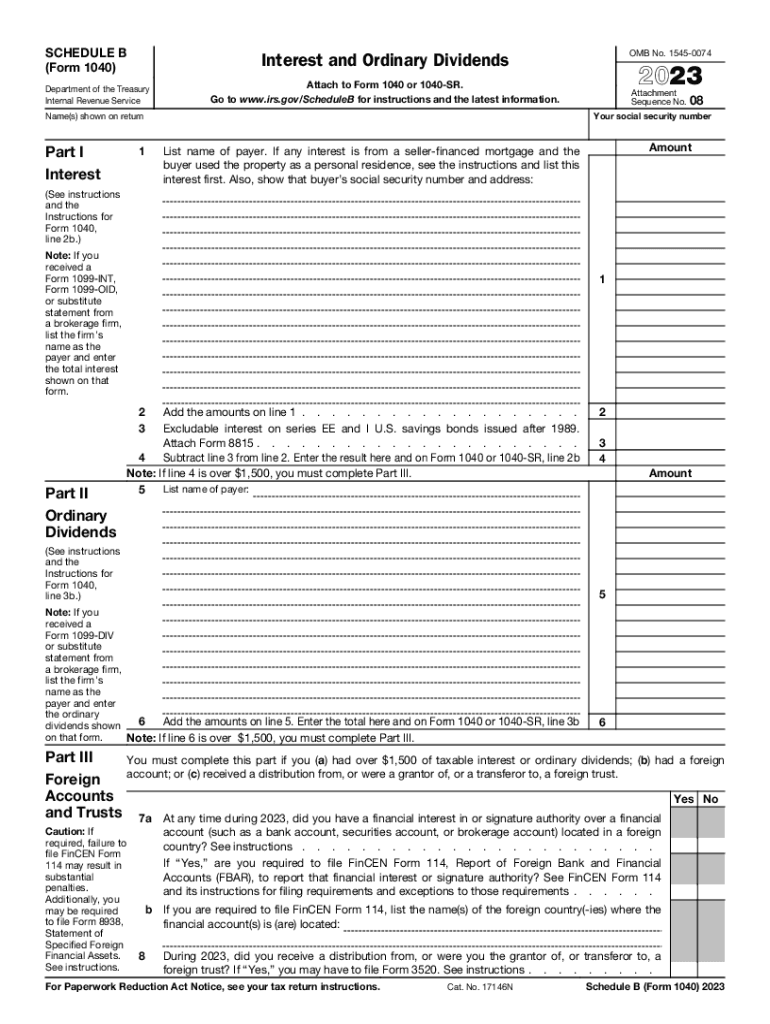
Schedule B (Form 1040) is utilized by taxpayers to report interest and ordinary dividends earned throughout the tax year. This form is crucial for those who have substantial investments or savings that generate income from interest or dividends. It helps ensure that all income sources are transparently reported to the IRS, in compliance with federal tax obligations.
Key Elements of the Form
- Interest Income: This section requires the listing of all interest income received from savings, CDs, and other interest-bearing accounts.
- Ordinary Dividends: Here, you report dividends earned from stocks or mutual funds, differentiating them from qualified dividends, which have different tax implications.
- Foreign Accounts and Trusts: Taxpayers must disclose if they have certain foreign accounts or trusts, which might necessitate additional forms like FinCEN Form 114.
How to Obtain the Form
The 2023 Schedule B can be downloaded from the IRS website or accessed through tax preparation software like TurboTax or QuickBooks. It's typically included in your tax preparation package when using these platforms.
Steps to Complete the 2023 Schedule B
- Gather Information: Collect all documents that report interest and dividend income, such as 1099-INT and 1099-DIV forms.
- Enter Payer Information: For each payer, list their name and the total amount of interest or dividends received during the year.
- Calculate Total Amounts: Sum the amounts in each category to get your total interest and dividends.
- Foreign Account Reporting: If applicable, answer questions about foreign accounts and trusts.
IRS Guidelines
The IRS provides detailed instructions to complete Schedule B, including how to report interest and dividend income accurately. It's essential to follow these instructions to avoid penalties or audits.
Filing Deadlines and Important Dates
- April 15: Standard deadline for filing Form 1040 and attached schedules.
- Extensions: If you require additional time, an extension to file can be requested, typically moving the deadline to October 15.
Required Documents
Before filing, ensure you have all pertinent documents like 1099-INT and 1099-DIV forms, along with any statements regarding foreign accounts if applicable.
Submission Methods
Schedule B can be submitted electronically or via mail as part of your complete Form 1040 return. E-filing is often quicker and provides an immediate acknowledgment from the IRS.
Digital vs. Paper Version
Digital filing is recommended for faster processing and reduced errors. However, paper submissions are still accepted and can be mailed to the IRS’ designated processing centers.
Special Considerations for Taxpayer Scenarios


Self-Employed and Retired Individuals
- Self-Employed: May have additional obligations if their business investments generate interest or dividends.
- Retired Individuals: Should ensure income from retirement accounts aligned with accounts or investments is properly reported.
Business Entity Types
Entities like LLCs or partnerships that distribute dividends or receive interest on investments must also consider Schedule B reporting, especially if they distribute these earnings to personal accounts.
Penalties for Non-Compliance
Failure to report interest or dividend income accurately can result in penalties, fines, or increased scrutiny from the IRS. Ensuring compliance through careful documentation and reporting is essential to avoid these issues.
Form Variants and Alternatives
While there are no direct alternatives to Schedule B, taxpayers should be aware of related forms. For those with specific investment incomes, related forms like Schedule D for capital gains may also be necessary.
Important Terms Related to Schedule B
- 1099-INT: Form for reporting interest income from financial institutions.
- 1099-DIV: Form for reporting dividends and distributions from investments.
- FinCEN Form 114: Required for taxpayers with foreign financial accounts meeting certain thresholds.
State-Specific Rules
Most states follow federal guidelines; however, certain states may have additional requirements or forms concerning investment income reporting. Checking state-specific resources is advisable.