
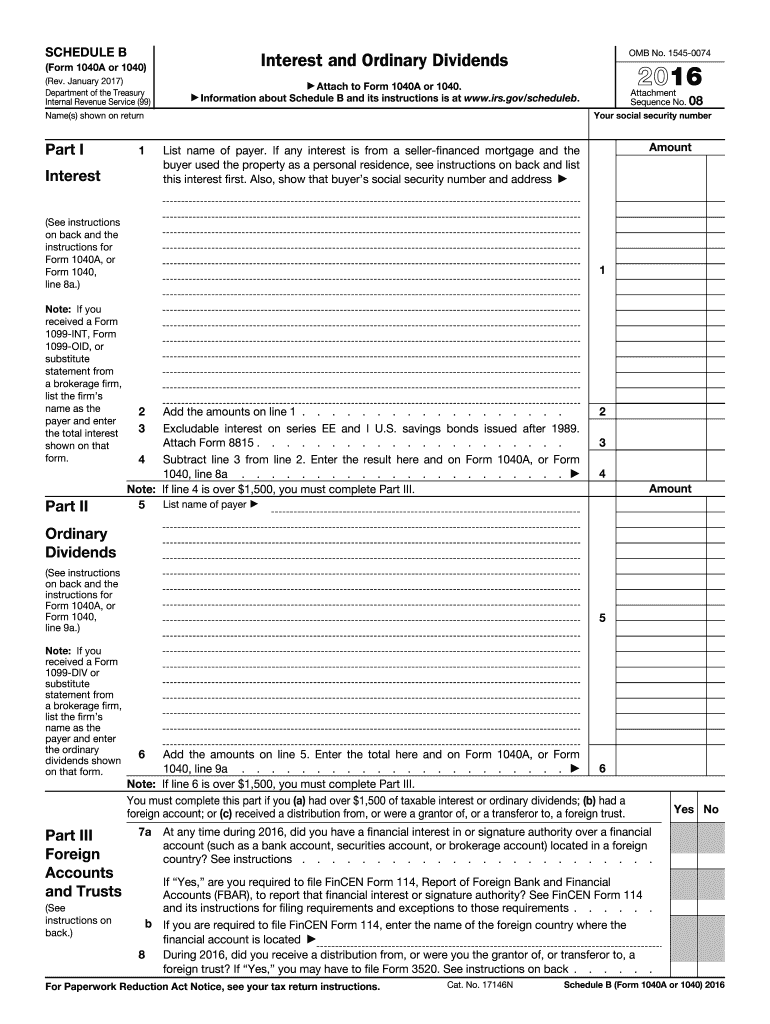







Definition & Purpose of the Schedule B 2016 Form
The Schedule B 2016 form is an integral part of the U.S. federal tax filing process for individuals who have received over $1,500 in taxable interest or ordinary dividends within the tax year. This form is used to report these financial earnings to the Internal Revenue Service (IRS), ensuring that all income is accounted for in your annual tax return. The document primarily serves to detail interest earned from financial institutions and dividends from investments, providing a breakdown of income sources for accurate tax calculation.
Key Elements of the Form
- Interest Income: This section requires taxpayers to list all sources from which they have received interest income, including banks and credit unions.
- Ordinary Dividends: Taxpayers need to record dividend payments received from stocks or mutual funds.
- Foreign Accounts: The form includes questions about ownership or signature authority over financial accounts outside the United States.
- Trusts and Nominee Distributions: It also captures income received through trusts and as a nominee for others, ensuring comprehensive reporting.
Steps to Complete the Schedule B 2016 Form
-
Gather Necessary Documents: Collect all 1099-INT and 1099-DIV forms received from financial institutions and investment firms. These forms will provide the information required to fill out Schedule B accurately.
-
Complete Part I: Interest Income: Begin with the first section dedicated to interest income. List each payer of interest along with the amount received. Total these figures at the end of the section.
-
Complete Part II: Ordinary Dividends: Proceed to the section for ordinary dividends, repeating the same process as interest income. Include payer names and dividend amounts, and calculate the total.
-
Answer Part III: Foreign Accounts and Trusts: Respond to questions regarding foreign bank accounts and interests in foreign trusts. Accurate answers are crucial to comply with offshore asset reporting requirements.
-
Review and Submit: After finishing the form, double-check all entries for accuracy before attaching it to Form 1040 or 1040NR. Submit the completed tax return by the filing deadline.
Who Typically Uses the Schedule B 2016 Form?
Individuals who fall into specific situations are required to use the Schedule B 2016 form. These include:
- High-Income Individuals: Those earning more than $1,500 in taxable interest or ordinary dividends.
- Investors: People with holdings in stocks, bonds, or mutual funds generating dividends or interest.
- Taxpayers with Foreign Accounts: U.S. residents with financial interests overseas must declare their holdings.


Legal Use and Compliance Considerations
Proper completion of Schedule B is not only a matter of accuracy but also a legal requirement. When filing the form:
- Ensure All Income is Reported: Misreporting or omitting income can lead to legal complications or penalties.
- Detail Foreign Financial Interests: Compliance with U.S. laws regarding foreign assets is mandatory.
IRS Guidelines for the Schedule B 2016 Form
The IRS provides specific instructions for completing Schedule B:
- Identifying Income Sources: Clearly identify each source of income and the type.
- Filing Requirements: Attach Schedule B to the 1040 or 1040NR tax form as part of the federal tax return.
- Deadline Compliance: Ensure submission by the IRS's annual deadline, typically April 15, unless extended.
Penalties for Non-Compliance
Failing to comply with Schedule B requirements can result in significant penalties:
- Fines for Undisclosed Foreign Accounts: Severe penalties are imposed for failing to report interests in foreign accounts.
- Interest and Dividend Omissions: Omitting information can lead to audits and fines.
Important Terms Related to the Schedule B 2016 Form
Understanding the terminology used in Schedule B is essential:
- 1099-INT: A form outlining interest income earned from payers.
- 1099-DIV: A documentation of dividend income received.
- FATCA: The Foreign Account Tax Compliance Act, requiring the reporting of foreign assets.
Form Submission Methods
The Schedule B 2016 form can be submitted through multiple channels:
- Online: Submitted electronically as part of e-filing the tax return.
- Mail: Paper submissions are accepted; however, ensuring delivery before the deadline is crucial.
- Tax Preparation Software Compatibility: Many tax software applications, like TurboTax and QuickBooks, support Schedule B for seamless e-filing.




