







Definition and Meaning
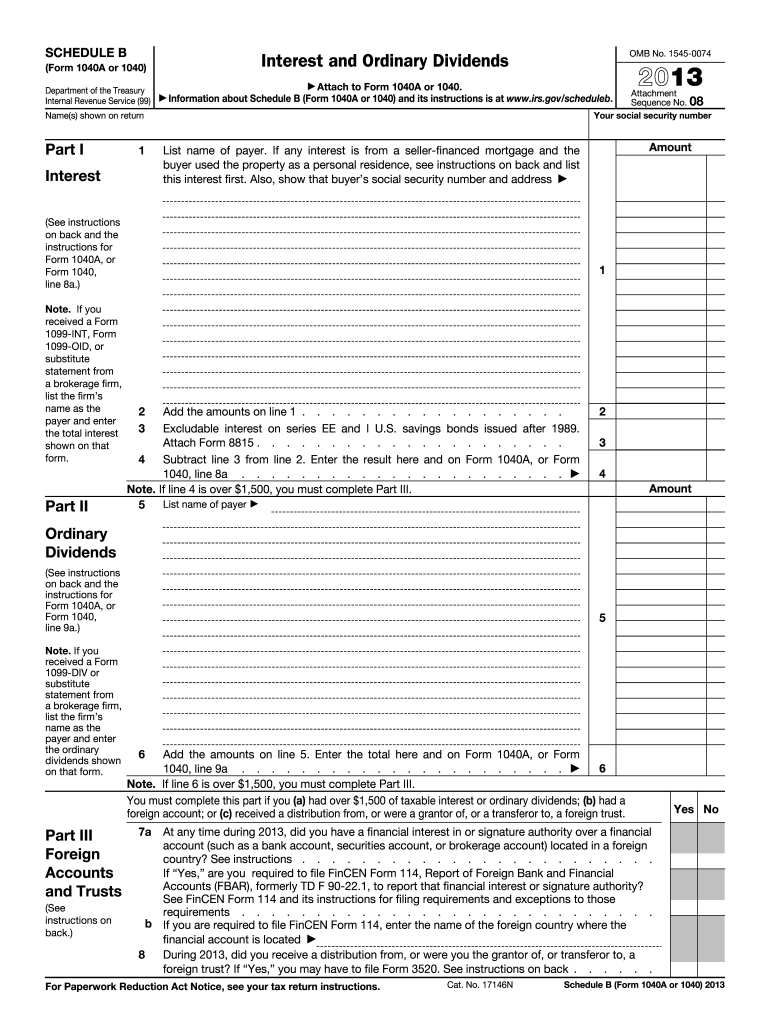
Schedule B (Form 1040A or 1040) is used primarily for reporting interest and ordinary dividends earned by taxpayers during the tax year. It supplements the main Form 1040 or 1040A and provides a detailed account of interest earnings and dividends, aiding the IRS in assessing proper tax obligations. The form requires a taxpayer to disclose specific details of interest income sources, including the payers' names and amounts received. Additionally, if a taxpayer has any financial interest in foreign accounts, Schedule B facilitates the necessary disclosure.
Key Elements of the 2013 Schedule B Form
Understanding the components of Schedule B is crucial for accurate completion. The form divides into three parts: the first for interest income, where taxpayers list earnings over $1,500; the second for dividend income, again requiring details only if dividends exceed $1,500; and the third addresses foreign accounts and trusts, mandating disclosure of any foreign financial interests. Each section serves to clarify the kind of income the taxpayer has received and any international financial activities, ensuring comprehensive income reporting.
Steps to Complete the 2013 Schedule B Form
-
Gather Financial Documents: Collect all necessary documents like bank statements, dividend distribution forms, and records of any foreign accounts.
-
Report Interest Income: In Part I, list all interest income sources and include amounts. Ensure accuracy, particularly if interest exceeds $1,500.
-
Report Dividend Income: In Part II, similarly, report all dividends, especially if they surpass the $1,500 threshold, including names of dividend payers.
-
Declare Foreign Accounts: In Part III, answer questions regarding foreign accounts and trusts. This section is essential if holding any financial interests abroad.
-
Review and Submit: Double-check all entries for accuracy before filing your completed Schedule B with your tax return.
How to Obtain the 2013 Schedule B Form
Obtaining the 2013 Schedule B form is straightforward. It can be downloaded directly from the IRS website or collected from a local IRS office. Many tax software packages, like TurboTax or QuickBooks, also include Schedule B within their tax filing modules. Ensure you have access to digital tools to ease the process of document completion and storage.
Why Should You Use the 2013 Schedule B Form
Using Schedule B is imperative when you have taxable interest or dividends over $1,500 or hold foreign accounts. It ensures compliance with federal tax requirements, preventing potential audits or penalties. By clearly listing all applicable income, taxpayers can verify the accuracy of their filings and potentially streamline the process with the IRS, reducing questions or further scrutiny.
IRS Guidelines for the 2013 Schedule B Form
The IRS provides specific guidelines for completing Schedule B. Taxpayers must report all interest and dividends above the designated limit, using exact figures from their financial documents. Accuracy is essential, as discrepancies can prompt detailed assessments from the IRS. For those holding foreign accounts, adherence to guidelines about disclosing these interests is crucial under federal law.
Filing Deadlines and Important Dates
Typically, the deadline for filing Schedule B alongside Form 1040 or 1040A coincides with the minimum filing deadline of April 15. If unable to meet this deadline, taxpayers should file for an extension to prevent penalties. However, an extension to file is not an extension to pay any taxes due, so promptly fulfilling payment obligations is vital to avoid interest and penalties.
Legal Use of the 2013 Schedule B Form
The legal purpose of Schedule B extends beyond simple reporting; it aids in regulatory compliance concerning domestic and international income. By outlining detailed accounts of foreign interests, it ensures adherence to US taxation laws. Taxpayers failing to submit or incorrectly filing Schedule B expose themselves to legal repercussions such as fines or audits, hence the necessity for accurate completion and timely submission.




