







Definition & Meaning
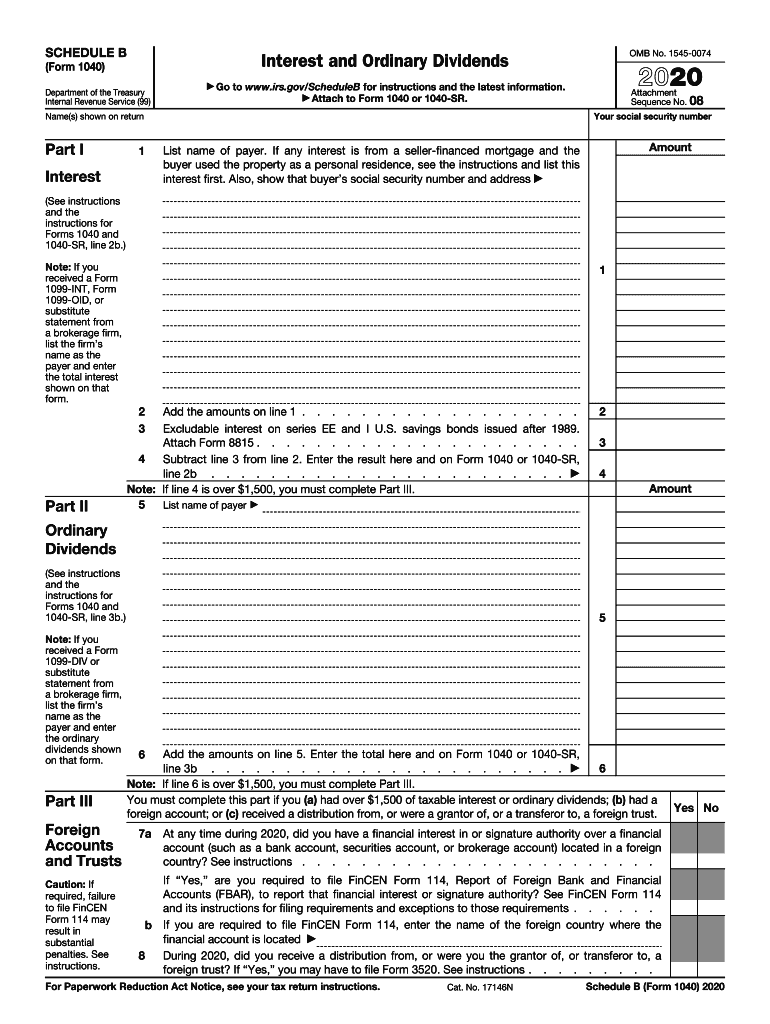
Schedule B is an integral component of the IRS's array of forms and is specifically designed to report interest income and ordinary dividends on individual tax returns, such as Form 1040 or 1040-SR. This form is crucial for taxpayers who need to disclose their income from interest and dividends, assisting the IRS in ensuring that all taxable income has been appropriately reported. By understanding the definition and purpose of Schedule B, taxpayers can better align their financial disclosures with IRS requirements, particularly if their income from these sources exceeds specified thresholds or involves foreign interests.
How to Use Schedule B
Using Schedule B effectively involves several key steps. First, taxpayers must collect all documents related to their interest income and dividends, such as 1099-INT or 1099-DIV forms from financial institutions. Then, they fill in Schedule B, listing all sources of interest and dividends, and calculate the total amounts. This section of the tax return aids in determining the taxpayer's total taxable income.
Taxpayers should also carefully review specific instructions pertaining to foreign accounts or trusts, ensuring they comply with all reporting regulations to avoid potential penalties. Knowing how to accurately complete Schedule B is essential for a straightforward tax filing process, reducing the risk of complications or audit triggers.
Steps to Complete Schedule B
- Gather Your Documents: Ensure you have all necessary documents such as 1099-INT, 1099-DIV, or similar forms.
- Identify Your Income Sources: Make a comprehensive list of all interest and dividend sources.
- Fill Out Part I - Interest Income: Enter the name of each payer and the amount of interest received.
- Fill Out Part II - Dividend Income: Similarly, list the payers of dividends and total the amounts.
- Address Foreign Accounts & Trusts: If applicable, complete Part III concerning foreign accounts and trusts.
- Calculate Totals: Add up the total amounts for both interest and dividends.
- Review and Attach to Tax Return: Double-check for accuracy, then attach Schedule B to your Form 1040 or 1040-SR.
Understanding these steps ensures that each section of the form is filled accurately, enabling taxpayers to meet their legal obligations without issue.
Important Terms Related to Schedule B
- Interest Income: The earnings received on investments such as savings accounts, certificates of deposit, and other interest-bearing accounts.
- Ordinary Dividends: Dividends received from owning shares in corporations, which are taxable as income.
- Foreign Account Compliance: Requirements concerning disclosure of foreign financial accounts, which may affect Part III of the form.
- 1099 Forms: Specific forms detailing the amount of income earned from various sources, crucial for completing the Schedule B.
Familiarity with these terms is essential for correctly filling out the form and avoiding inadvertent errors.
IRS Guidelines
The IRS provides detailed guidelines for completing Schedule B, focusing on accurately reporting all taxable interest and dividends. The guidelines advise that taxpayers must include all reportable income, specifying if it involves foreign accounts. Failure to adhere to these guidelines can result in penalties or increased scrutiny during audits.
The IRS also specifies threshold amounts that trigger the need for Schedule B; if interest or ordinary dividends exceed these limits, taxpayers are required to file this form. Being aware of IRS guidelines empowers taxpayers to file with precision and confidence.
Filing Deadlines / Important Dates
Schedule B, like most individual tax forms, needs to be filed by April 15 each year, reflecting the prior year’s income. This date is critical for timely submissions to avoid penalties. However, if April 15 falls on a weekend or public holiday, the deadline may shift to the next business day.
Moreover, taxpayers with foreign accounts may face additional deadlines for disclosing these accounts or filing related forms like the FBAR (Foreign Bank Account Report). Keeping track of these dates ensures compliance with regulatory requirements and enhances the filing process's efficiency.
Required Documents
Before starting with Schedule B, gathering all necessary documents is crucial:
- Form 1099-INT: Details interest earned over the tax year.
- Form 1099-DIV: Provides information on dividends received.
- Bank Statements: Useful for cross-verifying amounts recorded in 1099 forms.
- Investment Reports: For those with foreign assets, reports detailing overseas earnings.
Possession of these documents streamlines the form completion process, ensuring taxpayers are ready to report their interest and dividend income accurately.
Disclosure Requirements
Schedule B requires specific disclosures regarding foreign financial accounts. Taxpayers with over $10,000 in foreign accounts must provide details about these accounts, including maximum balances. Failing to meet these disclosure requirements can lead to significant IRS penalties.
Disclosures must include the country where the financial account resides and other significant details. Taxpayers uncertain about these requirements often seek professional advice to ensure complete compliance, thereby reducing the risk of penalties.
Penalties for Non-Compliance
Failing to file Schedule B when required, or inaccurately reporting income can result in significant penalties. The IRS may impose fines, interest on unpaid taxes, and other legal consequences. Furthermore, failing to report foreign accounts adequately can lead to additional severe penalties under the Foreign Account Tax Compliance Act (FATCA).
Understanding these penalties emphasizes the importance of accurate and complete tax reporting. Timely filing and adherence to Schedule B’s instructions help taxpayers avoid these costly consequences.




