






Definition & Meaning
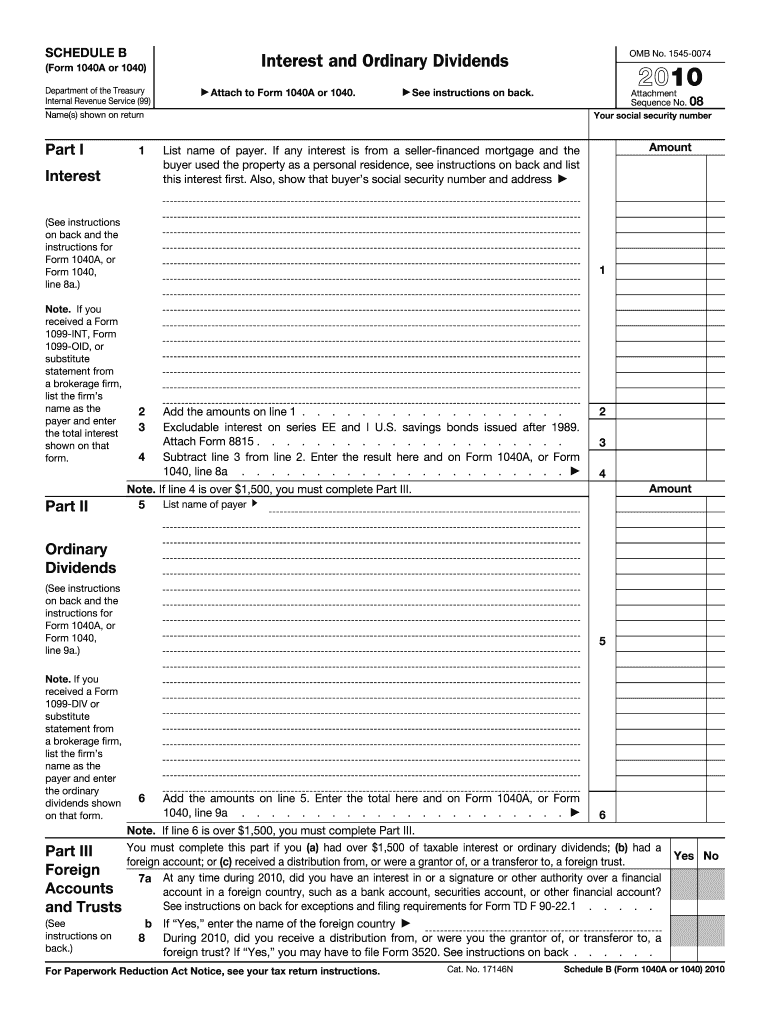
Schedule B is an integral part of the IRS Form 1040, primarily used by taxpayers in the United States to report interest and ordinary dividends. These are critical for individuals who have earned more than $1,500 in taxable interest or dividends during the tax year 2010. This form is essential for detailing the sources of such incomes, including the payers and the amount received, providing transparency and compliance with IRS regulations.
Schedule B comprises sections that not only list the payers of interest and dividends but also include inquiries regarding foreign accounts and trusts. This structure ensures that taxpayers disclose all necessary information pertaining to their financial interests both domestically and internationally. It also includes instructions on how to handle various types of income, such as seller-financed mortgages and nominee distributions, which are crucial to fulfilling IRS guidelines.
How to Use the 2010 IRS Form 1040 Schedule B
To correctly use the 2010 IRS Form 1040 Schedule B, taxpayers must first gather all necessary documents that report interest or dividend income. These documents often include form 1099-INT for interest income and form 1099-DIV for dividend income. Once collected, the information must be accurately transferred onto Schedule B.
- Interest Income: List the payers and the interest amounts received from each. This includes all taxable interest reported on form 1099-INT.
- Dividend Income: Similarly, report dividend payments by listing each payer and the amount, alongside any transactions noted on form 1099-DIV.
- Foreign Accounts and Trusts: Answer questions concerning foreign accounts, specifically if you have interests in or signature authority over accounts in foreign banks, and disclose if you're involved with any foreign trusts.
This meticulous reporting is crucial for ensuring compliance with the tax filing requirements and avoiding any potential penalties or discrepancies with the IRS.
Steps to Complete the 2010 IRS Form 1040 Schedule B
Completing the 2010 IRS Form 1040 Schedule B involves several critical steps, each of which demands attention to detail for accurate filing:
- Review Annual Statements: Begin by reviewing your annual financial statements and consolidating information from forms 1099-INT and 1099-DIV.
- Fill Out Interest Income Section: Enter each payer's name and the taxable interest received. Ensure accuracy to match totals with documents like the 1099-INT.
- List Dividend Income: Similarly, input details of dividend income into the relevant section. This requires care to reflect the correct amounts and the identities of payers.
- Foreign Account Details: If applicable, provide necessary information about foreign bank accounts and any foreign trusts, as it relates to international finance laws and compliance requirements.
- Cross-Verify with Tax Software: Use compatible tax software like TurboTax or QuickBooks to double-check entries for consistency and accuracy.
Following these steps carefully aids in preventing errors that could lead to the filing of an incorrect return or in receiving inquiries from the IRS.
Key Elements of the 2010 IRS Form 1040 Schedule B
Schedule B is segmented into three parts, each focusing on distinct financial elements. Understanding these key components aids in comprehensively completing and submitting the form:
- Part I: Interest Income: This section records all sources of interest income. Details should include payer names and precise amounts.
- Part II: Ordinary Dividends: Here, enter all dividend income data. Accurate recording is crucial to reflect what is shown in financial statements.
- Part III: Foreign Accounts and Trusts: Focuses on the taxpayer's foreign financial involvement, demanding disclosure of any accounts or trusts held outside the United States.
Awareness and understanding of these elements help in adhering to IRS requirements and ensuring the form is filled out correctly and completely.
IRS Guidelines
The IRS offers comprehensive guidelines regarding the completion and submission of Schedule B. These official directives are designed to guide taxpayers through the process, ensuring compliance with federal tax laws.
- Thresholds and Requirements: Any taxpayer receiving more than $1,500 in taxable interest or ordinary dividends must file Schedule B.
- Foreign Account Reporting: Detailed instructions are provided for reporting offshore accounts, detailing necessary disclosures for compliance with U.S. tax law regarding international assets.
- Form Adjustments: Adapt this form based on IRS updates or changes in tax legislation relevant for the 2010 tax year filing.
Following these guidelines is crucial for meeting legal obligations and minimizing risks associated with inaccurate tax reporting.
Who Typically Uses the 2010 IRS Form 1040 Schedule B
Individuals and entities likely to use Schedule B include:
- Taxpayers with Significant Interest or Dividends: Particularly those surpassing the $1,500 threshold in such earnings.
- Investors: Particularly those with broad portfolios that generate notable interest or dividends.
- Persons with Foreign Financial Interests: Those with bank accounts or trusts held overseas must adhere to related compliance demands outlined within the form.
These users’ adherence to disclosure requirements ensures that tax obligations are met correctly and transparently.


Filing Deadlines / Important Dates
Being cognizant of deadlines for submitting Schedule B is pivotal for avoiding late penalties or interest fees. Generally, the form must be filed by April 15 of the following year, in conjunction with the overall tax return deadline.
- Filing Extensions: Taxpayers can apply for an extension, which typically extends the filing deadline to October 15.
- Payment Deadlines: It's important to note that while the filing of the return can be extended, any taxes owed must be paid by the original deadline to avoid penalties.
Staying aware and organized in terms of these deadlines is crucial to maintaining financial and legal consistency.
Penalties for Non-Compliance
Failing to accurately submit Schedule B can lead to a range of penalties, including fines or interest on unpaid taxes:
- Late Filing Penalties: These can accrue daily until the form is submitted.
- Underreporting Income: If interest or dividends are inaccurately reported, the IRS may adjust the return and impose additional taxes or fines.
- Non-Disclosure of Foreign Accounts: Failing to disclose foreign accounts can result in significant penalties, notably if these accounts influence the taxpayer's reported income or deductions.
Understanding these potential penalties underscores the importance of diligence and accuracy in tax filings.