
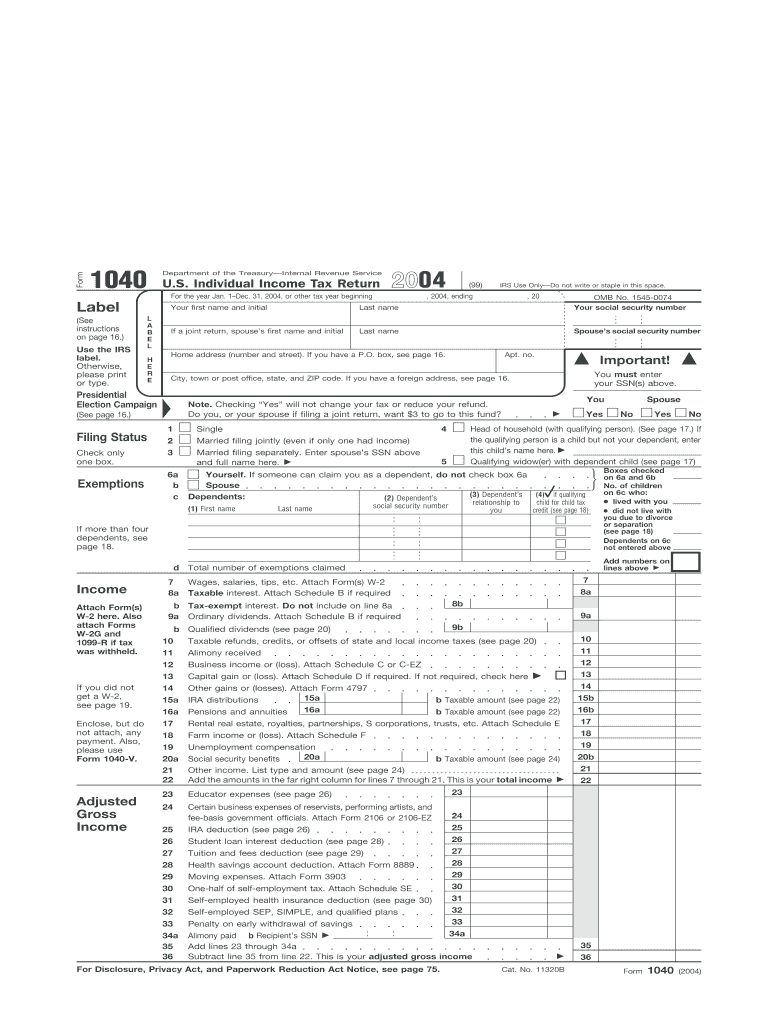







Definition and Purpose of the 2004 IRS Form
The 2004 IRS Form, specifically Form 1040, is a critical document used by taxpayers in the United States to file their individual income tax returns for the year 2004. This form is a comprehensive record of a taxpayer's income, deductions, credits, and tax calculations, enabling the IRS to assess tax liability accurately. The data provided on the form helps the IRS determine whether the taxpayer owes additional taxes or is eligible for a refund. Key elements included in the form are sections for personal information, filing status, and income reporting. By understanding the purpose and structure of Form 1040, taxpayers can ensure compliance with federal tax laws and potentially maximize their tax benefits.
How to Use the 2004 IRS Form
To effectively use the 2004 IRS Form 1040, individuals need to gather relevant financial records from the year 2004. This involves collecting W-2 forms, 1099 forms, records of other income sources, and documentation of deductions and credits. Following a systematic approach when filling out the form is essential:
-
Section 1: Personal Information
Enter the taxpayer's name, address, social security number, and filing status. Ensure accuracy to avoid processing delays. -
Section 2: Income Reporting
Report all sources of income, including wages, salaries, tips, interest, dividends, and capital gains. Use separate schedules for complex income sources. -
Section 3: Deductions and Credits
Itemize deductions if they exceed the standard deduction or claim eligible credits to reduce taxable income.
Completing these sections accurately ensures the correct calculation of tax liability and facilitates a smoother filing experience.
Obtaining the 2004 IRS Form
Taxpayers can obtain the 2004 IRS Form 1040 through several channels. The IRS provides digital copies on its official website, allowing users to download, print, and complete the form manually. Additionally, copies might be available at local libraries, post offices, or IRS offices for those who prefer a physical version. For individuals using software like TurboTax or QuickBooks, these platforms may offer integrated versions of Form 1040. Engaging with a tax professional can also ensure that the correct form and any accompanying schedules are filed.
Completing the 2004 IRS Form: Step-by-Step
Accurate completion of the 2004 IRS Form is crucial. Follow these steps to ensure thorough and compliant filing:
-
Gather all Necessary Documents
- W-2s for employment income
- 1099s for other income (e.g., self-employment, dividends)
- Receipts for deductible expenses
-
Determine Filing Status
Choose the appropriate status, such as single, married filing jointly, or head of household. -
Report All Income
Follow form instructions to report every income type. Attach supplementary schedules if required. -
Calculate Deductions
Decide between itemizing deductions or using the standard deduction to reduce taxable income. -
Claim Eligible Credits
Enter applicable tax credits to reduce overall liability. -
Calculate Taxable Income and Tax Due
Subtract deductions and credits from total income to find taxable income. Use tax tables in the instructions to calculate tax owed. -
Review and Double-Check
Verify all entries for accuracy to avoid errors and potential penalties.
Legal Use and Compliance with the 2004 IRS Form
Using the 2004 IRS Form appropriately involves adhering to legal guidelines and meeting all tax obligations. Taxpayers must submit accurate information by the designated deadlines to avoid penalties. The IRS provides specific instructions that clarify filing requirements and ensure compliance. Inaccuracies or omissions can lead to audits or penalties, while fraudulent claims may result in legal action. It's crucial for taxpayers to maintain accurate records and consult IRS resources or a tax professional to meet these obligations effectively.
Taxpayer Scenarios for the 2004 IRS Form
Different taxpayer scenarios require unique considerations when completing the 2004 Form 1040:
-
Self-Employed Individuals:
Must file Schedule C for business income and expenses, and may owe self-employment tax. -
Retired Individuals:
Report pension income and Social Security benefits, considering any taxable portions. -
Students:
May qualify for education credits or deductions for tuition expenses. -
Homeowners:
Might benefit from deductions for mortgage interest or property taxes.
Each scenario presents specific opportunities and requires a strategic approach to filing taxes effectively.


Filing Deadlines and Important Dates
The filing deadline for the 2004 IRS Form 1040 was typically April 15, 2005. Late filing or payment incurs penalties and interest charges. Taxpayers who filed for an extension had until October 15, 2005, to submit their forms without facing late filing penalties. It's crucial for taxpayers to retain records confirming the timely submission of their returns, such as certified mail receipts or electronic confirmation from the IRS.
Software Compatibility for Filing the 2004 IRS Form
Filing the 2004 IRS Form can be streamlined through tax preparation software such as TurboTax or TaxAct, which provide user-friendly interfaces for completing and submitting tax returns. These programs guide users through each section of the form, automatically calculating taxes and suggesting potential deductions or credits. Additionally, they may offer the option to e-file, which can expedite processing and reduce paperwork. Users must ensure that the chosen software version accommodates the 2004 tax year for the most accurate processing.




