






Definition & Meaning
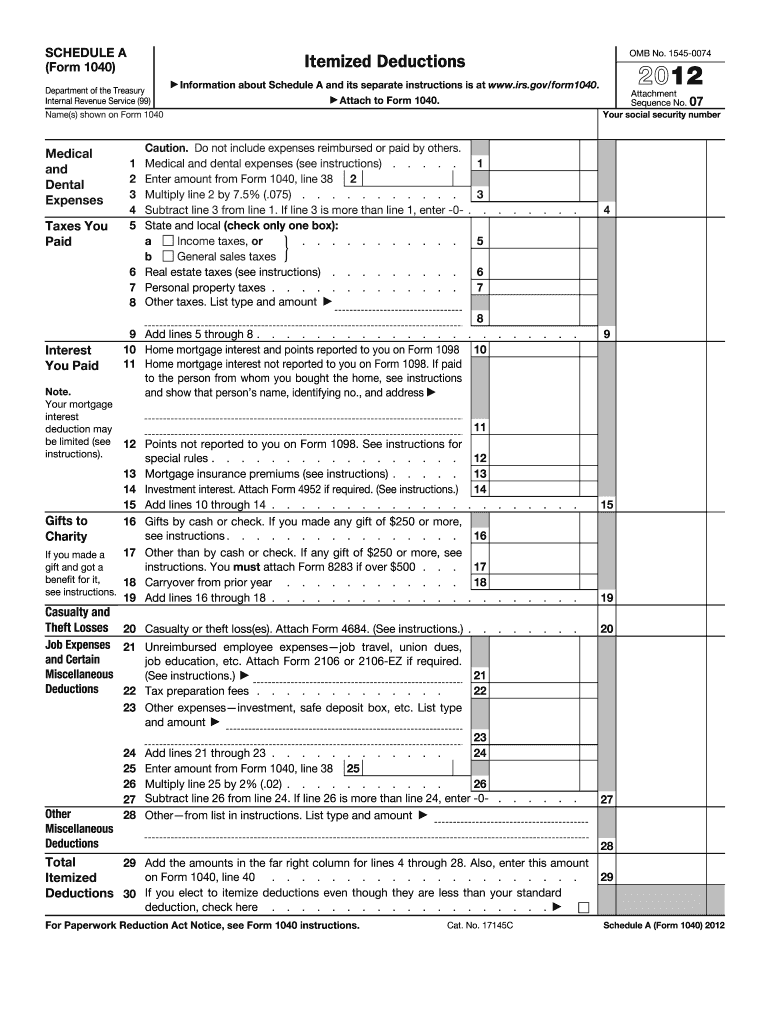
The Schedule A (Form 1040) for 2012 is used by taxpayers in the U.S. to itemize their deductions, reducing their taxable income by reporting eligible expenses. This document is essential for those who opt not to take the standard deduction. The form's main sections include medical and dental expenses, taxes paid, mortgage interest, charitable contributions, and various miscellaneous deductions. It's a vital part of the individual income tax return process, offering potential tax savings to those who qualify.
Steps to Complete the Schedule A 2012 Form
- Gather Required Information: Begin by collecting all receipts, statements, and documentation related to eligible expenses such as medical costs, property taxes, and charitable donations.
- Enter Personal Information: Fill in your name and Social Security Number at the top of the form.
- Calculate Medical and Dental Expenses: Itemize all eligible medical expenses and calculate if they exceed a specified percentage of your adjusted gross income.
- Report Taxes Paid: Include state and local income taxes, real estate taxes, and personal property taxes.
- Detail Mortgage Interest: Enter amounts from Form 1098 for mortgage interest paid and any related expenses.
- Charitable Contributions: Itemize monetary and non-monetary charitable donations, ensuring to keep proper documentation.
- Review and Calculate Miscellaneous Deductions: Include eligible deductions such as unreimbursed job expenses and tax preparation fees.
- Submit Form: Attach Schedule A to your Form 1040 before submission.
Why Should You Schedule a 2012 Form
Itemizing deductions using Schedule A can result in significant tax savings over taking the standard deduction. It allows taxpayers to deduct expenses that directly impact their net income. Individuals with substantial deductible expenses from medical treatments, charitable contributions, or mortgage interest often benefit most. By scheduling a 2012 form, taxpayers leverage detailed reporting to potentially lower their taxable income, thereby decreasing the amount owed to the IRS, or increasing their refund.
Eligibility Criteria
To utilize Schedule A in your 2012 tax filing, ensure you meet the following criteria:
- Your total itemized deductions exceed the standard deduction amount for your filing status.
- You possess detailed records and documentation of deductible expenses.
- Your expenses relate to categories recognized by the IRS, such as health care and charitable donations.
- You consistently itemized in previous tax years, keeping accurate and comprehensive records.
Not everyone will benefit from itemizing deductions, so it's crucial to evaluate whether your specific expenses justify using Schedule A instead of the standard deduction.


Key Elements of the Schedule A 2012 Form
- Medical and Dental Expenses: Deductible if exceeding a specific percentage of adjusted gross income.
- Taxes Paid: Deduct state, local, real estate, and personal property taxes.
- Interest You Paid: Includes mortgage interest and points reported on Form 1098.
- Gifts to Charity: Deduct both cash and property donations, ensuring you have receipts.
- Casualty and Theft Losses: For losses incurred due to unexpected events, if they surpass a set amount of your income.
- Job Expenses: For miscellaneous deductions, including unreimbursed employee expenses.
Important Terms Related to Schedule A 2012 Form
- Adjusted Gross Income (AGI): A critical figure against which most deductions are calculated.
- Standard Deduction: A fixed amount that reduces taxable income without detailed reporting.
- Itemized Deduction: A detailed deduction requiring receipts and proof of expenses.
- Form 1098: Document lenders issue to report interest paid on a mortgage.
- Tax Year 2012: The calendar year for which this specific form applies.
Examples of Using the Schedule A 2012 Form
Here are scenarios where taxpayers might use Schedule A:
- Large Mortgage Payments: A homeowner pays substantial mortgage interest and opts to deduct it.
- High Medical Expenses: A taxpayer undergoes extensive medical treatment far exceeding insurance coverage.
- Charitable Contributions: An individual donates appreciated assets to multiple charities, surpassing deduction limits for their income.
- State Tax Payments: A taxpayer in a high-tax state uses the form to deduct local taxes paid.
Filing Deadlines / Important Dates
For the 2012 tax year, the deadline to file Form 1040, along with Schedule A, was April 15, 2013. However, if you filed for an extension, the extended deadline was October 15, 2013. Filing on time ensures compliance and avoids potential penalties. Keep these dates in mind, while remembering that deadlines change annually, so always check the current tax year's requirements.
Penalties for Non-Compliance
Failing to accurately report deductible expenses or missing the filing deadline can result in penalties. These may include fines, interest on unpaid taxes, and denial of deductions. Non-compliance with IRS regulations can also prompt an audit, adding stress and potential legal costs. It's crucial for taxpayers to adhere to all filing requirements and maintain detailed records to avoid such consequences.
IRS Guidelines
The IRS provides comprehensive guidelines for filing Schedule A, detailing eligible deductions and necessary documentation. Adherence to these guidelines is crucial to ensure that your deductions are accepted. The IRS also offers resources and support for taxpayers who have questions or need further clarification about the form. Always consult the most current IRS instructions for any updates or changes related to itemized deductions.