



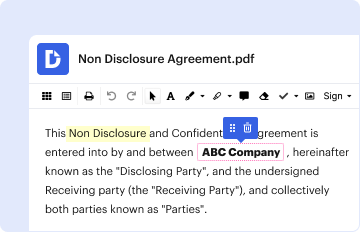
01. Edit your 2019 schedule a online
Type text, add images, blackout confidential details, add comments, highlights and more.

Type text, add images, blackout confidential details, add comments, highlights and more.
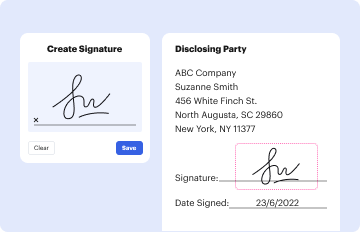
Draw your signature, type it, upload its image, or use your mobile device as a signature pad.
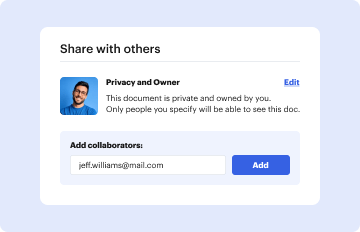
Send schedule a 2019 fillable via email, link, or fax. You can also download it, export it or print it out.
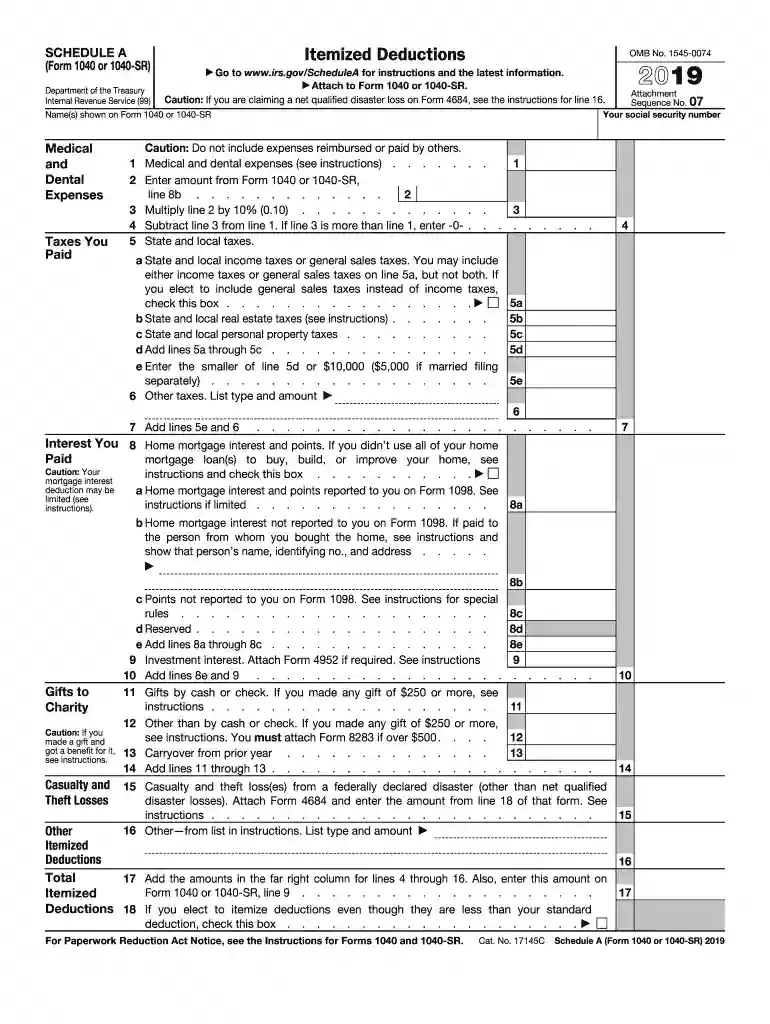
Schedule A (Form 1040 or 1040-SR) is an IRS tax document that allows taxpayers to itemize deductions on their federal income tax returns. This form is used to detail specific deductions, providing an option to list personal expenses that can reduce taxable income beyond the standard deduction. The primary categories for itemization include medical and dental expenses, mortgage interest, state and local taxes, charitable contributions, and casualty losses. By filling out Schedule A, taxpayers may potentially lower their tax liability if their itemized deductions exceed the standard deduction amount.
Gather Supporting Documents: Collect all receipts, statements, and documentation related to deductible expenses throughout the year. This includes medical bills, mortgage interest statements, charitable donations, and tax receipts.
Fill Out Medical and Dental Expenses: Enter the total amount paid for qualified medical and dental expenses, adjusting for any insurance reimbursements received.
Calculate Taxes You Paid: Include property taxes, state and local taxes, and any personal property taxes paid during the year.
Mortgage Interest Deduction: Use Form 1098 provided by your lender to report mortgage interest paid. Also, include any additional interest payments made without a 1098 if applicable.
Charitable Contributions: Input donations made to qualified charities, including cash, goods, or mileage traveled while performing charitable services.
Casualty and Theft Losses: Report any significant damages or losses due to theft or casualty events, ensuring they meet IRS criteria for deduction.
Other Itemized Deductions: Add any miscellaneous deductions that qualify, such as unreimbursed job expenses or tax preparation fees.
Complete and Attach: Total all itemized deductions, compare with the standard deduction, and attach Schedule A to your primary tax return if itemizing.
Schedule A is most beneficial for taxpayers whose total itemized deductions exceed the standard deduction limit for their filing status. It is particularly useful for:


Schedule A must be completed accurately to comply with IRS regulations. Providing false information on this form can result in penalties or legal consequences, including audit risks. It is crucial to maintain thorough records and documentation for all deductions claimed to withstand any IRS scrutiny. Taxpayers should consult IRS guidelines or a tax professional to ensure compliance and legal use of itemized deductions.
The IRS provides specific instructions and limitations on deductions claimed on Schedule A. Taxpayers must adhere to percentage limits, income thresholds, and documentation requirements. For instance, only medical expenses exceeding 7.5% of AGI are deductible, and charitable contributions must meet IRS standards. Consultation of IRS Publication 17 or IRS.gov for updates on deduction rules and thresholds is recommended for accurate completion.
We've got more versions of the 2019 schedule a form. Select the right 2019 schedule a version from the list and start editing it straight away!
| Versions | Form popularity | Fillable & printable |
|---|---|---|
| 2025 | 4.1 Satisfied (27 Votes) | |
| 2024 | 4.9 Satisfied (59 Votes) | |
| 2023 | 4.9 Satisfied (45 Votes) | |
| 2022 | 4.6 Satisfied (38 Votes) | |
| 2021 | 4.8 Satisfied (181 Votes) | |
| 2020 | 4.3 Satisfied (81 Votes) | |
| 2019 | 4.1 Satisfied (40 Votes) | |
| 2018 | 4.2 Satisfied (65 Votes) | |
| 2017 | 4.4 Satisfied (61 Votes) | |
| 2016 | 4.4 Satisfied (673 Votes) | |
| 2015 | 4 Satisfied (35 Votes) | |
| 2014 | 4.3 Satisfied (52 Votes) | |
| 2013 | 4 Satisfied (21 Votes) | |
| 2012 | 3.9 Satisfied (29 Votes) | |
| 2010 | 4 Satisfied (56 Votes) |
At DocHub, your data security is our priority. We follow HIPAA, SOC2, GDPR, and other standards, so you can work on your documents with confidence.
Use Schedule A (Form 1040 or 1040-SR) to figure your itemized deductions. In most cases, your federal income tax will be less if you take the larger of yourRead more
by A SCHEDULE Cited by 4 5 State and local taxes. a State and local income taxes or general sales taxes. You may include either income taxes or general sales taxes on line 5a,Read more
Jan 19, 2017 Attach a computation of your NOL using. Form 1045, Schedule A, and, if it applies, your. NOL carryover using Form 1045, Schedule B, discussedRead more


