






Definition and Meaning
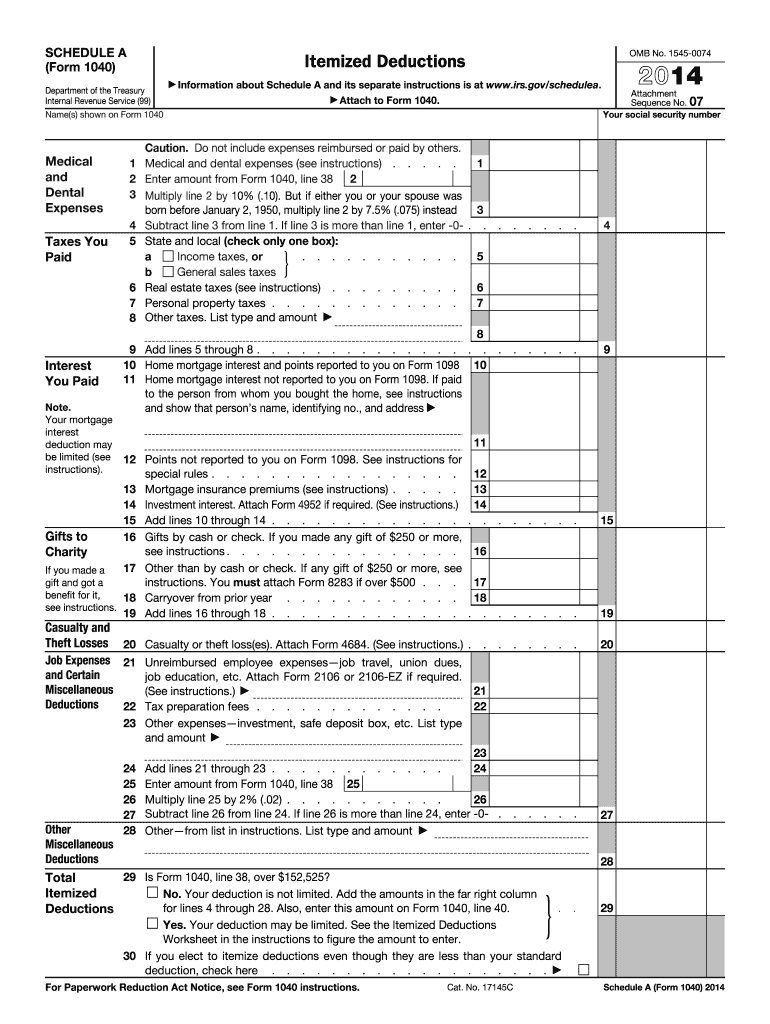
The 2014 IRS Schedule Form is an integral part of a taxpayer's annual return filing with the Internal Revenue Service (IRS). Used primarily for providing supplementary detail, this form can include various components, each tailored to capture specific information about a taxpayer's income, deductions, or credits. For example, taxpayers might use variants like Schedule A for itemizing deductions or Schedule C to report income and expenses related to a sole proprietor business. Each schedule serves a unique purpose and complements the main 1040 tax form by providing additional details that influence the computation of taxable income.
How to Use the 2014 IRS Schedule Form
When utilizing the 2014 IRS Schedule Form, taxpayers must first determine which schedule applies to their situation based on their financial activities throughout the year. The form can be used to report various types of income, such as self-employment earnings on Schedule C or rental income on Schedule E. Taxpayers should ensure they have the necessary supporting documentation, like receipts or statements, to accurately fill out the schedules. Once completed, these schedules must be attached to the taxpayer’s 1040 form and submitted to the IRS, as they contribute to calculating the correct taxable income and any amount owed or due for refund.
Steps to Complete the 2014 IRS Schedule Form
-
Identify Required Schedules: Review your financial records to determine which schedules are applicable. This can vary from needing to report itemized deductions to documenting business profits or losses.
-
Gather Documentation: Collect all necessary paperwork, including but not limited to, W-2s, 1099 forms, earnings reports, and receipts for deductions.
-
Complete Each Section: Accurately fill out each applicable part of the schedule forms, ensuring that calculations are precise. Utilize tax software or consulting with a tax professional can be helpful for complex situations.
-
Review and Verify: Double-check all entries for accuracy and completeness. Errors or missing information could slow down the processing or lead to penalties.
-
Attach to Main 1040 Form: Once each relevant schedule is accurately completed, they should be attached to your 1040 form.
-
Submit to IRS: Choose your preferred submission method, whether electronically through IRS-approved software or by postal mail, and ensure it is submitted by the designated deadline.
Important Terms Related to the 2014 IRS Schedule Form
- Adjusted Gross Income (AGI): The total income subject to taxation after adjustments such as contributions to retirement accounts are factored in.
- Deductions: Expenses that can be subtracted from gross income to reduce taxable income.
- Credits: Direct reductions in tax liability, distinct from deductions, that decrease the amount of tax owed.
- Income Types: Includes earned (like salary) and unearned income (like interest or dividends) reportable under various schedules.
IRS Guidelines
The IRS guidelines emphasize clear instructions on filling out each schedule form. Taxpayers must ensure compliance with these guidelines, which provide direction on the eligibility and applicability of each form. The IRS website offers detailed instructions for each schedule, helping taxpayers understand the nuances of each line item. Staying informed about guideline updates, especially during tax year changes, is essential to remain compliant and maximize tax benefits.
Filing Deadlines and Important Dates
Taxpayers using the 2014 IRS Schedule Form must be aware of the standard filing deadline, typically on April 15 of the year following the tax year. Extensions may be requested, pushing the deadline to October 15; however, extensions for payment do not apply. Any taxes owed must be paid by the original April deadline to avoid interest and penalties.
Form Submission Methods
The 2014 IRS Schedule Form can be submitted in a variety of ways. Electronic filing through IRS-approved tax preparation software is encouraged due to its efficiency and minimized error rate. Alternatively, taxpayers can choose to mail their completed forms to the appropriate IRS address, which varies depending on location and whether a payment is included. In-person submission is uncommon but facilitated at some IRS centers.
Penalties for Non-Compliance
Failure to properly submit the 2014 IRS Schedule Form and associated documentation can result in significant penalties. These may include failure-to-file and failure-to-pay penalties, both of which accrue interest over time. Additionally, inaccuracies or fraudulent information can lead to audits, further fines, and potential legal action. It is crucial for taxpayers to comply with all IRS requirements and deadlines to avoid such consequences.