
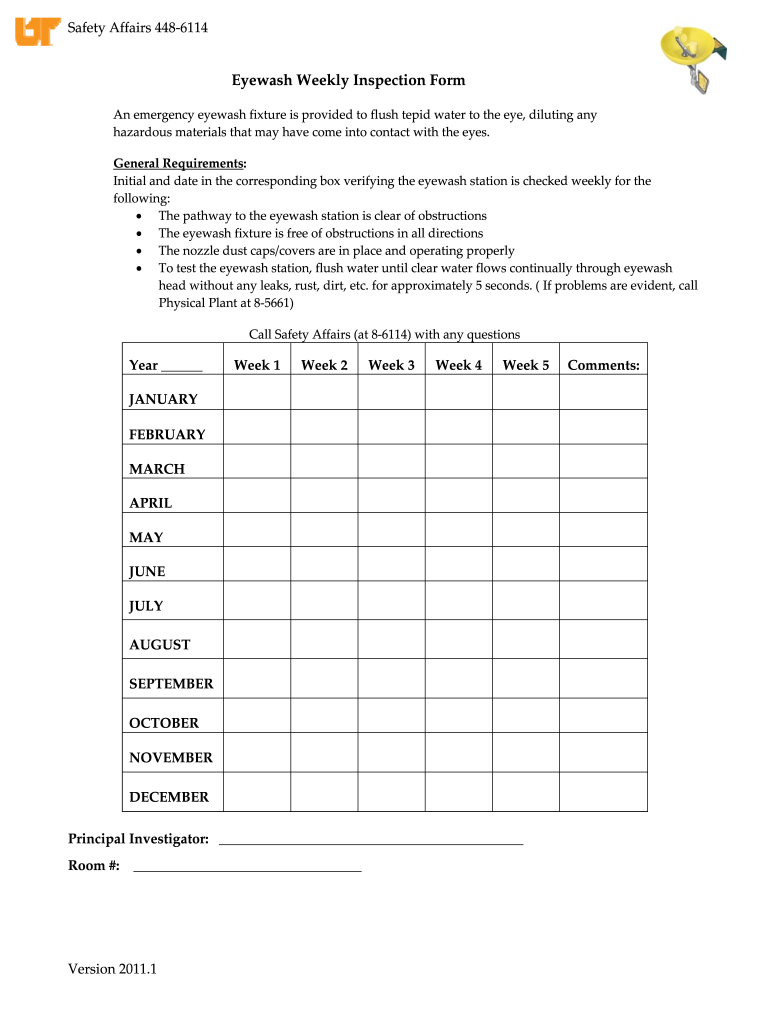







Understanding the Printable Eyewash Station Checklist
A printable eyewash station checklist is an essential tool for ensuring compliance with safety regulations and for maintaining the functionality of eyewash stations in various environments, such as laboratories, manufacturing facilities, and healthcare settings. This checklist serves as a systematic approach to regularly inspect and document the condition of these emergency stations, which are vital for providing immediate rinsing of eyes in case of exposure to hazardous substances.
Purpose and Importance of the Eyewash Station Checklist
The eyewash station checklist primarily serves to:
- Ensure Safety: Regular inspections help confirm that eyewash stations are properly maintained and ready for immediate use in emergencies. This proactive approach significantly reduces the risk of injury while promoting a safe work environment.
- Maintain Compliance: Organizations must adhere to Occupational Safety and Health Administration (OSHA) regulations that mandate specific requirements for eyewash stations. A checklist aids in documenting compliance efforts and can be critical during inspections.
- Track Maintenance History: By documenting inspections on a checklist, organizations can keep an accurate record of maintenance, repairs, and any deficiencies noted during checks. This history is invaluable for audits and safety reviews.
Key Elements of a Printable Eyewash Station Checklist
A comprehensive eyewash station inspection checklist typically includes several key elements:
- Location Verification: Confirming that the eyewash station is clearly marked and easily accessible within a specified distance from potential hazards is critical.
- Visual Condition Check: Inspecting the station's physical condition, including the basin and nozzles, ensures no physical obstructions or damage could impede use.
- Water Flow Assessment: Testing the flow of water from the eyewash station is vital. The water must be clean, at a comfortable temperature, and free from contaminants. This part of the checklist includes checking that the flow rates meet the required specifications.
- Functionality of Nozzles: Ensuring that the nozzles are unobstructed and functioning correctly helps guarantee that the eyewash station delivers an effective spray. This includes verification that nozzle covers are in place.
- Maintenance Documentation: Provide a section to record maintenance dates, responsible personnel, and any issues encountered, which facilitates proactive problem-solving.
Steps for Conducting an Eyewash Station Inspection
Regular inspections help uphold compliance and safety standards. Here are the steps involved in conducting an effective eyewash station inspection:
-
Identify the Eyewash Station Locations: Familiarize yourself with all eyewash stations within the work area. Ensure that the paths to these stations are unobstructed and clearly marked.
-
Conduct Visual Inspections: Confirm that all components, including the sink, eyewash nozzles, and water supply, are in good condition. Look for signs of corrosion, leaks, or damage.
-
Test Water Flow: Turn on the eyewash station and observe the flow of water. It should be a steady stream without interruptions. Check the temperature for comfort and test for water clarity.
-
Assess Nozzle Condition: Ensure the nozzles are clean, unobstructed, and functional. Replace or clean nozzles that are blocked or damaged.
-
Consult and Document Findings: After conducting the inspection, document your findings in the provided sections of the checklist. Include any maintenance actions required and assign responsibility for follow-up work.
Frequency of Inspections
Organizations should perform inspections of eyewash stations at least monthly, adhering to specific environmental requirements and manufacturer’s recommendations. Certain workplaces, such as chemical manufacturing facilities, may require more frequent inspections due to the nature of hazards present.
- Weekly Checks: For high-risk areas, a weekly inspection may be warranted, ensuring that conditions remain optimal.
- Annual Review: Conduct a full review and re-evaluation of the emergency eyewash station setup annually to ensure ongoing compliance and functionality.
Additional Considerations for Eyewash Stations
- Training Employees: It's important that all employees know the location of eyewash stations and the procedure for using them effectively. Ongoing training and drills contribute to a culture of safety.
- Use of Technology: Some organizations are utilizing digital tools to maintain and document inspection logs, making it easier to track inspection history and maintain compliance.
By following a thorough and regular inspection protocol using a printable eyewash station checklist, organizations can enhance safety measures and ensure a well-prepared response in case of emergencies.




