







Definition & Meaning
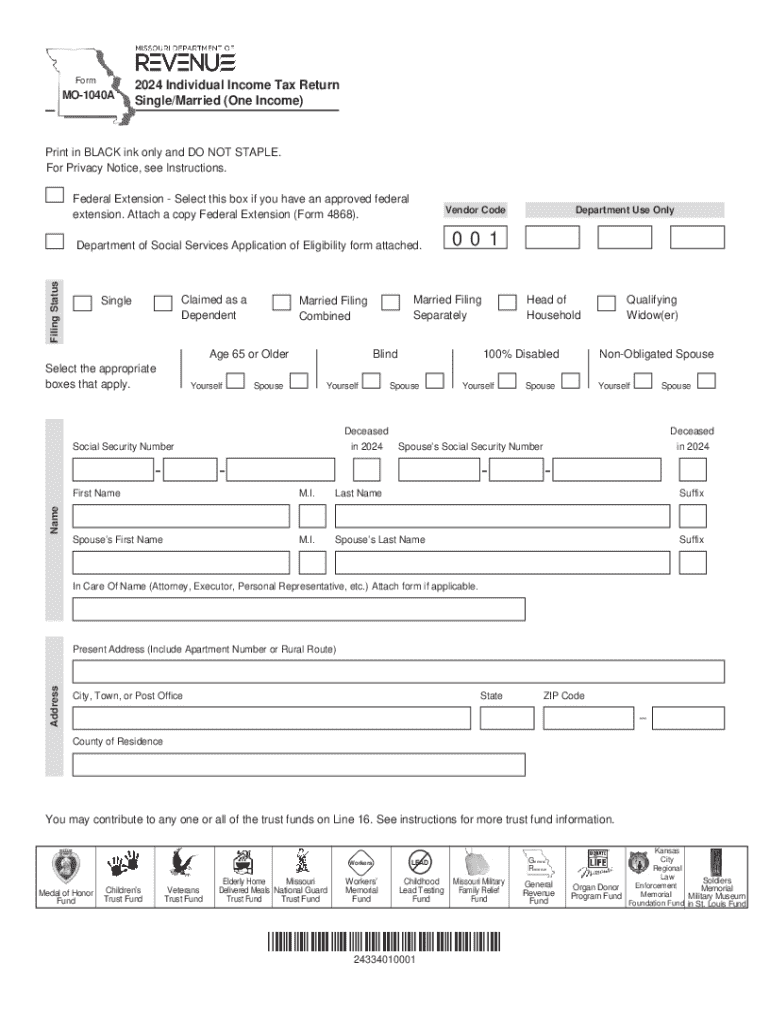
The MO-1040 Book, also known as the Missouri Individual Income Tax Long Form, is a tax document used by residents and non-residents of Missouri to report their income, calculate taxes owed, and claim any applicable deductions and credits. This form is crucial for ensuring accurate tax submissions, particularly for individuals with complex financial situations such as multiple income sources. It includes areas for various personal and financial details, enabling taxpayers to provide comprehensive information to the state.
Importance of Detailed Reporting
Understanding the sections of the MO-1040 Book is vital, as it allows taxpayers to comply with state taxation rules. This form provides the format for Missouri residents to reconcile their tax responsibilities with both state and federal requirements. It serves as the official document to report adjusted gross income, deductions, and tax calculations in line with Missouri laws.
How to Use the MO-1040 Book
When approaching the Missouri Individual Income Tax Long Form, individuals need to gather essential documentation to fill out each part accurately. The form requires information about income, deductions, credits, and tax payments. Having prior-year tax returns can assist in correctly transferring pertinent data and maintaining consistency in tax filing.
Step-by-Step Completion Process
- Personal Information: Start by entering your full name, address, and Social Security Number. Ensure these details match your identification records.
- Filing Status: Indicate your filing status, whether single, married filing jointly, etc. This choice will affect tax rates and standard deduction amounts.
- Income Recording: Accurately list income from all sources, such as wages, dividends, business earnings, and interest. Utilize statements like W-2s or 1099s to verify amounts.
- Deductions and Credits: Examine potential deductions and credits that reduce taxable income. This could involve healthcare expenses, educational credits, or contributions to retirement savings.
- Tax Calculation: Use provided tables to compute the tax liability based on your taxable income after adjustments.
- Final Adjustments and Payments: Factor in any prepayments, withholding, or extra payments sent to the state to determine if you owe further taxes or are due a refund.
Steps to Complete the MO-1040 Book
Filing your taxes can be simplified by following a methodical approach to filling out the MO-1040 Book. Each section of the form builds upon the previous, creating an organized path to determine tax liabilities or refunds.
Organizing and Preparing Information
- Gather Required Documents: Collect all relevant income and expense documents, ensuring up-to-date and factual entries.
- Calculate Income: Aggregate total income using IRS guidelines to ensure each source is included.
- Determine Deductions: Identify qualifying deductions to reduce taxable income.
- Apply Credits: Recognize applicable credits that diminish overall tax due.
- Reconcile Payments: Compare taxes owed to payments made throughout the year.
- Review and Submit: Double-check calculations for accuracy before submission, either electronically or via mail.
Key Elements of the MO-1040 Book
Understanding the essential parts of the MO-1040 ensures that no crucial details are overlooked during preparation.
Components of the Form
- Personal and Filing Information: Basic taxpayer identity and filing status.
- Income Sources: Listings from wages, interest, dividends, and other income types.
- Adjustment Entries: Deduction listings like student loan interest or retirement contributions.
- Taxable Income: Calculations to determine the base for tax liability.
- Tax, Credits, and Payments: Areas where tax is computed, reduced by eligible credits, and compared against payments made.
- Refund or Amount Due: Final reconciliation of tax obligations for the year.
Required Documents
Specific documentation is crucial in correctly completing the MO-1040 Book. Taxpayers should be prepared with both personal and financial records.
Essential Preparatory Materials
- W-2 Forms: For wage and salary details from employers.
- 1099 Forms: Reporting other income like interest, dividends, and independent contracting.
- Interest Statements: Such as mortgage or educational loans for applicable deductions.
- Previous Tax Return: To ensure consistency and accuracy in reporting.
- Social Security and ID Numbers: For verifiable identity information.
- Receipts for Deductibles: Documentation supporting all claimed deductions.
Filing Deadlines / Important Dates
Staying informed of the latest tax deadlines can prevent late fees and penalties. The due dates for the MO-1040 typically align with those of federal returns.
Key Deadlines
- April 15: Standard deadline for filing an individual Missouri tax return. Extensions generally require submission of a formal request by this date.
- October 15: Extended filing deadline for those who filed for an extension.
- Quarterly Dates: For individuals with estimated payments, these typically occur in January, April, June, and September.
Penalties for Non-Compliance
Failing to adhere to submission deadlines or inaccurately reporting tax obligations can lead to financial penalties and legal repercussions.
Consequences of Errors or Late Filing
- Monetary Fines: Percentage-based penalties on unpaid taxes or late submissions.
- Interest Charges: Accumulate daily on unpaid taxes from the filing due date.
- Legal Notices: Persistent non-compliance may invite legal measures or negotiations.
Digital vs. Paper Version
Both digital and paper formats of the MO-1040 Book offer distinct features and can be selected based on individual preferences for convenience and accessibility.
Comparing Filing Options
- Digital Submissions: Provide quicker processing, error-checking tools, and immediate confirmation.
- Paper Filing: Offers a tactile review opportunity, preferred by those uneasy with technology.
Software Compatibility
Many tax software programs support Missouri's MO-1040, streamlining the process with integrated data import and export capabilities.
Common Compatible Platforms
- TurboTax: Allows import of W-2 and 1099 forms, with guidance for state-specific entries.
- H&R Block Software: Features error checking and deduction discovery tools.
- QuickBooks: Facilitates integration for users with business expenditures.
Taxpayer Scenarios
Different taxpayer situations impact how the MO-1040 Book is utilized, with certain categories requiring special consideration.


Case Variations
- Self-Employed Individuals: Need to report income and pay self-employment taxes.
- Retirees: May list pensions and Social Security income.
- Students: Report tuition payments and potential educational credits.
By providing detailed coverage of each essential aspect of the MO-1040 Book, tax filers can navigate their responsibilities with confidence and accuracy.




