






Definition and Meaning of NJ Special Civil Part Forms
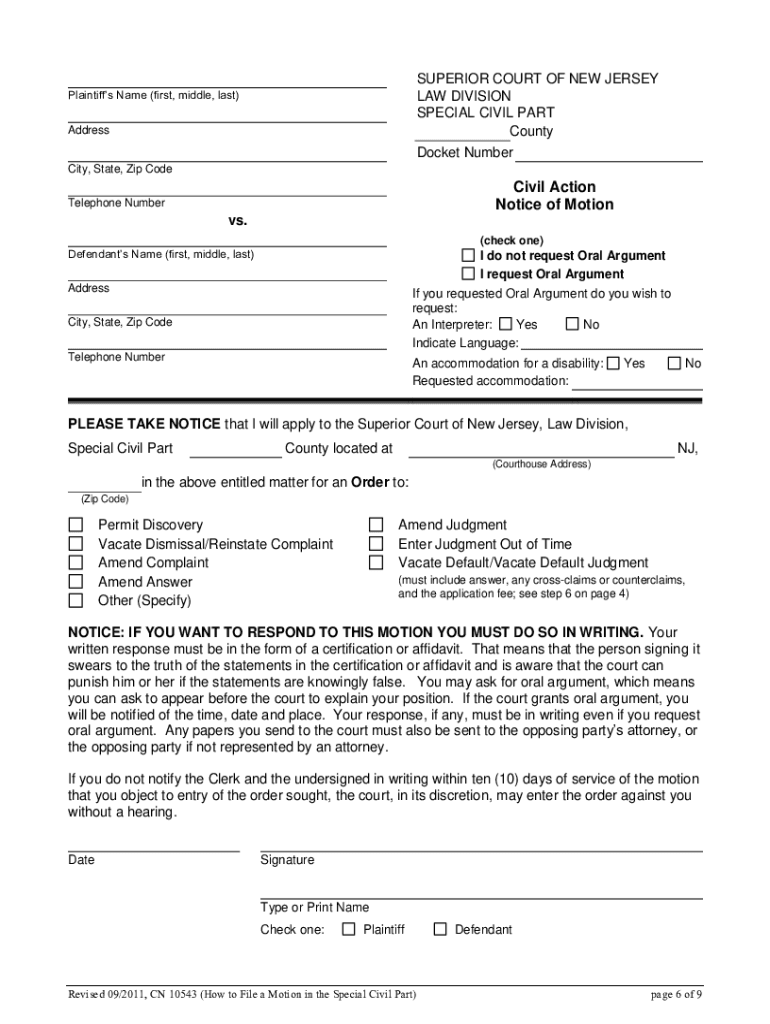
The NJ Special Civil Part forms are a set of legal documents specifically designed for use within the Special Civil Part of the New Jersey Superior Court. This court deals primarily with civil disputes involving amounts up to $15,000. The forms are utilized for various purposes, including landlord-tenant disputes, small claims, and other civil matters. Proper understanding of these forms and their functions is essential for parties wishing to navigate the New Jersey legal system effectively.
The most common forms include the Special Civil Part Complaint and the Counterclaim form. These documents are structured to collect essential details about the parties involved, the nature of the claim, and the desired relief. Accuracy in completing these forms is crucial, as errors may lead to delays or legal complications.
Steps to Complete the NJ Special Civil Part Forms
Completing the NJ Special Civil Part forms requires attention to detail and a thorough understanding of the legal requirements. The following steps outline the process:
- Identify the Correct Form: Determine which specific form is necessary for your case, such as a complaint or a motion.
- Gather Required Information: Collect all pertinent information, including the names and addresses of involved parties, the case number (if applicable), and relevant facts supporting your claim.
- Complete the Form:
- Fill in the form legibly, ensuring accuracy in all entries.
- Include any necessary attachments or supporting documentation as indicated by the form's instructions.
- Review for Completeness: Double-check that all sections of the form are filled out and that there are no inconsistencies or missing information.
- File the Completed Form: Submit the form to the appropriate division of the New Jersey Superior Court, either in-person, by mail, or using an online filing system if available.
Completing these forms correctly is fundamental to ensuring that your legal issue is addressed promptly and effectively.
Important Terms Related to NJ Special Civil Part Forms
Understanding the terminology associated with NJ Special Civil Part forms is essential for effectively navigating the legal system. Here are some key terms:
- Complaint: A legal document that outlines the plaintiff's grievances and the nature of the claim being brought against the defendant.
- Defendant: The individual or entity being accused or sued in a civil action.
- Service of Process: The delivery of legal documents to the parties involved, ensuring notice of the proceedings.
- Judgment: The formal decision made by the court on the matter presented before it.
Familiarity with these terms helps individuals accurately complete forms and understand court proceedings.
Legal Use of NJ Special Civil Part Forms
The legal utilization of NJ Special Civil Part forms is tightly regulated to ensure that the rights of all parties are protected. These forms are specifically structured to align with New Jersey's laws governing civil disputes.
- Jurisdiction: The Special Civil Part has jurisdiction over cases involving claims up to $15,000, making it a vital resource for individuals seeking legal resolution without the need for a higher court.
- Form Validation: All forms must adhere to the requirements set forth by the court, including proper signatures, dates, and necessary supporting documentation. Non-compliance can result in dismissal of the case or delays.
- Filing Procedures: The forms must be filed in accordance with local court rules; this includes submitting to the correct county court and within established timelines.
Understanding these legalities is critical for ensuring compliance throughout the litigation process.
Who Typically Uses the NJ Special Civil Part Forms
NJ Special Civil Part forms are commonly utilized by a range of individuals and entities within the New Jersey judicial system. Key users include:
- Landlords and Tenants: Frequently, these forms are used in disputes regarding lease agreements, eviction proceedings, or claims for damages.
- Small Business Owners: Business owners may use these forms to recover small claims against clients or suppliers.
- Individuals with Small Claims: Ordinary citizens often file claims for payment disputes, service failures, or personal property damage through the Special Civil Part.
The accessibility of these forms makes them a practical option for resolving lower-value claims efficiently.


State-Specific Rules for NJ Special Civil Part Forms
Each state has distinct rules governing the use and filing of civil forms, and New Jersey is no exception. Key state-specific rules include:
- Filing Fees: There are specific fees associated with filing NJ Special Civil Part forms, which may vary by county and form type.
- Time Limits: There are strict deadlines for filing certain forms, such as complaints or motions, that affected parties must adhere to for their claims to be considered.
- Revisions: The New Jersey courts periodically update the forms and requirements for their use. Staying informed about these changes is essential for successful form completion and submission.
Compliance with these state-specific guidelines is crucial to ensure that your legal filings are valid and enforceable.
Examples of Using the NJ Special Civil Part Forms
Practical examples help illustrate the various applications of NJ Special Civil Part forms:
-
Landlord-Tenant Dispute: A landlord may utilize a Special Civil Part Complaint form to initiate eviction proceedings against a tenant who has failed to pay rent for three consecutive months. In this case, the landlord will detail the amount owed, relevant lease terms, and any prior communications regarding the delinquency.
-
Small Claims Filing: An individual seeking to recover $1,200 for damages caused by a contractor failure may file a complaint in the Special Civil Part. This form will outline the incident, provide evidence of the claim, and state the relief sought.
These examples illustrate how the forms are tailored to address specific civil litigation scenarios effectively, enabling individuals to pursue justice in a streamlined manner.
Filing Deadlines and Important Dates
Awareness of filing deadlines is crucial for anyone engaging with NJ Special Civil Part forms. Important dates to keep in mind include:
- Initial Filing Deadline: Civil complaints generally must be filed within a set period following the occurrence of the incident (for example, six years for most contracts).
- Response Times: Defendants are often required to respond to complaints within a specific timeframe, typically 35 days from the date of service. Failure to respond may result in a default judgment against them.
- Hearing Dates: Once the forms are filed, the court will schedule a hearing date, which is communicated to the parties involved. Adhering to these dates is crucial for proper case resolution.
Being aware of and adhering to these deadlines can significantly affect the outcome of civil litigation.