

Improve your template administration with Order to Show Cause Forms
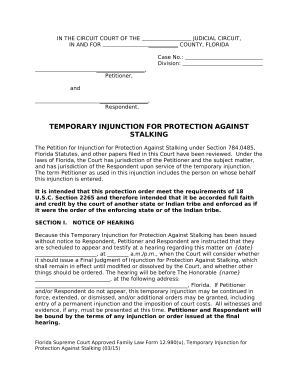
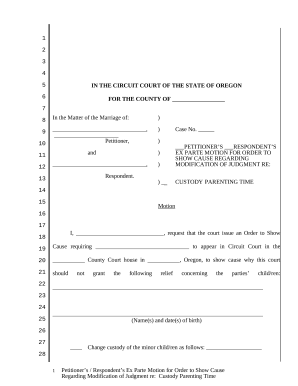
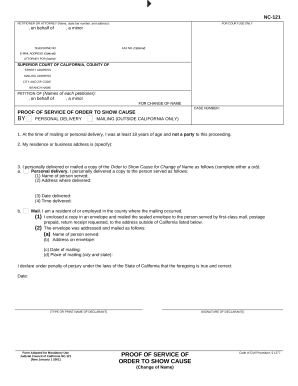
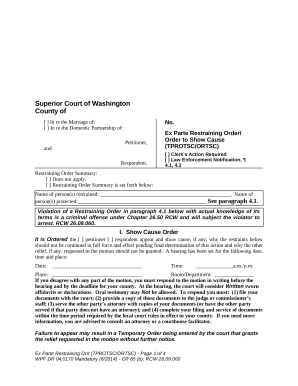
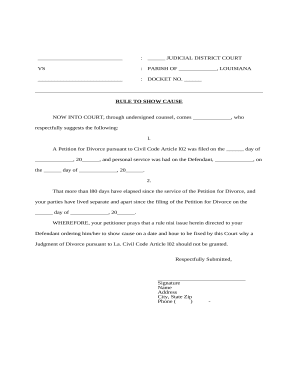
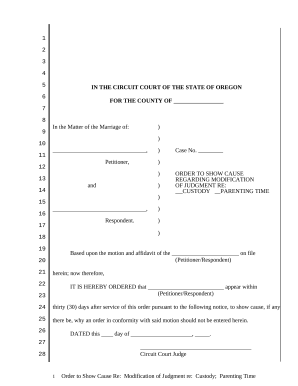
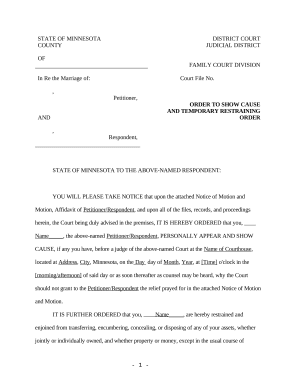
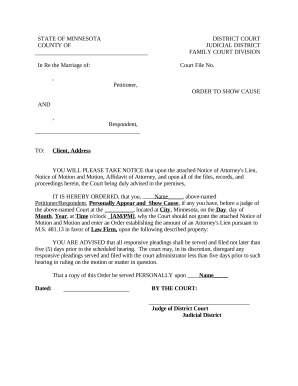
Your workflows always benefit when you can easily get all the forms and documents you require on hand. DocHub gives a a huge library of forms to relieve your daily pains. Get hold of Order to Show Cause Forms category and quickly browse for your document.
Begin working with Order to Show Cause Forms in several clicks:
- Open Order to Show Cause Forms and locate the document you need.
- Click Get Form to open it in our online editor.
- Start modifying your file: add fillable fields, highlight paragraphs, or blackout sensitive facts.
- The app saves your changes automatically, and after you are ready, you can download or distribute your form with other contributors.
Enjoy seamless record managing with DocHub. Discover our Order to Show Cause Forms collection and discover your form today!
Commonly Asked Questions about Order to Show Cause Forms
What is an example of a show cause order?
For example, if a party requests that the court find another party in contempt of an existing court order, the judge will typically issue an Order to Show Cause Re Contempt to the party accused of being in contempt of court.
What happens after a show cause notice?
What happens after an employee responds to a show cause letter? - After receiving the employees response, HR professionals should review it carefully, along with any supporting evidence or documentation provided. Based on the response, a decision will be made regarding any further action or disciplinary measures.
How do you write a show cause order?
Outlining the required elements of an Order to Show Cause Identify the parties involved in the legal action. Set forth the relief requested. Specify the legal basis for the requested relief. Specify the timely filing of the Order to Show Cause. Identify a date and time for the hearing.
What is the difference between a motion and an order to show cause?
Both a motion and an order to show cause are used to ask the court to do something in a case. But, a motion has strict rules about the number of days it can be served before the court date.
What is an Order to Show Cause in the federal rules of civil procedure?
The Court may send out an Order to Show Cause to tell you that you did not follow the Courts rules, directions or deadlines and to instruct you to file one or more documents by a certain date. Your Response must show a good reason (cause) for not following the Courts rules, directions or deadlines.
What is an example of a show cause?
Common reasons for filing a Rule to Show Cause include the respondent failing to pay court-ordered child support or alimony, failing to pay debts as required, not allowing visitation with children, or not adhering to child-related behavior restraints.
How do you serve an Order to Show Cause in NY?
After you file the papers, you must have someone deliver a copy of the Order to Show Cause (form NC-120) and other forms to your childs other parent at least 30 days before your court date. This is called serving papers.
How to file How to file an order to show cause?
A notice to show cause is the starting point for disciplinary action. It will describe the alleged misconduct, set out the specific grounds for the disciplinary action and advises how you can respond to the notice. The show cause process is your opportunity to persuade Fair Trading not to take disciplinary action. Notice to show cause | NSW Fair Trading nsw.gov.au starting-a-business nsw.gov.au starting-a-business
Related Templates

Reptile licence qld
The document is an application form for a permit to take water under the Water Act 2000 (Qld). It outlines the process f ...

Form 80 immigration australia pdf Form 80 immigration australia pdf Australian immigration form 80 p
Form 80 immigration australia pdf Form 80 immigration australia pdf Australian immigration form 80 p
The document provides detailed instructions and requirements for completing the Australian immigration Form 80, specific ...

STEP 2 PROMPTED VOIDING TRIAL - UCLA
The document outlines a procedure for conducting a prompted voiding trial for residents, detailing how to record results ...

DOT ADM-3016: Equity Claims for Goods Services of $12,500 or
The document outlines the process for filing equity claims for goods and services valued at $12,500 or less against the ...
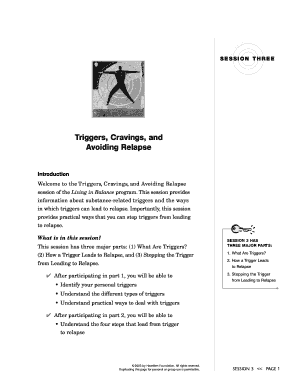
Triggers, Cravings, and Avoiding Relapse - The Recovery
This document outlines Session Three of the Living in Balance program, focusing on understanding triggers, cravings, and ...

Form: Application for registration as a British citizen (form ARD)
The document is the Form ARD, an application for registration as a British citizen, intended for individuals in the Chan ...
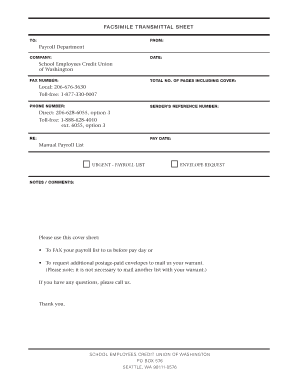
FACSIMILE TRANSMITTAL SHEET - bschoolemployeescuorgb
The document is a facsimile transmittal sheet intended for the Payroll Department of the School Employees Credit Union o ...
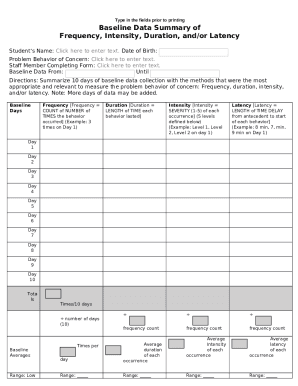
Baseline Data Summary of Frequency, Intensity, Duration,
The document outlines a Baseline Data Summary for monitoring a student's problem behavior over a 10-day period. It inclu ...


