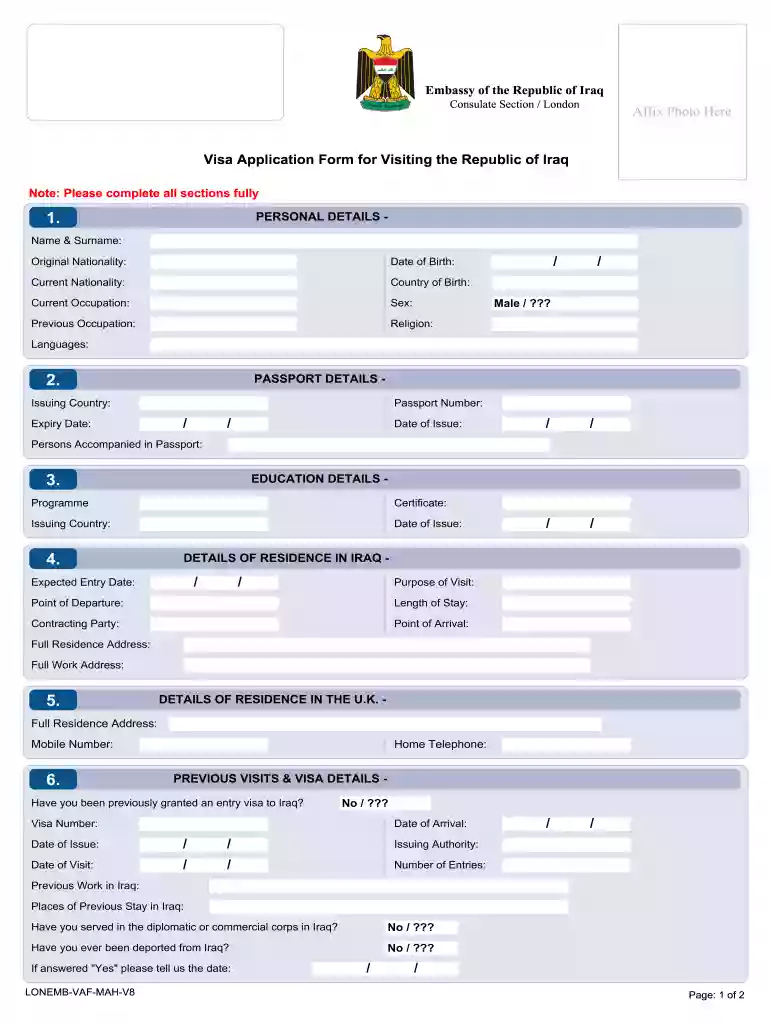
Definition and Purpose of the Iraq Visa
The Iraq visa is an essential document that permits foreign nationals to enter, stay, and exit Iraq for specific purposes, such as tourism, business, or family visits. Each visa type comes with unique conditions and validity periods that align with the intended activities of the visitor.
- Types of Iraq Visas: Visitors can apply for various types of visas, including tourist visas, business visas, and transit visas. Each visa serves different purposes and has specific application requirements.
- Duration of Stay: The validity period for an Iraq visa can vary from a few days to several months, depending on the visa type issued by the Iraqi authorities.
- Restrictions: Different visas may come with conditions that limit the activities one can undertake while in Iraq. Understanding these restrictions can prevent legal complications.
How to Obtain the Iraq Visa
Acquiring an Iraq visa involves several key steps that applicants must follow to ensure successful processing.
- Determine Visa Type: Identify the specific visa type based on the purpose of travel. Common types include tourist, business, and transit visas.
- Gather Required Documents: Prepare essential documents, including a completed visa application form, valid passport, passport-sized photographs, and any supporting documentation relevant to the visa type.
- Submit Application: Submit the completed visa application to the appropriate Iraqi consulate or embassy in your home country or apply online if the e-visa option is available.
- Processing Time: Typically, visa processing may take anywhere from a few days to several weeks, depending on the visa type and the embassy's workload.
Steps to Complete the Iraq Visa Application
Completing the Iraq visa application requires attention to detail to avoid errors that could lead to delays or rejections.
- Download the Visa Application Form: Access the Iraq visa application form in PDF format from the official consulate or embassy website.
- Fill Out the Form: Provide accurate personal information, including full name, passport details, and travel plans.
- Attach Supporting Documents: Include necessary documents such as proof of accommodation in Iraq, a travel itinerary, and financial statements.
- Review and Verify Information: Double-check all entered information to ensure that it aligns with the documents provided.
- Submit the Application: Follow the outlined procedure for submission, either online or in person, at the relevant embassy or consulate.
Required Documents for Iraq Visa Application
To enhance the likelihood of visa approval, applicants must furnish several critical documents.
- Passport: A valid passport with a minimum of six months' validity remaining is typically required.
- Visa Application Form: The completed Iraq visa application form must be submitted in accordance with the specified guidelines.
- Photographs: Recent passport-sized photographs that meet the specifications outlined in the application requirements.
- Travel Itinerary: A detailed itinerary outlining travel plans, including entry and exit dates, along with accommodation reservations.
- Financial Evidence: Provide proof of sufficient funds to cover expenses during the stay in Iraq, such as bank statements or sponsorship letters.
Key Elements of the Iraq Visa Process
Understanding the key elements of the Iraq visa process can facilitate a smoother application experience.
- Eligibility Criteria: Different visa types carry distinct eligibility requirements. Applicants should ensure they meet the criteria for the visa they intend to apply for.
- Approval Time: The processing time for an Iraq visa can fluctuate based on various factors, including the diplomatic mission's location and visa type applied for. Be prepared for potential delays.
- Renewal and Extension: If an extended stay is necessary, applicants must familiarize themselves with the renewal or extension process, often requiring prior approval and additional documentation.
Legal Use of the Iraq Visa
Using an Iraq visa involves adhering to the legal stipulations outlined by Iraqi immigration authorities.
- Compliance with Terms: Visa holders must abide by the terms of their visas, including duration of stay, activity restrictions, and entry/exit requirements to avoid penalties.
- Understanding the Law: While traveling in Iraq, it's essential to understand and respect local laws and customs, which may differ significantly from those in the U.S.
- Overstay Consequences: Exceeding the allotted stay can lead to fines, deportation, or a ban on future entries into Iraq. Awareness of these consequences aids in planning your departure appropriately.
Examples of Using the Iraq Visa
The Iraq visa serves various purposes depending on the traveler's intentions.
- Tourism: A tourist may visit Iraq to experience its rich historical and cultural heritage, including ancient sites like Babylon and Ur.
- Business Engagements: Business professionals often secure visas to participate in conferences, establish partnerships, or oversee projects in the growing market.
- Family Visits: Individuals with family in Iraq may apply for a visa to reunite with relatives, attend significant life events, or provide support to family members.
Digital vs. Paper Version of the Iraq Visa Application
Navigating the application process can also involve choosing between digital and paper formats.
- E-Visa Advantages: The e-visa option simplifies the application by allowing users to apply online. This method is often faster and more convenient.
- Paper Application Considerations: Some applicants may prefer or be required to submit a paper application at an embassy, which can lead to longer processing times but may offer additional assistance in person.
- Compatibility with Submission Method: Applicants should select the method that aligns best with their needs and timeline, as both methods must meet the same requirements for documentation and accuracy.