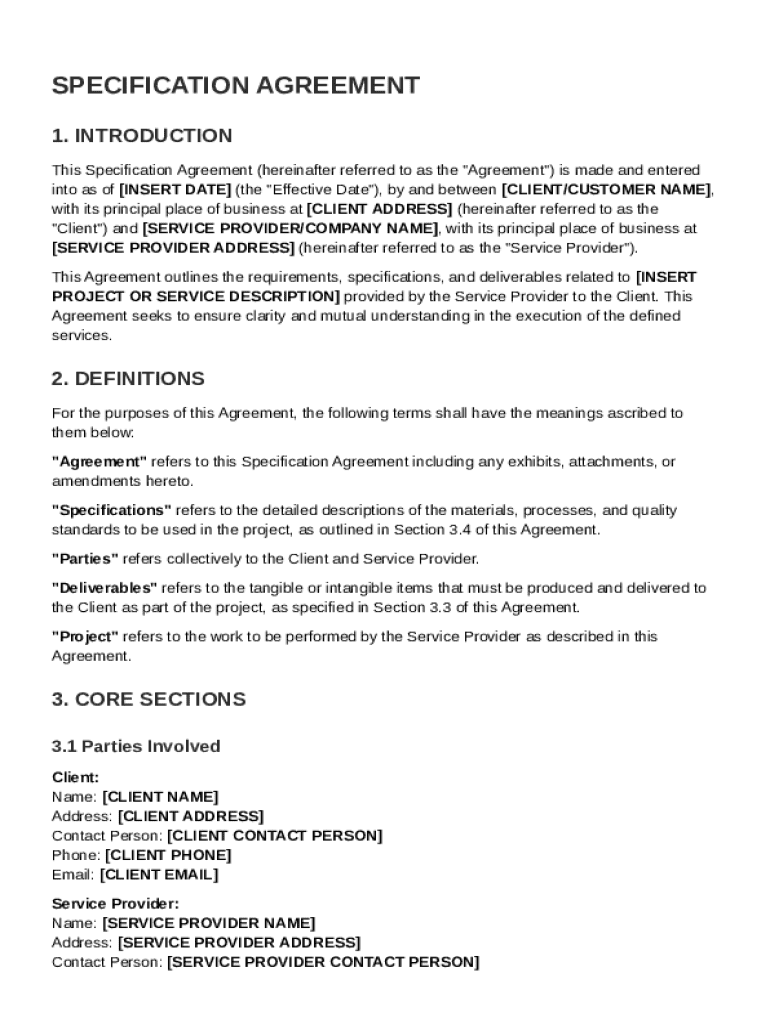







Definition and Purpose of the Specification Agreement Template
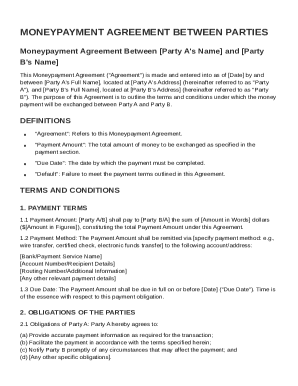
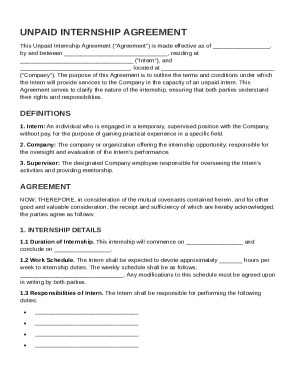
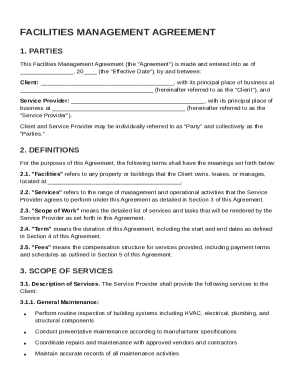
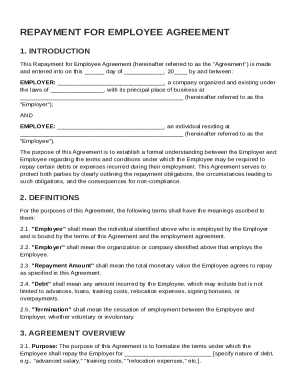
The Specification Agreement Template serves as a comprehensive document that outlines the terms and expectations between a client and a service provider for a specific project or service. It is a crucial tool for establishing mutual understanding and clarity in service execution. This template typically includes key components such as definitions, project overview, scope of work, specifications, timeline, payment terms, procedures for alterations, dispute resolution methods, confidentiality obligations, and governing law.
- Definitions: Clarifies the terminology used within the agreement to ensure both parties have a clear understanding of the terms.
- Project Overview: Provides a summary of the project or service, including objectives and key deliverables.
- Scope of Work: Details the work to be performed, ensuring that both parties agree on what is included and excluded from the project.
How to Use the Specification Agreement Template
Using the Specification Agreement Template involves several essential steps to ensure it is tailored to the specific needs of the project or service.
- Download the Template: Obtain a copy of the template through a document management platform like DocHub, which allows for easy editing and customization.
- Customize the Sections: Modify the text to reflect the specific terms and details of the project or service you are engaging in. This includes the scope of work, timeline, and payment terms.
- Review with Stakeholders: Share the draft with all relevant parties, such as clients and service providers, to gather feedback and make necessary adjustments.
Ensuring Completeness
- Include All Necessary Details: Verify that every section is filled in with precise and relevant information.
- Review for Clarity: Ensure the language used is clear and unambiguous to prevent misunderstandings.
Steps to Complete the Specification Agreement Template
Completing the Specification Agreement Template involves a structured approach to ensure all key elements are addressed.
- Gather Required Information: Collect all necessary details from both parties involved, including project details, expected outcomes, and roles.
- Populate the Template: Enter the information into the template, taking care to cover all sections thoroughly.
- Verify Legal and Compliance Standards: Ensure that the template complies with any applicable legal requirements and industry standards.
Finalizing the Agreement
- Conduct a Final Review: Have all parties review the agreement to confirm accuracy and completeness.
- Sign and Date: Ensure all designated signatories provide their signatures to validate the agreement’s terms.
Key Elements of the Specification Agreement Template
The Specification Agreement Template includes several critical components that should be carefully addressed to cover every aspect of the project.
- Timeline: Establishes the schedule for deliverables and milestones, helping keep the project on track.
- Payment Terms: Specifies the financial details, including payment schedules, amounts, and conditions for additional expenses.
- Dispute Resolution: Outlines the procedures for resolving any disagreements that may arise during the project.
- Confidentiality Obligations: Describes the measures taken to protect sensitive information shared between parties.
Legal Use and Compliance of the Specification Agreement Template
The legal standing and compliance requirements for using a Specification Agreement Template are critical to its enforceability.
- Adherence to Applicable Laws: Ensure the agreement complies with federal, state, and local laws governing contractual agreements.
- Legally Binding Signatures: Use platforms like DocHub to apply electronic signatures, which are legally binding and comply with the ESIGN Act.
- Confidentiality and Data Protection: Implement security measures such as password protection and data encryption to safeguard sensitive information.
Software Compatibility and Digital Integration
The Specification Agreement Template should be compatible with various software platforms to facilitate ease of use and integration.
- Document Editing Tools: Use software like DocHub to easily import, edit, and export the template in multiple formats such as PDF, DOC, or XLS.
- Cloud Storage Integration: Seamlessly integrate with cloud services like Google Drive or Dropbox for easy document sharing and collaboration.
Combining Digital Tools
- Electronic Signatures: Utilize electronic signature functionalities to quickly and securely sign documents without the need for physical copies.
- Real-Time Collaboration: Enable multiple users to edit and view the agreement simultaneously through cloud-based solutions, ensuring everyone has access to the latest version.
Business Types Benefiting from the Specification Agreement Template
Various business entities can greatly benefit from utilizing a well-structured Specification Agreement Template.
- Small Businesses and Startups: Establishing clear project guidelines can prevent misunderstandings and foster positive client relationships.
- Large Corporations: Ensure complex projects are executed as planned by documenting detailed specifications and terms.
- Freelancers and Consultants: Protect intellectual property and ensure fair compensation through well-defined payment and confidentiality sections.
Tailoring to Industry Needs
- Technology and IT Services: Document specific technical requirements and service level agreements.
- Construction and Engineering: Detail project timelines, material specifications, and safety requirements.
Examples of Using the Specification Agreement Template
Practical examples demonstrate how the Specification Agreement Template can be applied in real-world scenarios.
- Case Study: Web Development Project: A digital marketing agency uses the template to outline deliverables such as website launch timelines, design specifications, and client feedback procedures.
- Example: Manufacturing Contract: A manufacturing company specifies material requirements, production timelines, and delivery schedules to ensure consistency and quality.
Extensive Use Cases
- Event Management: Detail event logistics, supplier responsibilities, and guest services.
- Consultancy Services: Define the scope of consulting tasks, expected outcomes, and client collaboration processes.
State-Specific Considerations for Specification Agreements
While the general structure of a Specification Agreement remains consistent, state-specific legal requirements may influence its contents.
- Governing Law: Clearly state which state’s laws will govern the agreement, particularly when parties are from different locations.
- State Regulations: Comply with state-specific regulations regarding business transactions, consumer protections, and confidentiality obligations.
Addressing State Differences
- California: Consider additional privacy clauses to comply with the California Consumer Privacy Act (CCPA).
- New York: Include adherence to specific labor laws and work hour regulations when relevant.