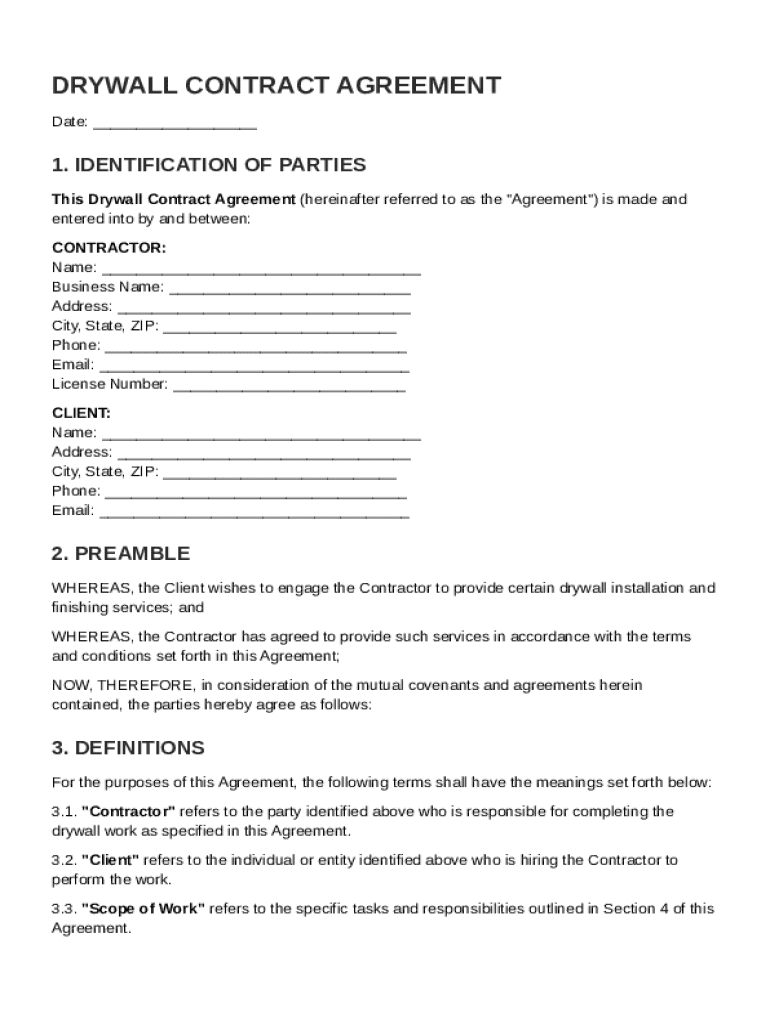







Definition and Meaning of a Drywall Contract Template
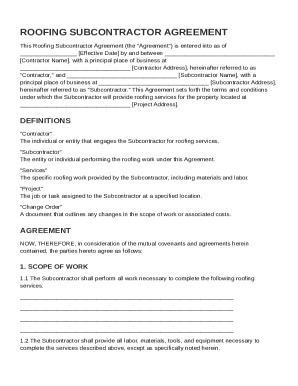
A Drywall Contract Template serves as a comprehensive framework for establishing agreements between contractors and clients concerning the installation and finishing of drywall. This document is pivotal for ensuring clarity and mutual understanding of the project scope, deadlines, costs, and other essential elements. It brings structure to the contractual relationship, delineating each party's roles, responsibilities, and expectations. By defining key terms and conditions, this template facilitates a transparent, efficient collaboration that helps prevent disputes and misunderstandings.
Typically, the template includes sections on identification of parties, a detailed project scope, financial arrangements, quality assurance measures, and clauses for termination and modifications. It also addresses liability and insurance requirements, helping both parties understand their obligations and the potential consequences of failing to meet them. Depending on the jurisdiction, the template might also incorporate region-specific legal mandates to ensure compliance with local laws. The primary goal is to establish a comprehensive, legally sound agreement from the outset of the project.
How to Use the Drywall Contract Template
Step-by-Step Instructions
-
Identify the Parties Involved: Begin by specifying the contractor's and client's full legal names and contact information. This sets the foundation for the agreement and ensures that both parties are correctly identified within the legal document.
-
Define the Scope of Work: Use this section to outline the drywall tasks to be completed. Include details such as the type of drywall to be used, the spaces that will be worked on, and any additional requirements for finishing or painting.
-
Set Project Timelines: Clearly state the start and expected completion dates of the project. If there are any critical milestones or deadlines, these should be logged to maintain project accountability.
-
Outline Payment Terms: Detail the financial arrangement, including total project costs, payment schedules, and any milestones that trigger payment disbursements. Both fixed-price and time-and-materials models can be described, as applicable.
-
Include Quality Assurance Measures: Specify standards for workmanship and materials, as well as any warranties or guarantees. This section may also address how quality issues will be handled or assessed during and after the project.
-
Address Modification and Termination: Outline how changes to the contract can be initiated and agreed upon by both parties. Also include terms under which the contract may be terminated, whether due to performance issues or other factors.
Practical Examples and Case Studies
- Example 1: A contractor defining project specifics in a suburban home, specifying moisture-resistant drywall for a kitchen installation due to its high humidity environment.
- Example 2: A client including a penalty clause for each day the project extends beyond the agreed-upon completion date, providing an incentive for timely project delivery.
Key Elements of the Drywall Contract Template
Essential Clauses
-
Identification of Parties: This foundational information is vital to legally enforce the contract.
-
Project Scope and Specifications: A detailed description ensures both parties have a clear understanding of what work will be completed.
-
Timeline and Deadlines: Clear timelines set expectations and help manage project flow, minimizing disruptions and ensuring smooth progress.
-
Payment Terms and Conditions: Whether through fixed fees or milestone payments, this defines the financial roadmap for the project, reducing misunderstandings.
-
Termination and Modification Clauses: These protect both parties, enabling them to exit or alter the agreement under certain conditions.
Enhanced Content Requirements
A detailed drywall contract ensures transparency and minimizes potential disputes by clearly articulating expectations and responsibilities. It prevents ambiguity that could lead to costly legal disputes, and helps maintain a professional relationship between client and contractor. Quality assurance measures are particularly important to assure the client of the contractor's expertise and commitment to high standards.
Who Typically Uses the Drywall Contract Template
This template is most commonly utilized by contractors and construction companies who specialize in drywalling but also serves architects and project managers overseeing construction projects. Homeowners and commercial property owners who engage contractors for renovations or new builds also use this to establish clear terms and expectations.


Use Cases
-
Residential Projects: Homeowners contracting a company for renovations would use this template to ensure all details of the renovation are documented and agreed upon.
-
Commercial Developments: Large-scale office fit-outs where timelines and specifications are crucial can benefit from a well-structured drywall contract.
Legal Use of the Drywall Contract Template
The Drywall Contract Template must comply with local, state, and federal laws to be legally binding. It should be reviewed by a legal professional to ensure adherence to applicable statutory requirements. This includes understanding contractor licensing laws, local building codes, and any other regulatory requirements specific to the jurisdiction where the work will be undertaken.
Compliance Checks
-
State-Specific Licensing: Contractors should ensure they are appropriately licensed to comply with regional regulations.
-
Insurance Requirements: Documentation should affirm necessary insurances are in place to protect both parties.
These legal safeguards promote a transaction that respects both parties’ rights while fulfilling all regulatory obligations, further securing the integrity of the agreement.