






Definition and Meaning of a Government Contract Template
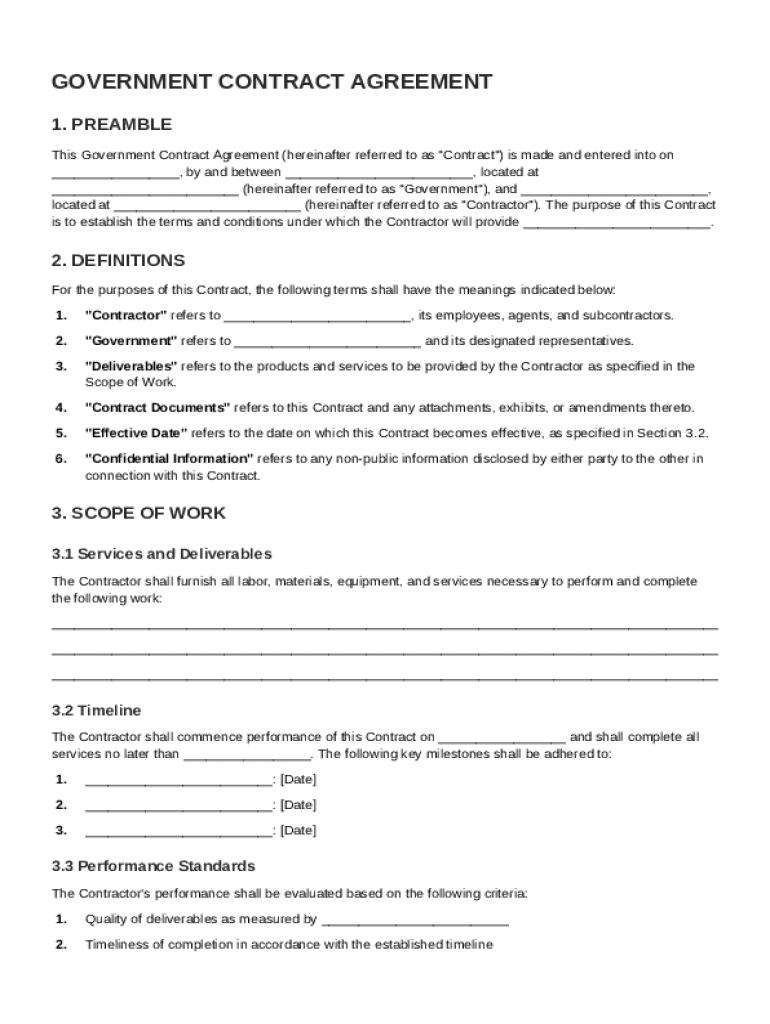
A Government Contract Template is a standardized document that outlines the terms and conditions governing an agreement between a government entity and a contractor. It is designed to facilitate the procurement process by setting clear guidelines about roles, responsibilities, and expectations. This template typically includes sections such as definitions, scope of work, compensation, performance standards, and confidentiality clauses. By providing a consistent format, it helps ensure that all parties involved are on the same page and reduces the risk of misunderstandings or disputes.
Key Components:
- Definitions: Clarifies terminology used in the contract.
- Scope of Work: Specifies tasks and deliverables expected from the contractor.
- Compensation: Outlines payment terms and amounts.
- Performance Standards: Details quality criteria and deadlines.
- Confidentiality: Sets limits on information sharing to protect sensitive data.
How to Use the Government Contract Template
Understanding how to use a Government Contract Template is crucial for successful execution of contracts. This template serves as a baseline, allowing government agencies to customize it for specific projects while ensuring legal compliance.
Steps to Follow:
- Review All Sections: Familiarize yourself with each part of the template.
- Customize Details: Tailor sections like the scope of work and compensation to fit the project specifics.
- Consult Legal Counsel: Ensure compliance with relevant regulations by consulting with legal experts.
- Collaborate with Stakeholders: Engage with all parties involved to ensure agreement on the contract content.
- Finalize and Sign: Once reviewed, finalize and ensure signatures are collected from authorized signatories.
Practical Example:
Consider a local government contracting a company for road maintenance. The template would need to specify the types of roads, maintenance frequency, and specific deliverables before proceeding to the signature phase.
Steps to Complete the Government Contract Template
Completing the Government Contract Template involves a series of structured activities aimed at ensuring precision and compliance.
Step-by-Step Process:
- Gather Necessary Information: Collect all relevant project details, including objectives, timelines, and budget.
- Insert Specifics into the Template: Apply the collected data to customize the template's sections.
- Verify Legal Requirements: Ensure the completed template adheres to both federal and state laws.
- Review and Revise: Thoroughly review the contract for accuracy and make any necessary revisions.
- Secure Approvals: Obtain necessary approvals from department heads or legal teams.
- Conduct a Final Review: Have a separate team perform a final check to confirm completeness.
- Execute the Contract: Upon final approval, execute the contract by obtaining all required signatures.
Key Elements of the Government Contract Template
The Government Contract Template includes several critical elements designed to provide a comprehensive agreement framework.
Detailed Breakdown:
- Performance Standards: Ensures quality and adherence to specified timelines.
- Compliance with Laws: Mandatory observance of all applicable legal and regulatory requirements.
- Liability and Insurance: Defines insurance coverage and liability responsibilities.
- Dispute Resolution: Establishes mechanisms, such as mediation or arbitration, for addressing disagreements.
- Amendment Process: Defines how changes to the contract will be managed.
Who Typically Uses the Government Contract Template
This template is utilized by a wide range of professionals involved in government projects. Common users include procurement officers, project managers, legal advisors, and contractors across various industries.


User Examples:
- Procurement Officers: Oversee the bidding and negotiation process, ensuring contracts are awarded fairly.
- Project Managers: Use the contract to guide project execution and monitor compliance with deliverables.
- Legal Advisors: Review contract terms to ensure legal soundness and manage risk.
- Contractors: Reference the template to understand obligations and compliance requirements.
Legal Use of the Government Contract Template
Using a Government Contract Template legally involves adhering to all pertinent statutory and regulatory guidelines. Legal compliance ensures that contracts are enforceable and protects against potential litigation.
Compliance Checklist:
- Review Federal and State Laws: Confirm that the contract aligns with relevant laws and regulations.
- Ensure Proper Authorization: Validate that individuals signing the contract have the legal authority to do so.
- Document Trail: Maintain records of the negotiation, approval, and signing processes for accountability.
Examples of Using the Government Contract Template
The template is versatile and frequently used in various sectors, illustrating its adaptability to different government projects.
Case Studies:
- Infrastructure Projects: For a new bridge construction, the template details engineering requirements and material specifications.
- IT Services: In software development contracts, it specifies deliverables like code quality standards and testing protocols.
- Public Health Initiatives: Outlines services rendered by medical professionals during a vaccination campaign, including logistics and personnel qualifications.
State-Specific Rules for the Government Contract Template
State-specific rules can influence the formation and execution of government contracts. Each state may have its own set of laws that dictate how public sector contracts should be managed.
Considerations:
- Procurement Regulations: Varying state procurement requirements affect bidding and award processes.
- Local Compliance: States may have additional compliance requirements for aspects such as labor, materials, and subcontracting.
- Tax Obligations: State-specific taxes and fees related to government contracts must be observed.
It is crucial for both government agencies and contractors to stay informed about these variances to ensure lawful and effective contract management.