
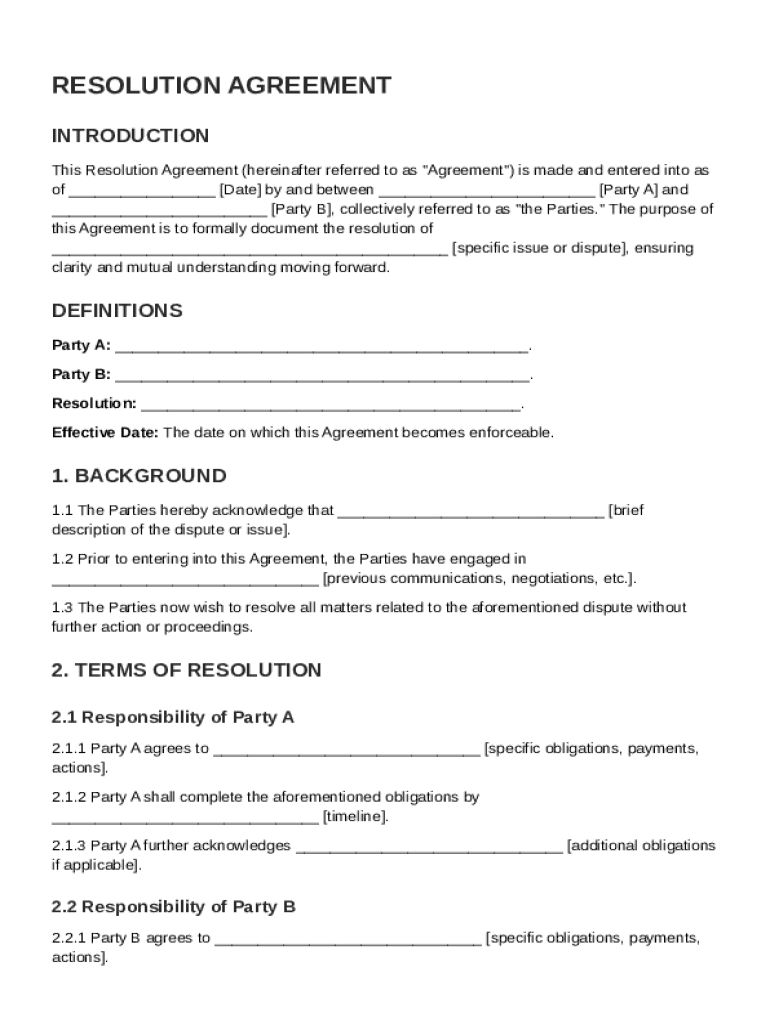







Definition and Meaning
A Resolution Agreement Template is a formal document used by two parties to resolve a specific dispute. It delineates the responsibilities, obligations, and timelines each party must adhere to in order to reach a resolution. The document typically includes confidentiality clauses and methods for resolving potential disagreements, such as negotiation, mediation, and arbitration. In the United States, this type of agreement is commonly used to ensure that disputes are settled in good faith without resorting to litigation, thereby saving time and resources for all parties involved.
Key Elements of the Resolution Agreement Template
The Resolution Agreement Template comprises several critical elements designed to ensure clarity and enforceability:
- Parties Involved: Clearly identifies the individuals or entities entering into the agreement, including their contact information and legal status.
- Objective: Describes the nature of the dispute and the agreed-upon resolution.
- Obligations and Timelines: Outlines specific duties both parties must perform, including deadlines for these actions.
- Confidentiality Provisions: Specifies confidentiality requirements to protect sensitive information disclosed during the resolution process.
- Dispute Resolution Methods: Includes procedures for mediation, arbitration, and negotiation aimed at addressing any future disagreements.
- Amendment Clause: Defines how the agreement can be modified, requiring mutual consent from both parties.
- Governing Law: Specifies the jurisdictional laws that will govern the agreement.
- Severability and Waiver: Details the terms under which any part of the agreement deemed invalid will be severed without affecting the rest.
Steps to Complete the Resolution Agreement Template
Completing a Resolution Agreement Template involves the following steps:
- Identify the Parties: Enter detailed information about the parties to the agreement, ensuring accuracy and completeness.
- Define the Dispute: Clearly articulate the specific dispute to be resolved to avoid ambiguity.
- List Obligations: Specify each party's responsibilities, stating how and when they need to be fulfilled.
- Include a Confidentiality Clause: Add terms to protect all sensitive information shared during and after negotiations.
- Set Dispute Resolution Terms: Incorporate clauses outlining mediation and arbitration processes in the event of future disagreements.
- Review Governing Law: Ensure that all parties agree on the jurisdiction laws that will preside over the agreement.
- Amend and Review: Allow both parties to suggest amendments and finalize the terms of the agreement.
- Signing and Execution: Have all involved parties sign the document and retain copies for their records.
Legal Use of the Resolution Agreement Template
In the United States, a Resolution Agreement Template serves multiple legal purposes:
- Formalizing Resolutions: Transforms an informal agreement into a legally binding document.
- Ensuring Compliance: Holds parties accountable for their obligations with specified consequences for non-compliance.
- Avoiding Litigation: Offers a structured approach to settle disputes outside courts, minimizing legal costs and time.
- Protecting Privacy: Enforces confidentiality, ensuring private or proprietary information isn't publicly disclosed.
Legal use of this template aligns with generally accepted practices across various states, with adaptations for specific state laws or industry standards.
How to Use the Resolution Agreement Template
Using the template efficiently involves several steps to maximize its benefits:
- Customization: Modify the template according to the specific needs of the dispute, ensuring relevance.
- Consultation: Involve legal professionals to review and verify the adequacy of terms and legal compliance.
- Execution: Ensure both parties fully understand and voluntarily agree to all terms before signing.
- Retention: Maintain signed copies in a secure location for future reference or proof of agreement compliance.
Who Typically Uses the Resolution Agreement Template
The Resolution Agreement Template is commonly used by:
- Businesses and Corporations: To resolve commercial disputes with partners, suppliers, or clients.
- Legal Practitioners: To draft legally compliant and enforceable agreements for clients.
- Individuals: To settle personal or professional disagreements without legal representation.
- Non-Profit Organizations: When mediating conflicts among stakeholders or external entities.


Important Terms Related to Resolution Agreement Template
Understanding key terms associated with the Resolution Agreement Template is essential:
- Good-Faith Negotiation: Parties agree to negotiate honestly without intent to defraud.
- Mediation: A neutral third party facilitates a resolution among parties without imposing an outcome.
- Arbitration: A formal process where an arbitrator makes a binding resolution to the dispute.
- Confidentiality: Terms ensuring no disclosed information is publicized beyond defined limits.
- Severability: Ensures the remainder of the document remains enforceable even if parts are invalidated.
Examples of Using the Resolution Agreement Template
Real-world scenarios include:
- Business Conflicts: Resolving disputes over contract breaches with suppliers through a structured agreement.
- Employment Issues: Settling workplace disputes without legal proceedings by agreeing on terms via the template.
- Personal Settlements: Neighbors may use the template to settle property disputes through agreed terms of action.
These examples demonstrate the versatility and practical utility of the Resolution Agreement Template across various contexts.





