




Understanding the Lab Order Form: Definition and Purpose
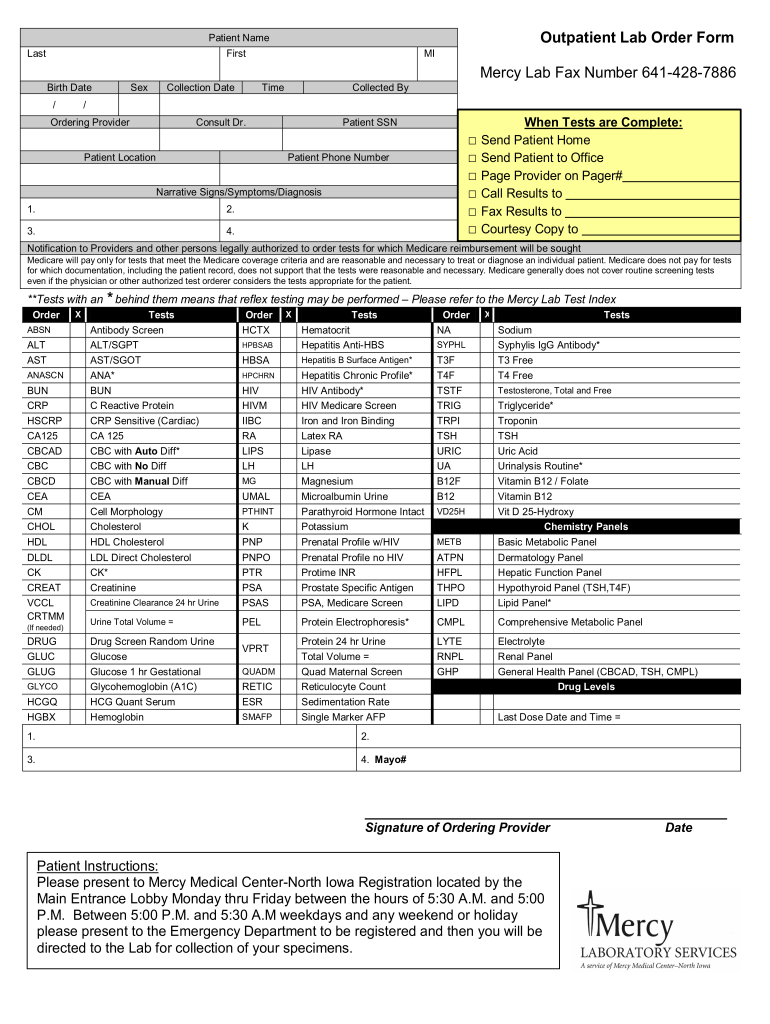
A lab order form is a crucial document utilized in the healthcare sector, serving as a formal request for laboratory tests. Physicians and healthcare providers issue these forms to ensure that lab personnel have the necessary patient details and specific tests required. The form typically includes essential information such as patient demographics, healthcare provider details, requested tests, and instructions for specimen collection.
The primary purpose of the lab order form is to facilitate accurate and efficient laboratory testing. By providing a structured approach to test ordering, it minimizes the risk of errors, ensures that tests are performed as requested, and enables proper billing and documentation processes.
Importance of the Lab Order Form
- Accuracy: It ensures correct test selection and reduces miscommunication between healthcare providers and labs.
- Compliance: Many regulatory requirements mandate proper documentation for lab tests, making the form essential for meeting legal obligations.
- Streamlined Processes: Utilizing a standardized form allows for quicker processing and turnaround times for lab results.
Practical Steps for Completing the Lab Order Form
Properly filling out the lab order form is critical to ensure that the requested tests are performed accurately. The following outlines key steps for completing the form:
- Patient Information: Begin by entering the patient's full name, date of birth, and identification number. This identification is essential for accurate patient records.
- Ordering Provider Information: Fill out the details of the healthcare provider requesting the tests, including their name, contact information, and any relevant credentials.
- Test Selection: Clearly specify the tests needed. This may involve checking boxes or writing the names of tests such as a complete blood count (CBC) or metabolic panel.
- Specimen Collection Instructions: Include any specific instructions on how the specimen should be collected, whether blood, urine, or other types. This ensures tractability during the testing process.
- Sign and Date: The healthcare provider must sign and date the form to validate the request.
Common Mistakes When Completing the Form
- Incomplete Information: Failing to fill out all fields can lead to processing delays or erroneous test results.
- Ambiguous Test Requests: Vague descriptions can cause confusion, so it’s essential to be specific about required tests.
How to Obtain a Lab Order Form
Acquiring a lab order form can vary, but there are several common methods to consider.
- From Healthcare Providers: Patients can request a lab order form from their healthcare professionals during consultations.
- Online Resources: Many labs and healthcare organizations provide generic lab order forms on their websites for download.
- Medical Offices: Physical medical offices may have printed versions available upon request.
Free Printable Lab Requisition Forms
In addition to formal orders from healthcare providers, you might find free printable lab requisition form templates available online. These can be particularly useful for laboratories and practices seeking to streamline their processes.
Essential Elements of a Lab Order Form
A lab order form must contain several key components to ensure it is effective and compliant:
- Patient Identification: Essential for matching test results with the correct patient.
- Provider Details: Helps labs communicate with the ordering provider regarding any follow-up questions or clarifications.
- Test List: Should include all tests ordered, potentially indicated by a corresponding code for each test to avoid errors.
- Collection Instructions: Specific details on how samples should be collected or handled to maintain integrity.
- Signature Section: Validates that the form has been authorized by a qualified healthcare professional.
Understanding these elements can ensure that the lab order form is correctly utilized and that the necessary tests are efficiently conducted.
Legal Considerations Surrounding Lab Order Forms
The use of lab order forms is bound by various legal and regulatory guidelines. Compliance with regulations such as HIPAA (Health Insurance Portability and Accountability Act) ensures the protection of patient information during the ordering and testing phases.
Common Legal Requirements
- Confidentiality: Patient information must be kept secure, which is critical when transmitting lab order forms.
- Document Retention: Labs are generally required to keep records of lab orders and results for a specified period, ensuring accountability and traceability.
Understanding these legal considerations is vital for both healthcare providers and laboratories to maintain compliance and safeguard patient rights.
Variants and Alternatives to the Lab Order Form
While the standard lab order form is widely used, there are variants that may be appropriate for specific laboratory needs or regulations. These include:
- Specialty Order Forms: Certain tests may require specific forms designed for particular testing categories, such as genetic testing or pathology.
- Insurance-Specific Variants: Some health insurance providers may mandate their own forms to cover laboratory services.
Familiarizing oneself with these variants can help ensure that the correct form is used for the corresponding test, thereby facilitating the claims process and ensuring comprehensive care for patients.
Integration of Digital Solutions for Lab Order Forms
In today's digital age, many healthcare facilities have transitioned to digital lab order forms to streamline their workflow. Digital forms offer several advantages:
- Efficiency: Automated processes can reduce time spent on data entry and reduce human errors.
- Accessibility: Providers can access and complete forms from multiple devices, facilitating quicker interactions with labs.
- Integration: Digital forms can often be linked to electronic health records (EHR) for seamless documentation and retrieval of patient information.
Incorporating these solutions can significantly improve the efficiency of the lab ordering process while enhancing the overall patient experience.
Summary of Who Uses the Lab Order Form
The lab order form is utilized by a diverse range of healthcare providers and staff, including:
- Physicians: General practitioners and specialists who order tests for their patients.
- Nurse Practitioners and Physician Assistants: Professionals who can order lab tests as part of their practice.
- Medical Assistants: Healthcare workers who may assist in preparing the form and ensuring proper documentation.
Understanding the wide scope of users highlights the importance of properly designed lab order forms in facilitating efficient healthcare delivery.