
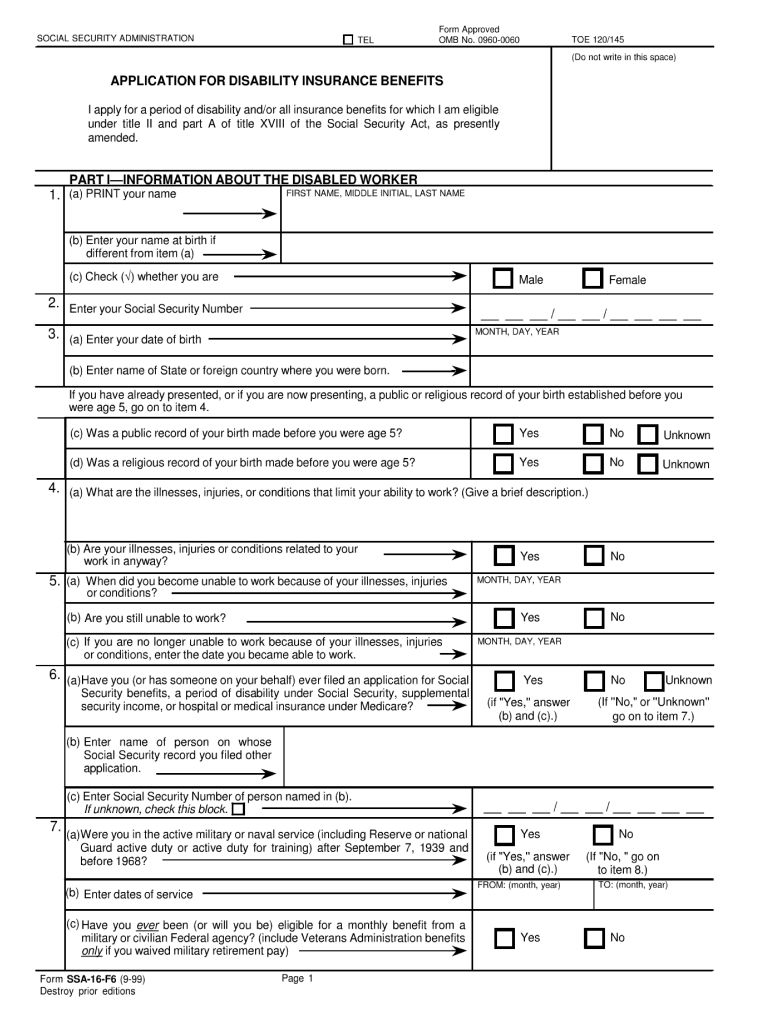







Definition and Purpose of the SSA 16 Form
The SSA 16 form, officially known as the "Application for a Period of Disability and Disability Insurance Benefits," is utilized by individuals seeking Social Security Disability Insurance (SSDI) benefits. This application collects comprehensive information about the applicant's medical conditions, work history, and personal details necessary for determining eligibility for disability benefits under the Social Security Administration (SSA).
The form requires applicants to provide specific information such as:
- Personal Identification Information: This includes the applicant's full name, Social Security number, date of birth, and contact details.
- Medical History: Detailed descriptions of disabling conditions are necessary, including dates of diagnosis, treatment received, and the impact on daily functioning.
- Work History: Applicants must outline their employment background, emphasizing jobs held in the past 15 years, along with details on job duties and income.
- Other Benefits: Information about any additional public disability benefits the applicant may be receiving must also be disclosed.
Understanding these aspects ensures that applicants are better prepared and aware of what information is pertinent when filling out the SSA 16 form.
Steps to Complete the SSA 16 Form
Completing the SSA 16 form correctly is crucial for a successful application. Here are the key steps to follow:
-
Gather Required Information
- Compile personal identification details, including Social Security number and date of birth.
- Collect medical records that outline your disabling conditions and treatments.
- Document work history, including employment dates, job titles, and descriptions.
-
Begin the Application
- Access the SSA 16 form online or obtain a printable version from the SSA website.
- Ensure you have a stable internet connection if completing it online.
-
Fill Out the Personal Information Section
- Enter accurate personal details as requested. Double-check for errors, as this can delay processing.
-
Detail Your Medical Conditions
- Include comprehensive descriptions of each disability, emphasizing how they affect your ability to work.
- List all healthcare providers, treatments, and medication currently or previously prescribed.
-
Outline Employment History
- Clearly detail all jobs held in the past 15 years. Mention duties and reasons for leaving.
-
Review Your Application
- Thoroughly review each section for accuracy and completeness. Mistakes or omissions can result in delays or denials.
-
Submit the Form
- Submit electronically or print and mail the form to the SSA. Ensure you keep copies for your records.
Following these steps minimizes the risk of errors and enhances the chances of a successful application for SSDI benefits.
Important Terms Related to the SSA 16 Form
Understanding specific terminology used in the SSA 16 form is essential for navigating the application process effectively. Key terms include:
- Disability: Defined by the SSA, disability is the inability to engage in substantial gainful activity due to a medically determinable physical or mental impairment expected to last for at least 12 months.
- Substantial Gainful Activity (SGA): Refers to the level of work activity and earnings that rely on the severity of the applicant's disabilities. If earnings exceed the SGA limit, the individual may not qualify for benefits.
- Residual Functional Capacity (RFC): An assessment of what an applicant can still do in a work setting despite their limitations due to health conditions.
- Medically Determinable Impairment: A condition that can be verified by medical documentation. This is a determining factor in the approval of SSDI applications.
- Non-Exertional Limitations: Restrictions that may affect an individual’s ability to perform work-related activities, excluding physical demands. This includes issues like mental health disorders.
Familiarizing yourself with these terms can offer clarity during the application process and enhance effective communication with SSA representatives.
Who Typically Uses the SSA 16 Form?
The SSA 16 form is designed primarily for individuals seeking SSDI benefits due to disability. Typical users include:
- Individuals with Chronic Illnesses: Those suffering from long-term medical conditions such as cancer, heart disease, or debilitating pain disorders.
- Mental Health Conditions: Applicants with diagnosed mental health disorders that severely impact their daily functioning, such as major depressive disorder or schizophrenia.
- Physical Disabilities: Individuals who have sustained injuries or physical limitations, preventing them from maintaining gainful employment.
- Older Workers: Those who may face challenges in finding new employment due to their age and the impact of valid medical conditions.
- Veterans: Ex-military personnel with disabilities connected to their service may also utilize the SSA 16 form to apply for benefits.
Understanding the demographics of SSA 16 users can aid in tailoring resources and support for applicants throughout their disability benefit acquisition journey.

Application Process and Approval Time for the SSA 16 Form
The application process for the SSA 16 form involves several steps, and understanding this procedure helps applicants prepare adequately. The general process includes:
- Submission of Application: After filling out the SSA 16 form, applicants submit it either online or via mail.
- Initial Review by SSA: The SSA conducts a preliminary examination, assessing if the application meets the basic eligibility requirements.
- Medical Evaluation: If the application passes initial scrutiny, it undergoes a thorough medical review, wherein the SSA evaluates all submitted medical evidence.
- Decision Notification: The SSA will send a notification regarding the approval or denial of benefits, generally within three to four months after submission.
The approval timeframe can be influenced by various factors:
- Complexity of the Case: Detailed or complicated cases may require more time for review.
- Backlogs: The volume of applications the SSA is handling can also extend waiting periods.
- Accuracy of Documentation: Well-documented applications with clear medical evidence often expedite the process.
Understanding these nuances can help applicants maintain realistic expectations regarding the timeline and possibly improve submission quality to prevent delays.




