
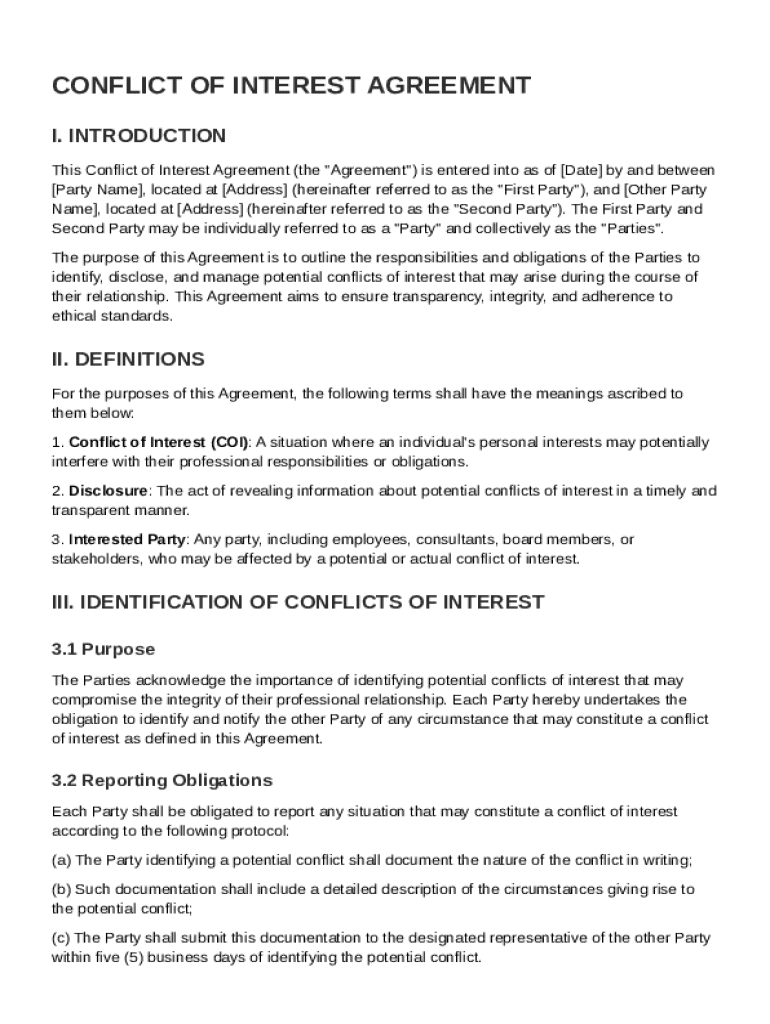







Definition & Meaning
A Conflict of Interest Agreement Template is a formal document designed to identify, disclose, and manage potential conflicts of interest between two parties. The template sets the framework for maintaining transparency in relationships where conflicting interests might arise. Conflicts of interest can occur when personal interests might interfere with professional duties. This document is essential for formalizing the procedure for disclosure, ensuring that all parties are aware of potential conflicts and agree on how to handle them.
Core Components
- Identification: Details possible scenarios that might lead to a conflict.
- Disclosure Obligation: Specifies when and how parties should report conflicts.
- Management Procedures: Outlines steps to mitigate or resolve conflicts.
- Responsibilities: Defines each party's role in identifying and addressing conflicts.
Practical Usage
Organizations of all sizes can utilize this template to safeguard against conflicts that could jeopardize integrity or legal standing.
How to Use the Conflict of Interest Agreement Template
Utilizing the Conflict of Interest Agreement Template effectively involves understanding its structure and customizing it according to specific needs. The primary goal is to ensure that all parties involved know their rights and duties.
Step-by-Step Instructions
- Review the Template: Familiarize yourself with all sections and their relevance.
- Customize Terms: Tailor sections like definitions, reporting obligations, and management procedures to fit organizational requirements.
- Engage Stakeholders: Obtain input from individuals who may be impacted by the agreement.
- Implement Review Process: Establish procedures for regular evaluation and updates.
Practical Tips
- Ensure all language is understandable to all parties.
- Use clear, specific examples to illustrate what constitutes a conflict.
- Include real-world scenarios relevant to your business environment for better comprehension.
Key Elements of the Conflict of Interest Agreement Template
Understanding the essential components of the template allows for better implementation and ensures comprehensive coverage of potential conflicts.
Essential Sections
- Purpose Statement: Defines the agreement's objectives.
- Scope: Describes which relationships and interactions are covered.
- Definitions: Clarifies key terms for all parties.
- Reporting Mechanisms: Explains how to report a conflict.
- Resolution Framework: Details steps for conflict management.
Importance
These elements contribute to a clear, structured document that effectively manages conflicts and aligns with organizational policies.
Steps to Complete the Conflict of Interest Agreement Template
Filling out the Conflict of Interest Agreement Template requires attention to detail and an understanding of the organization's specific needs.
Completion Process
- Gather Required Information: Collect necessary data on all parties involved.
- Define Conflict Scenarios: List potential situations that could lead to conflicts.
- Set Reporting Protocols: Determine who will handle conflict notifications.
- Draft Management Plans: Outline how each type of conflict will be addressed.
- Consult Legal Advisors: If needed, get input from legal experts to ensure compliance.
Considerations
- Tailor each section to address unique organizational dynamics.
- Ensure the language is clear and accessible to all stakeholders.
Legal Use of the Conflict of Interest Agreement Template
Using the Conflict of Interest Agreement Template in a legal context involves understanding its enforceability and applicability within the regulatory framework.
Compliance Considerations
- Governing Law: Identify which state or federal laws apply.
- Amendment Procedures: Establish how changes to the agreement will be handled.
- Legal Review: Periodic examination by legal counsel to ensure ongoing compliance.
Legal Implications
- Non-compliance with the agreement can lead to legal ramifications.
- Regular legal audits can prevent misunderstandings and disputes.
Important Terms Related to Conflict of Interest Agreement Template
Familiarity with terminology used in the Conflict of Interest Agreement Template enhances comprehension and execution.
Key Terms
- Beneficiary: A person who benefits from the agreement.
- Fiduciary Duty: Obligation to act in another party's best interests.
- Conflict Disclosure: The act of revealing potential conflicts.
- Resolution Pathway: Stepwise method for resolving conflicts.
Contextual Understanding
- Each term comes with specific obligations and implications, making it vital to understand their meanings in context.
Who Typically Uses the Conflict of Interest Agreement Template
Identifying parties who commonly use the template helps in tailoring the document for specific audiences.


Common Users
- Corporations: For managing employee and stakeholder relationships.
- Non-profits: To ensure board members prioritize organizational missions.
- Educational Institutions: For faculty with external research engagements.
- Government Agencies: To maintain transparency and trust.

Usage Scenarios
- For any situation where personal interests might conflict with professional duties.
Who Issues the Form
Understanding the origins of the form provides context for its structure and utility.
Form Origination
- Typically issued by:
- Human Resources departments
- Corporate compliance offices
- Legal departments within organizations
Issuer Responsibilities
- Ensure that the form is up-to-date and compliant with current laws and regulations.
- Facilitate training for all parties involved to promote understanding of the form's contents.
By covering these points comprehensively, the guide ensures that users of the Conflict of Interest Agreement Template are well-informed and capable of effectively managing potential conflicts within their professional settings.




