
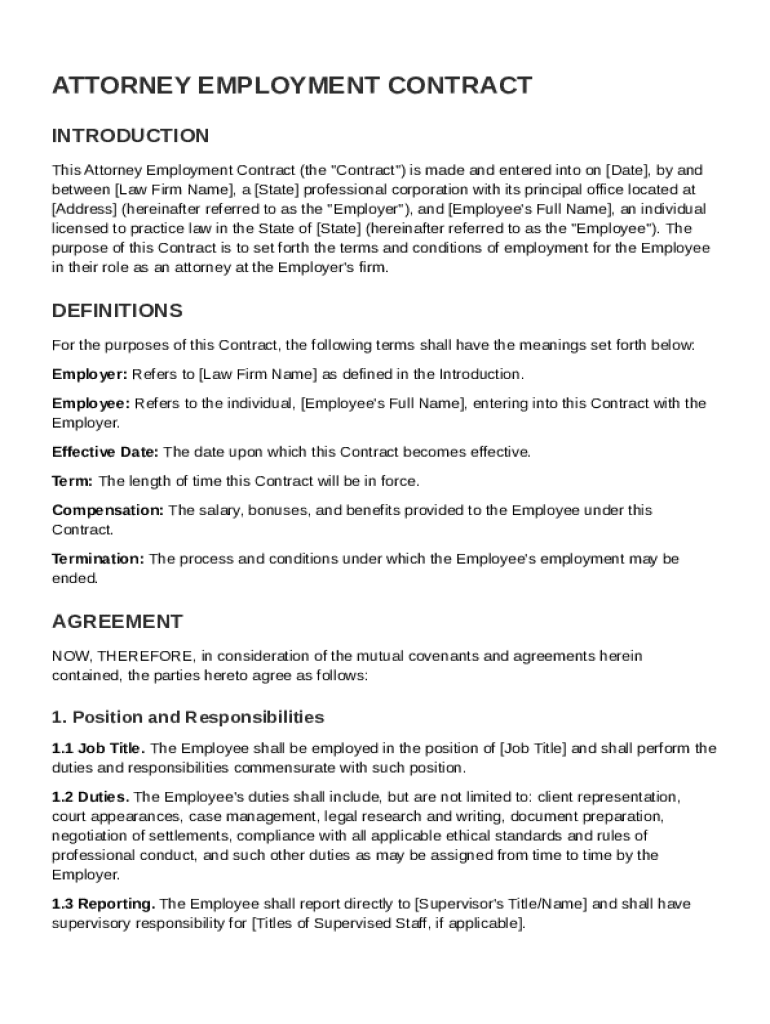







Definition and Meaning
An "Attorney Employment Contract Template" is a structured legal document designed to establish the terms and conditions of employment between an attorney and a law firm. This template serves to formalize the employment relationship, ensuring clarity on expectations and legal obligations for both parties. It typically covers various aspects such as job responsibilities, compensation, benefits, confidentiality, and terms of termination. Using a standard template ensures consistency and can help avoid misunderstandings, as all critical elements are laid out in a clear, organized manner.
Key Elements of the Attorney Employment Contract Template
The "Attorney Employment Contract Template" encompasses several vital components critical to the employment agreement. Some of the key elements included are:
- Job Responsibilities: Detailed description of the attorney's role and duties within the firm.
- Compensation: Information on salary, bonuses, and other forms of payment.
- Benefits: Outline of benefits such as health insurance, retirement plans, and paid leave.
- Confidentiality Obligations: Terms to protect sensitive information and proprietary work of the firm.
- Conflict of Interest Policies: Provisions addressing potential conflicts that may arise during the attorney's employment.
- Termination Conditions: Guidelines on how and under what conditions the employment can be terminated.
- Governing Law: Specification of the legal jurisdiction that will apply to the contract.
Having a comprehensive template helps both the employee and the employer understand their rights and responsibilities, protecting both parties legally.
Legal Use of the Attorney Employment Contract Template
The legal use of this contract template involves employing it as a formal agreement that holds legally binding power once both parties have signed. This practice aligns with employment laws and contract laws in the United States:
- Contract Validity: The drafted template, once signed, becomes a legally enforceable contract.
- Compliance with Laws: It must adhere to local, state, and federal regulations regarding employment.
- Resolution for Disputes: Clear clauses on dispute resolution methods can prevent legal conflicts from escalating.
Proper usage ensures that the contract aligns with the legal requirements necessary to maintain a fair and lawful employment relationship.
Steps to Complete the Attorney Employment Contract Template
Filling out the "Attorney Employment Contract Template" should be done methodically to ensure it efficiently captures all necessary details. Below is a step-by-step guide on how to complete this process:
- Populate Personal Information: Fill in the details of both hiring firm and the attorney.
- Define Scope of Work: Clearly outline the attorney’s responsibilities and tasks.
- Specify Compensation Details: Include salary, bonuses, and payment schedule.
- List Benefits: Add any applicable employee benefits such as health insurance.
- Include Confidentiality Terms: Mention clauses protecting sensitive business information.
- Set Termination Clauses: Define the scenarios and procedures for termination.
- Review Governing Laws: Confirm the legal jurisdiction applicable.
- Collect Signatures: Both parties should sign the document to make it official.
Ensuring each step is followed accurately will result in a detailed and enforceable contract.
Who Typically Uses the Attorney Employment Contract Template
This template is generally utilized by law firms and attorneys within the United States as it outlines employment agreements specific to legal professionals. The primary users include:
- Law Firms: Typically draft the contract as a part of their hiring process.
- Attorneys: Review and sign the contract to understand their role and the benefits provided.
- Human Resources Department: Facilitate the process of creating and managing employment contracts.
Having a clear understanding of who uses the template can streamline the hiring process within the legal industry.


State-Specific Rules for the Attorney Employment Contract Template
While the template provides a general framework, state-specific rules might influence certain clauses or conditions in the contract. Important considerations include:
- Employment-at-Will: Varies by state; confirm if and how it applies.
- Minimum Wage and Overtime Laws: Ensure compliance with state's labor standards.
- Employee Benefits: Understand state regulations concerning mandatory employee benefits.
- Non-Compete Clauses: Some states have stringent rules regarding the enforceability of non-compete agreements.
Tailoring the contract to meet state-specific statutory and regulatory requirements ensures legal compliance and reduces future litigation risks.
Software Compatibility
Ensuring ease of use with various document management software, the attorney employment contract template should be compatible with platforms like DocHub, Google Docs, and Microsoft Word. This compatibility enables:
- Editing and Collaboration: Multiple users can work on the document simultaneously across different platforms.
- Cloud Storage Options: Store and access documents via services like Google Drive and Dropbox.
- Integration with Signing Tools: Use electronic signature features to simplify the signing process.
Compatibility across these platforms facilitates smooth document processing, storage, and sharing.
Important Terms Related to Attorney Employment Contract Template
Understanding the terminology used in the "Attorney Employment Contract Template" is crucial for effective interpretation and implementation:
- At-Will Employment: Terms that express the flexibility to terminate employment at any time without cause.
- Clawback Clauses: Conditions that allow an employer to reclaim bonuses or other incentives.
- Arbitration: Alternative dispute resolution mechanism mentioned within the contract.
- Non-Solicitation: Provisions that prevent the attorney from attracting the firm’s clients after termination.
Clarifying these terms enhances comprehension of the contract, ensuring that both parties have a mutual understanding of their commitments and responsibilities.




