
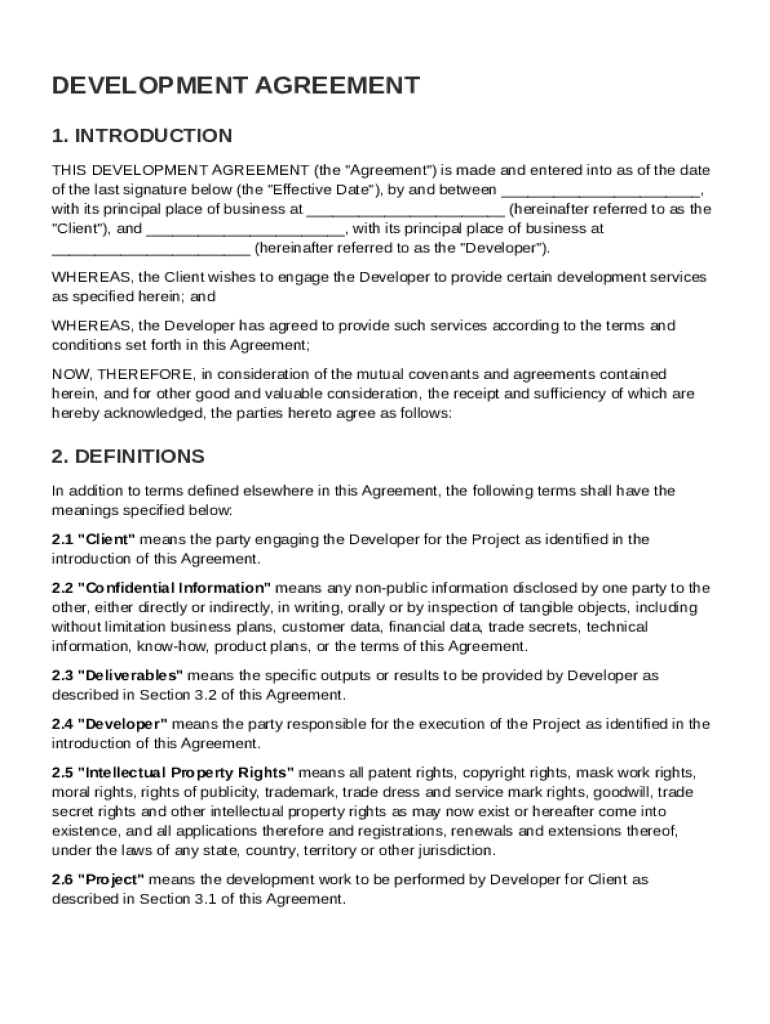







Definition and Purpose of the Development Agreement Template
The Development Agreement Template serves as a legally binding document between a client and a developer, delineating the terms and conditions for providing development services. It is intended to clarify the collaboration framework between the parties on a specified project. This template typically includes sections describing the scope of work, responsibilities, compensation, intellectual property rights, confidentiality, dispute resolution, termination conditions, and other miscellaneous provisions. By having a clear written agreement, both parties can protect their interests and minimize potential conflicts throughout the project lifecycle. The template serves as a foundational tool for establishing expectations and guidelines for successful project completion.
Key Elements Included in the Development Agreement Template
The template includes several critical elements to ensure comprehensive coverage of project parameters:
- Definitions: Precise definitions of terms used within the agreement to prevent misunderstandings.
- Scope of Work: Detailed explanation of tasks the developer will perform, ensuring clarity regarding deliverables.
- Responsibilities: Breakdown of duties each party must fulfill, promoting accountability.
- Compensation and Payment Terms: Specifications on how and when the developer will be paid, including invoice procedures.
- Intellectual Property Rights: Clauses defining ownership and use of intellectual property generated during the project.
- Confidentiality Obligations: Requirements for both parties to maintain project confidentiality.
- Dispute Resolution Procedures: Steps to amicably resolve conflicts that may arise.
- Termination Conditions: Guidelines for agreement cessation, including causes and notice requirements.
Steps to Complete the Development Agreement Template
Completing the Development Agreement Template involves several specific steps to ensure all necessary information is accurately included:
- Identify Parties: Clearly name and describe the client and developer.
- Define Project Scope: Articulate the tasks and objectives to avoid scope creep.
- Agree on Compensation: Specify payment amounts, schedules, and conditions.
- Review Legal Terms: Ensure both parties understand and consent to intellectual property, confidentiality, and other legal clauses.
- Finalize Dispute Procedures: Decide on preferred methods for handling disagreements.
- Customize Necessary Sections: Adapt terms to fit specific project or business needs.
- Legal Review: Have a legal professional review the agreement to ensure its validity.
Importance of Using the Development Agreement Template
Utilizing a Development Agreement Template is crucial as it provides several benefits:
- Risk Mitigation: Reduces the likelihood of disputes by clearly defining roles and responsibilities.
- Legal Protection: Offers a protective legal framework, setting a clear precedent in case of disputes.
- Enhanced Communication: Facilitates mutual understanding by detailing every aspect of the project.
- Efficiency and Clarity: Standardizes the development process, thus enhancing productivity and ensuring project timelines are met.
Legal Use of the Development Agreement Template in the United States
In the United States, the Development Agreement Template conveys a legally enforceable contract once signed by both parties. The template adheres to contract laws, ensuring compliance with state and federal requirements. However, variations may be necessary based on state-specific regulations, particularly concerning intellectual property rights and data protection clauses. Users should verify the state-specific enforceability of every section within the agreement. For additional legal security, it is advisable to seek guidance from a legal professional familiar with local laws.
Who Typically Uses the Development Agreement Template
Typically, the Development Agreement Template is used by businesses and professionals in the tech industry, such as:
- Software Development Firms: Agencies creating applications or software systems for clients.
- Freelance Developers: Individuals offering bespoke programming services.
- Project Managers: Overseeing development tasks requiring structured agreements.
- Startups: Small businesses defining the terms with contractors for product development.
- Consulting Firms: Helping clients with tech integrations or system improvements.


Examples of Using the Development Agreement Template
In practical scenarios, the Development Agreement Template can be employed in various contexts:
- Custom Software Solutions: When hiring a developer to build bespoke software tailored to specific business needs.
- Web Development Projects: Engaging a contractor to design and launch a company website.
- Mobile App Creation: Outlining terms with a mobile developer for a new app idea.
- Enterprise System Integration: Partnering with consulting firms for integrating new systems within existing enterprise architectures.
- Prototype Development: Contracting to develop a minimum viable product for initial market testing.
Versions or Alternatives to the Development Agreement Template
Numerous versions or alternatives to the Development Agreement Template exist, each catering to different development types:
- Standard Software Development Agreement: Tailored specifically for software or app creation projects.
- Web Design Contract: Focused on web development services and inclusions.
- Joint Development Agreement: For collaborative projects involving multiple parties.
- Agile Development Agreement: Adapted to agile project management methodologies, emphasizing flexibility and iterations.
- Master Services Agreement: Broad framework for ongoing services beyond individual projects.
Understanding the versatile nature of development agreements helps businesses choose the most fitting version for their needs, ensuring comprehensive project coverage.




