Definition & Meaning
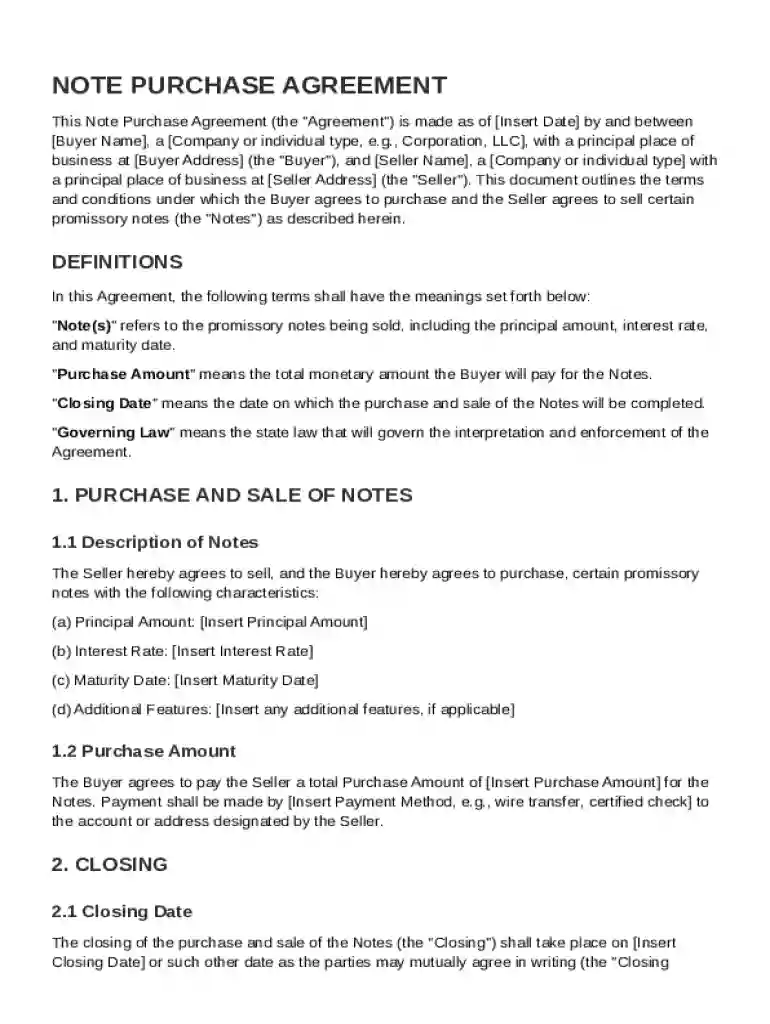
A Note Purchase Agreement Template serves as a foundational document that outlines the terms and conditions for purchasing promissory notes. It acts as a legal framework between a buyer and a seller to ensure the transaction is clear, transparent, and legally binding. This template includes critical elements such as purchase details, payment schedules, and obligations. It's crucial in formalizing the transaction and offers protection to both parties by detailing conditions under which the sale is made, thereby reducing the risk of disputes.
Components of the Agreement
- Definitions and Interpretation: Sets the specific meanings for terms used throughout the document, which ensures all parties have a mutual understanding.
- Purchase Details: Outlines the number of notes being sold, the total purchase price, and any payment terms agreed upon.
- Closing Procedures: Specifies the process for finalizing the sale and transferring ownership, including any deadlines or required actions.
How to Use the Note Purchase Agreement Template
Using the Note Purchase Agreement Template involves customizing it to fit the specific transaction. The template acts as a starting point, which can be adjusted to reflect the nuances of the deal in question. Begin by reviewing the template thoroughly to ensure it meets the needs of the transaction. Then, fill in specific details such as buyer and seller information, the value of the notes, payment terms, and any additional clauses necessary for the agreement. Finally, it is recommended to have legal counsel review the completed agreement for compliance and adequacy.
Step-by-Step Customization
- Download the Template: Obtain the template from a credible source.
- Insert Necessary Information: Fill in details about the parties involved and specifics of the notes.
- Modify Terms as Needed: Adjust clauses to meet particular needs or circumstances of the transaction.
Key Elements of the Note Purchase Agreement Template
The agreement comprises several key elements that are essential for an effective and binding contract. These include:
- Representations and Warranties: Statements by both buyer and seller regarding their capacity and authority to enter into the agreement, along with the validity of the notes being sold.
- Covenants: Ongoing commitments by both parties to fulfill certain obligations during and after the sale.
- Indemnification Clauses: Provisions that protect parties from losses arising due to breaches or misrepresentations by the other party.
Critical Provisions
- Governing Law: Identifies the jurisdiction’s laws that govern the agreement to ensure clarity in legal interpretations.
- Notices: Details how communication between parties should occur, ensuring that all important information is properly conveyed.
Legal Use of the Note Purchase Agreement Template
The Note Purchase Agreement Template is used to create a legal and enforceable document that ensures all parties are bound by its terms. It's critical for streamlining the purchasing process and providing a structured method for resolving disputes. By formalizing the transaction in writing, the template helps meet legal standards and protects the interests of both buyers and sellers.
Compliance Considerations
- Adherence to ESIGN Act: When signed electronically using platforms like DocHub, signatures are legally binding and enforceable under the ESIGN Act.
- State-Specific Regulations: Ensure the template aligns with state regulations, which may vary, particularly around transaction limits and interest rates.
Important Terms Related to the Note Purchase Agreement Template
Several important terms are commonly used in a Note Purchase Agreement Template, each carrying particular legal and transactional significance:
- Promissory Note: A written promise to pay a specified sum of money to a designated party.
- Recourse/Non-Recourse: Terms that define the extent of claim a seller can place on a buyer in case of default.
- Amortization Schedule: A table detailing each periodic payment on a loan, including principal and interest amounts.
Commonly Confused Terms
- Secured vs. Unsecured Notes: Secured notes have collateral backing them, whereas unsecured notes rely solely on the borrower’s creditworthiness.
- Subordination: The act of placing a senior level of debt in a junior position if risks require adjustments in credit hierarchy.
Steps to Complete the Note Purchase Agreement Template
Completing a Note Purchase Agreement Template involves several methodical steps that ensure accuracy and effectiveness. Each step allows you to customize the agreement to suit both parties' needs and regulatory requirements.
- Gather All Necessary Information: Ensure you have the complete details of all participating parties and the terms.
- Customize the Template: Adjust standard clauses to reflect the specific conditions of the transaction.
- Review for Completeness and Accuracy: Go over the filled template to ensure no erroneous data is entered.
- Legal Review: It's advisable to have the draft reviewed by a legal professional to catch any potential gaps or oversights.
- Signatures and Finalization: Once reviewed, all involved parties should sign the agreement. Use an e-signature tool or print and sign physically depending on preference or necessity.
Final Steps and Verification
- Confirm Signatures: Double-check that all required signatures are present.
- Distribute Copies: Ensure all parties have a complete copy of the signed document for their records.
User Scenarios
- Investors looking to diversify portfolios by acquiring notes with specific interest rates.
- Companies aiming to sell notes to raise capital for expansion without taking on new debt.