






Definition and Meaning
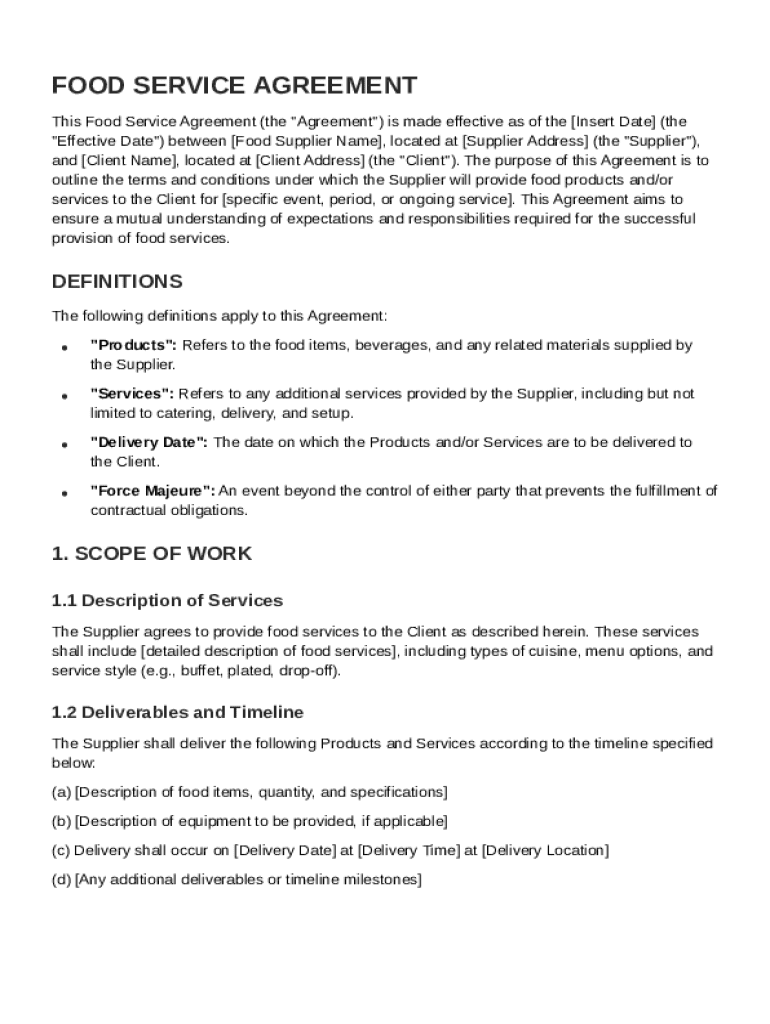
The Food Contract Template is a structured document that outlines the legal and operational relationships between a food supplier and a client. It encompasses the delivery of food products and services, ensuring both parties are aware of their obligations and the terms of their engagement. This template serves as a standardized framework to prevent misunderstandings and disputes, clarifying every aspect of the business relationship. Businesses often use it to expedite the process of drafting formal agreements while maintaining compliance with legal requirements.
Key Elements of the Food Contract Template
The template includes several critical components that ensure a comprehensive agreement:
- Definitions: Clearly specifies the terms and phrases used throughout the document, reducing ambiguity.
- Scope of Work: Outlines the specific services and products to be provided, tailored to the client's needs.
- Pricing and Payment Terms: Details the cost of services, payment methods, and schedules, preventing future disputes.
- Responsibilities: Allocates responsibilities between the supplier and the client to avoid overlapping roles.
- Cancellation Policies: Defines conditions under which either party may terminate the agreement.
- Liability Limitations: Limits each party's liability in case of failures or unforeseen issues.
- Governing Law: States which jurisdiction's laws apply to the contract, ensuring legal clarity.
- Confidentiality Provisions: Protects sensitive information shared between parties, maintaining privacy and trust.
Steps to Complete the Food Contract Template
- Review Definitions: Familiarize yourself with key terms and ensure alignment with your understanding.
- Fill in Party Details: Enter the legal names and contact information of both the supplier and the client.
- Define Scope of Work: Specify the products and services, including any special requirements or deliverables.
- Negotiate Pricing and Terms: Agree on pricing structures, payment methods, and due dates.
- Assign Responsibilities: Clearly outline tasks and expectations for both parties.
- Address Legal Provisions: Include clauses related to cancellation, liability, and confidentiality.
- Finalize and Sign: Once both parties agree on all details, sign the contract for it to become legally binding.
Who Typically Uses the Food Contract Template
This template is primarily used by food suppliers, catering companies, restaurants, and clients requiring regular or one-time food services. It is particularly beneficial for:
- Catering Services: Ensuring all event requirements are met.
- Restaurants: Coordinating meal delivery services for large clients or corporate events.
- Schools and Universities: Managing contracts for dining services.
- Corporate Clients: Ensuring their catering needs are formalized for business events.


Legal Use of the Food Contract Template
The Food Contract Template must comply with U.S. legal standards to ensure enforceability. Key legal considerations include:
- Adherence to the ESIGN Act: When signed electronically, signatures must adhere to the ESIGN Act to be considered legally binding.
- Jurisdiction and Governing Law: Clearly specify the applicable state law and jurisdiction for resolving disputes.
- Compliance with Local Regulations: Ensure the template aligns with local health and safety regulations concerning food service.
Software Compatibility
The Food Contract Template should be accessible and compatible with various digital platforms, enhancing usability:
- DocHub: Supports the template, allowing for easy editing, signing, and collaboration.
- Microsoft Word and Google Docs: Enables text modifications and version tracking.
- Cloud Storage Integration: Compatible with Google Drive, Dropbox, and OneDrive for seamless document management.
State-Specific Rules for the Food Contract Template
State regulations can influence the format and enforceability of food contracts:
- Health Codes: States have differing health and safety requirements related to food service, which must be considered.
- Licensing Requirements: Some states may require additional licenses or permits for food service operations.
- Taxation: State-specific sales tax terms may need inclusion in the pricing section.
Examples of Using the Food Contract Template
Real-world applications of the template illustrate its utility in various contexts:
- Wedding Catering: A caterer uses the template to detail menu options, pricing, and delivery schedules for a wedding reception.
- Corporate Lunches: A company contracts a food supplier for weekly meal services, using the template to specify dietary needs and billing.
- School Cafeterias: An educational institution formalizes its contract with a food vendor for daily meal provisions to students.
By providing clear guidelines and uniform structure, the Food Contract Template is an indispensable tool for entities looking to formalize food-related agreements efficiently and legally.