






Definition and Meaning
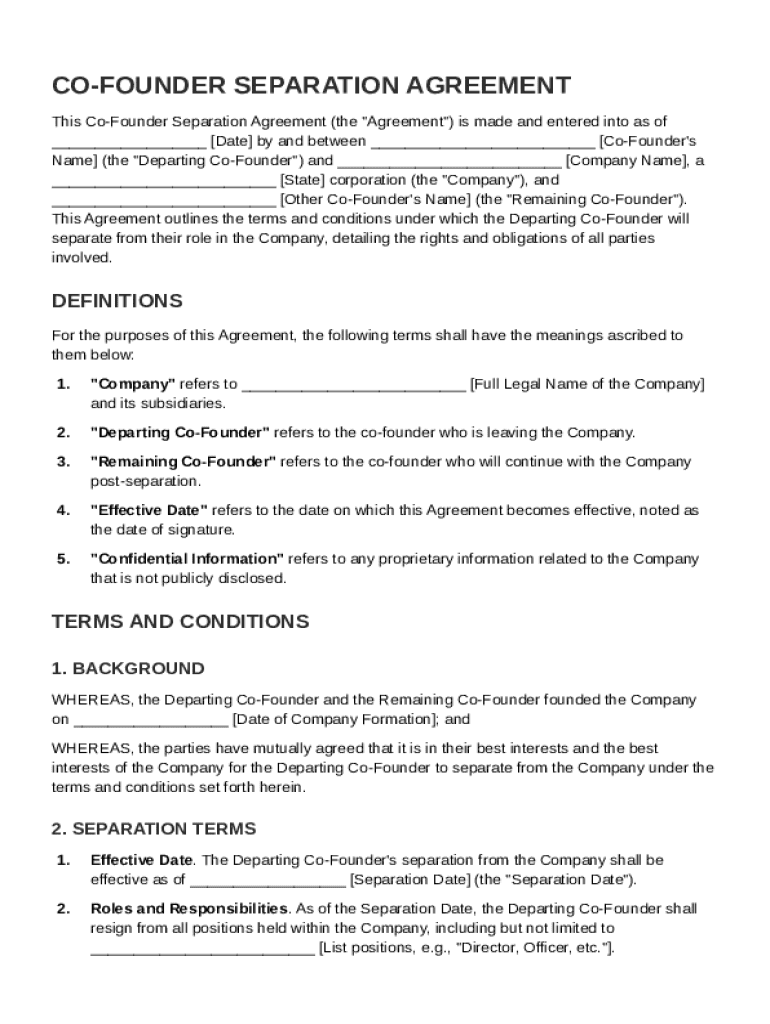
The Co-Founder Separation Agreement Template is a legal document designed to outline the terms and conditions for a co-founder departing from their role in a company. This template serves to delineate the rights and responsibilities of both the departing and remaining founders, ensuring a comprehensive understanding of separation terms. The agreement typically includes clauses related to financial arrangements, confidentiality, non-compete obligations, indemnification, and dispute resolution processes. By clearly defining these aspects, the separation agreement aims to provide a smooth transition and safeguard the interests of all parties involved.
Key Elements of the Co-Founder Separation Agreement Template
Creating and executing a Co-Founder Separation Agreement involves several critical components to ensure clarity and legal standing:
- Separation Terms: Clearly outlined conditions under which the separation occurs, including any notice periods and transition assistance.
- Financial Arrangements: Detailed explanation of financial compensations such as equity buyout terms, payment of any outstanding loans, or severance packages.
- Confidentiality Clauses: Provisions to protect sensitive company information post-separation, maintaining the confidentiality obligations agreed upon initially by the co-founder.
- Non-Compete and Non-Solicitation Clauses: Restrictions imposed on the departing co-founder regarding engagement with competitors or solicitation of existing clients and employees, ensuring fair competition and protection of the business's interests.
- Indemnification: Clauses addressing any legal protection or responsibilities assumed by either party in case of legal disputes arising from the co-founder’s activities while at the company.
- Dispute Resolution Mechanisms: Agreed processes for resolving disputes that may arise from the separation, including mediation or arbitration guidelines.
Steps to Complete the Co-Founder Separation Agreement Template
Completing a Co-Founder Separation Agreement requires a thorough and systematic approach to ensure all necessary information is included:
- Review the Template: Carefully read through the template to understand each section and its implications.
- Customize the Document: Fill in company-specific details, such as names of the parties involved, specific roles, and any particular circumstances surrounding the separation.
- Outline Financial Terms: Specify any financial compensations, including equity settlements, payment terms, and timeline.
- Define Conditions and Obligations: Clearly articulate confidentiality obligations and non-compete clauses to prevent future disputes.
- Seek Legal Counsel: Consult with legal professionals to review the draft for compliance with state laws and ensure all legal protections are in place.
- Finalize and Sign: After addressing any revisions, the document should be signed by all parties involved and a copy retained for records.
Who Typically Uses the Co-Founder Separation Agreement Template
The Co-Founder Separation Agreement Template is primarily utilized by business entities where ownership and leadership roles are shared among multiple founders. Typical users include:
- Startups: Companies in their early stages may frequently face changes in leadership, making a clear agreement crucial for maintaining stability.
- Small to Medium Enterprises (SMEs): Organizations with a close-knit leadership team benefit from preemptive agreements in case a co-founder chooses to leave.
- Tech Firms: These companies often have dynamic ownership structures and high employee turnover, necessitating detailed separation documents to protect intellectual property and business interests.
- Family-Owned Businesses: Though not common, family businesses sometimes require formal agreements to manage intra-family separations effectively.


Legal Use of the Co-Founder Separation Agreement Template
This template functions as a legally binding document when properly executed and can be used to:
- Enforce Separation Terms: Legally hold the departing co-founder to the agreed-upon terms and conditions, minimizing disruption to the business.
- Protect Business Assets: Secure confidential information and prevent potential competitive threats through restrictive clauses.
- Resolve Disputes: Serve as a reference point for dispute resolution, offering predetermined solutions for potential conflicts.
- Fulfill Legal Requirements: Ensure compliance with relevant state laws that govern the dissolution or alteration of business partnerships.
Important Terms Related to Co-Founder Separation Agreement Template
Understanding common terms in the Co-Founder Separation Agreement is crucial for effective communication and negotiation:
- Equity Buyout: Compensation type where the departing co-founder receives payment for their share of company equity.
- Severance Package: Benefits and payments offered to the departing co-founder as part of the separation deal.
- Intellectual Property (IP): Legal rights associated with creations of the mind such as inventions, designs, and company trade secrets.
- Restrictive Covenants: Binding clauses that limit the actions of the departing co-founder to protect the business.
State-Specific Rules for the Co-Founder Separation Agreement Template
The enforceability and specific requirements of certain clauses can vary by state due to differing laws about employment and business agreements. Key considerations include:
- Enforcement of Non-Compete Clauses: Some states have restrictions or outright bans on non-compete agreements, so it's critical to align such clauses with state laws.
- Mandatory Disclosures: Certain states might require disclosure of specific financial or operational details during the separation process.
- Mediation Requirements: State laws may dictate the necessity and process for mediation in the event of disputes over the separation agreement.
Examples of Using the Co-Founder Separation Agreement Template
Real-world scenarios illustrate the diverse applications of the Co-Founder Separation Agreement:
- Tech Startup Scenario: A co-founder with significant equity decides to pursue other ventures. A separation agreement is used to outline an equity buyback and establish non-solicitation clauses to protect proprietary technology.
- Family Business: When one family member co-founder decides to retire, the agreement ensures fair distribution of assets and establishes future engagement guidelines.
- Venture-Funded Enterprise: In cases of disagreements on company direction among founders, the agreement provides a structured manner to exit while securing financial compensation, ensuring business continuity.
By clearly delineating these various blocks of information, companies can effectively manage the complexities and potential conflicts associated with co-founder departures.