
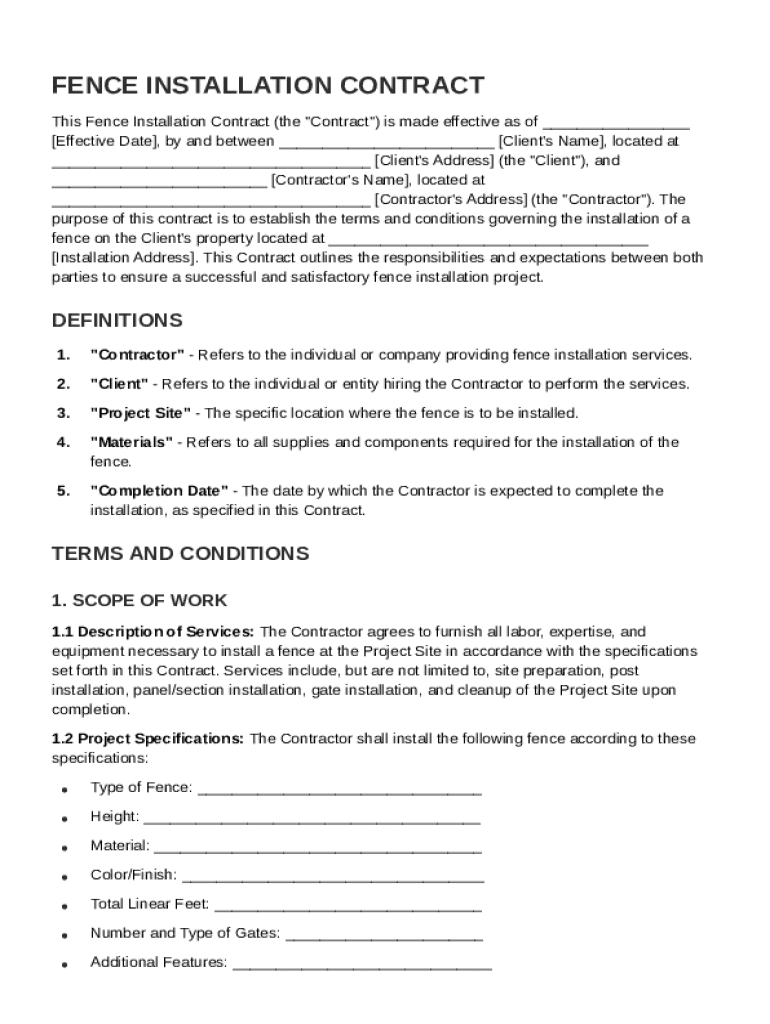







Definition & Understanding
The Fence Installation Contract is designed to formalize the agreement between a client and a contractor for the installation of a fence. It is a legal document that outlines various aspects of the project, ensuring all parties are aligned on expectations and responsibilities. This contract serves as a reference point for everyone involved, reducing the likelihood of misunderstandings or disputes. By detailing every component of the fence installation process, both the client and contractor can ensure that the project proceeds smoothly and efficiently.
How to Utilize the Fence Installation Contract Template
Utilizing the Fence Installation Contract Template involves customizing it to fit the specific details of your project. Start by filling in the basic information, such as the names and addresses of both parties. You should also specify the type of fence being installed and the exact location on the property. Include any pertinent dates, such as the start and expected completion dates. Once these basic details are set, proceed to complete sections related to pricing, payment terms, and responsibilities, ensuring that each part reflects the unique aspects of your agreement.
Obtaining the Fence Installation Contract Template
The Fence Installation Contract Template is available for download from various legal and document management platforms. To obtain it, you can visit online document services that specialize in legal templates, such as DocHub. These platforms often provide templates in multiple formats, making it easy to adapt them to your preferred word processing software. Be sure to review the template thoroughly before use, ensuring it meets your specific needs and any local legal requirements.
Steps to Complete the Fence Installation Contract Template
Completing the Fence Installation Contract Template involves several critical steps to ensure the document is effective:
- Gather all necessary information about the project and participating parties.
- Custom-tailor the template by entering specifics about the installation, including materials, timeline, and costs.
- Clearly outline payment terms, including any deposits, installments, or payment schedules.
- Define the scope of work, specifying tasks that are included and excluded from the contract.
- Include any warranties or guarantees offered by the contractor.
- Ensure both parties review the document thoroughly.
- Both the client and contractor should sign the contract, making it legally binding.
Key Elements of the Fence Installation Contract Template
A well-structured Fence Installation Contract Template should include several key elements:
- Scope of Work: Detailed descriptions of the tasks to be performed.
- Payment Details: Comprehensive payment terms, including total cost and payment schedule.
- Project Timeline: Start and completion dates, with provisions for delays.
- Client and Contractor Responsibilities: Specific duties and obligations of each party.
- Warranties and Guarantees: Any assurance regarding the quality or durability of the work.
- Termination Clause: Conditions under which the contract can be ended prematurely.
- Dispute Resolution: Methods for resolving any conflicts that may arise.
Who Typically Uses the Fence Installation Contract Template
The Fence Installation Contract Template is primarily used by contractors and property owners engaging in a fencing project. Contractors benefit by having a clear document that outlines the terms of service, protecting their business interests. Property owners or clients utilize this template to ensure that their expectations regarding the project are legally documented. Additionally, real estate agents and property managers might use the contract when fencing is part of a larger property improvement plan.


Legal Use of the Fence Installation Contract Template
Legally, the Fence Installation Contract Template acts as a binding agreement once both parties have signed. This means that the terms specified within must be adhered to, and failure to do so can result in legal repercussions. It is essential to ensure that the contract complies with state laws, as regulations can vary. Consulting with a legal advisor when drafting or customizing the contract can provide additional assurance that all components meet the necessary legal requirements.
State-Specific Considerations for Fence Installation Contracts
Fence Installation Contracts must align with the specific legal requirements of the state in which the property is located. This might include adhering to zoning laws, obtaining necessary permits, and following local regulations regarding fence height and materials. Understanding these state-specific considerations is crucial for ensuring the contract’s legality and avoiding potential legal issues during or after the installation process. Consulting state-specific guidelines or a local attorney can provide clarity on these matters.




