
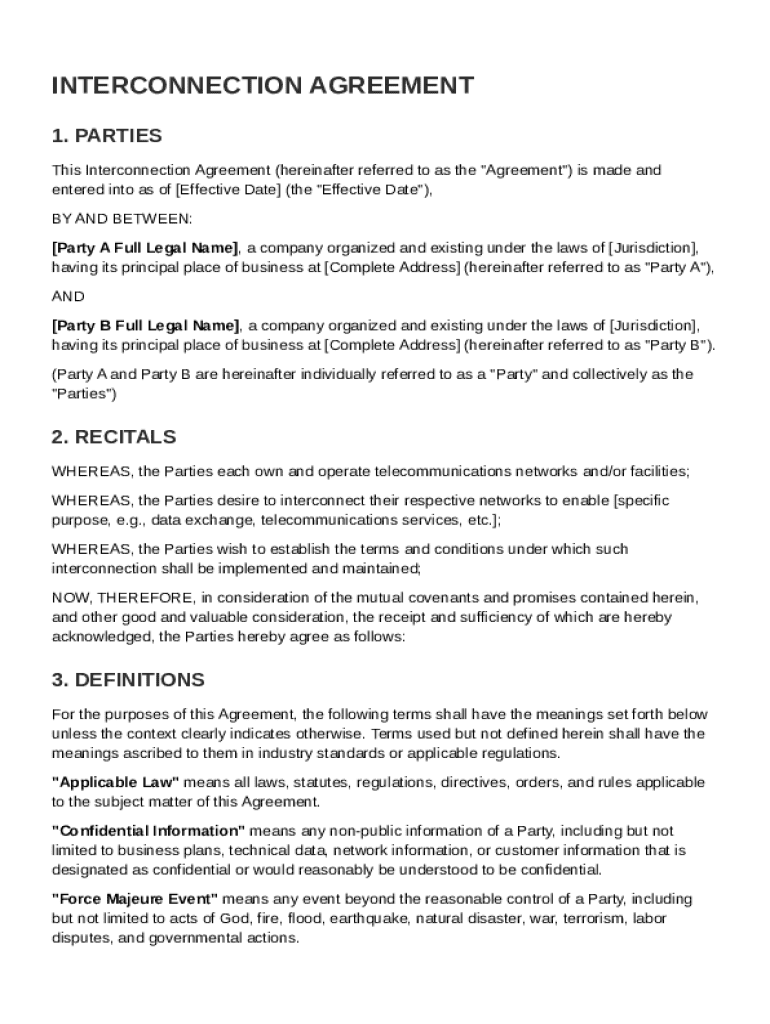







Definition & Meaning
The Interconnection Agreement Template is a formal document utilized by telecommunications companies to establish the terms and conditions under which two entities, often referred to as Party A and Party B, agree to connect their networks. This template serves as a foundational agreement that ensures the seamless exchange of data and the provision of telecommunications services between the parties involved. It outlines the specific obligations, technical standards, performance metrics, and liability clauses that each party must adhere to for successful interconnection. By providing a structured framework, the template helps in mitigating potential disputes and ensuring compliance with relevant laws and industry standards.
Key Elements of the Interconnection Agreement Template
The Interconnection Agreement Template encompasses several critical components designed to clarify the responsibilities and expectations of all parties involved:
- Technical Standards: Specifications that the interconnected networks must meet for effective connectivity.
- Confidentiality Provisions: Clauses to protect sensitive information exchanged between parties.
- Dispute Resolution Procedures: Defined protocols for resolving disagreements or breaches of contract.
- Performance Metrics: Standards that measure the quality of service and reliability of the interconnection.
- Liability Clauses: Details on the extent of responsibility each party bears in case of service failure or data breach.
These elements collectively ensure a robust and transparent agreement that facilitates reliable network interconnections.
How to Use the Interconnection Agreement Template
The Interconnection Agreement Template can be used as a guide to draft a customized agreement for telecommunication partnerships. Here’s how you can effectively utilize the template:
- Review the Template: Thoroughly read the entire document to understand its framework.
- Customize Provisions: Amend sections to reflect specific needs, such as technical requirements and confidentiality conditions.
- Include Specifics: Add details pertinent to the transaction, like network capabilities and performance expectations.
- Consult Legal Experts: Engage legal advisors to ensure compliance with applicable laws and safeguard against potential liabilities.
- Finalize and Sign: Have both parties review and agree to the terms, followed by signatures to validate the agreement.
The structured nature of the template aids in creating a comprehensive and legally sound contract tailored to the specifics of the agreement.
Who Typically Uses the Interconnection Agreement Template
The Interconnection Agreement Template is primarily used by telecommunications companies seeking to establish a formal relationship for network integration. Typical users include:
- Network Operators: Companies that manage and operate communication networks.
- Service Providers: Entities delivering internet, voice, or data services to consumers or businesses.
- Infrastructure Companies: Firms owning physical or virtual network infrastructure used in telecommunications.
- Regulatory Bodies: Agencies that might use the template as a standardized reference for compliance assessment.
These entities rely on the template to ensure their partnerships adhere to industry norms and legal requirements.


Steps to Complete the Interconnection Agreement Template
Completing the Interconnection Agreement Template involves several steps to ensure accuracy and completeness:
- Identify Parties: Clearly name all participating parties, including their businesses and addresses.
- Draft Specific Clauses: Modify clauses to address particular business needs and expectations.
- Set Performance Standards: Define measurable benchmarks for network service quality.
- Detail Network Requirements: Specify technological and operational prerequisites for the connection.
- Incorporate Legal Terms: Add legal language covering confidentiality, liability, and compliance.
- Review and Revise: Carefully review the agreement with all stakeholders to unearth any overlooked details or errors.
- Finalize: After consensus, obtain signatures from authorized representatives of each party to formalize the agreement.
Following these steps helps to create a well-defined and comprehensive agreement tailored to the specifications of the interconnection.
Legal Use of the Interconnection Agreement Template
The legal use of the Interconnection Agreement Template ensures the document adheres to all relevant laws and regulations applicable to telecommunications in the U.S. The template typically incorporates elements mandated by federal telecommunications legislation and industry practices, such as:
- Compliance: Meets requirements set by the Federal Communications Commission (FCC) and relevant state agencies.
- Adherence to Industry Standards: Aligns with guidelines from bodies like the Telecommunications Industry Association (TIA).
- Contractual Validity: Ensures that all parties recognize the agreement’s binding nature and legal enforceability.
Consulting with legal professionals versed in telecommunications law is advisable to reaffirm compliance and address jurisdiction-specific legal nuances.
State-Specific Rules for the Interconnection Agreement Template
While the template offers a foundational framework, state-specific regulations may necessitate additional provisions or adjustments. For instance:
- Technical Requirements: Some states might impose additional technical criteria specific to their infrastructure needs.
- Liability and Disputes: Variations in state laws concerning liability and dispute resolution can affect contract terms.
- Regulatory Compliance: State-level telecommunications commissions may have further guidance or requirements specific to interconnection agreements.
Understanding these variations ensures that the agreement is both comprehensive and compliant with local legal standards.
Examples of Using the Interconnection Agreement Template
The Interconnection Agreement Template has a wide range of practical applications in real-world scenarios:
- Network Expansion: Use the template to formalize agreements for expanding network reach into new geographical regions.
- Service Collaboration: When two providers join forces to enhance service delivery or create a bundled offering.
- Infrastructure Sharing: Allocate responsibilities and rights when sharing physical or virtual infrastructure for cost efficiency.
- Data Exchange Agreements: Establish protocols for secure and reliable data interchange between networks.
Each use case demonstrates the template’s flexibility in forging productive telecommunications collaborations.




