01. Edit your form online
Type text, add images, blackout confidential details, add comments, highlights and more.

Type text, add images, blackout confidential details, add comments, highlights and more.

Draw your signature, type it, upload its image, or use your mobile device as a signature pad.

Send it via email, link, or fax. You can also download it, export it or print it out.
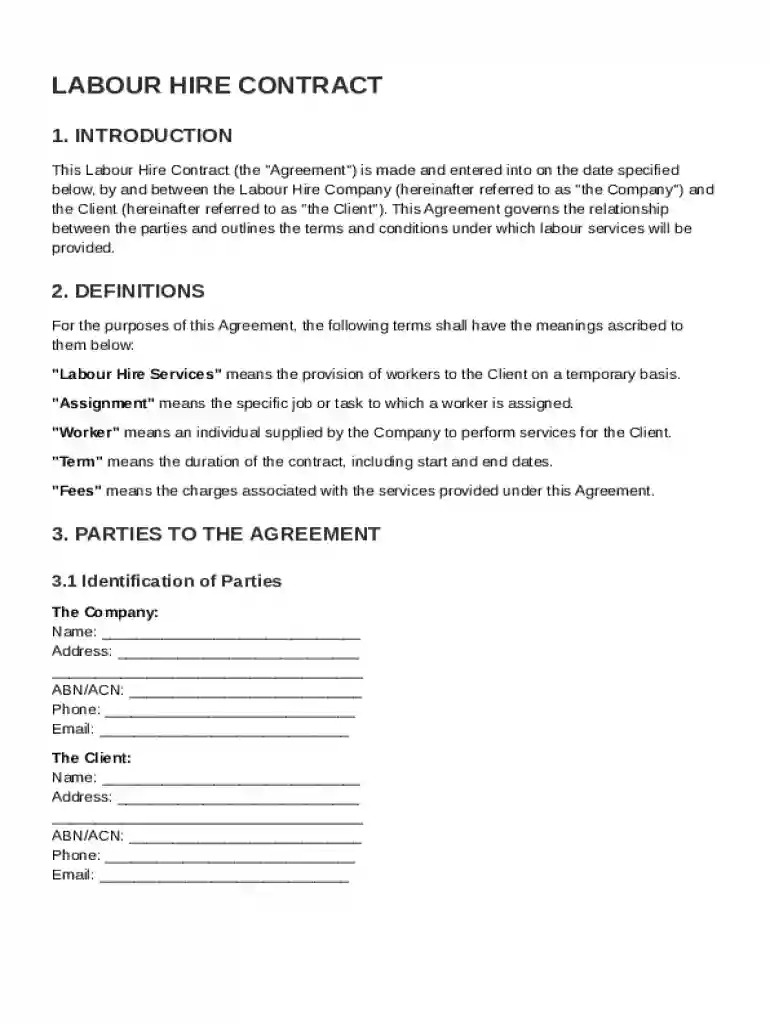
A Labour Hire Contract Template is a structured document that outlines the terms of an agreement between a Labour Hire Company and a Client. This contract includes specific provisions regarding the provision of temporary workers. It sets clear expectations by defining roles, responsibilities, and legal obligations of both parties involved. The template ensures that all pertinent details such as payment terms, duration, and termination clauses are formally agreed upon. This structured approach helps reduce misunderstandings and potential conflicts, establishing a transparent framework for hiring and managing labour.
This template covers several essential elements that are critical in a labour hire contract:
Definitions and Roles: It provides clarity on the specific roles and responsibilities of each party, including both the Labour Hire Company and the Client. This section ensures that each party is aware of their duties and obligations.
Payment Terms: Details on compensation structures, including hourly rates, billing cycles, and payment methods, are thoroughly outlined to avoid disputes over financial transactions.
Duration and Termination: The contract specifies the start and end dates of the agreement, along with conditions under which the contract may be terminated by either party.
Liability Limitations: This part of the contract sets forth any limitations on the liabilities of each party, providing a layer of protection against potential losses or legal issues.
Confidentiality Requirements: It addresses how sensitive information should be handled, ensuring that both parties respect privacy and proprietary information.
Dispute Resolution: Methods for resolving conflicts that may arise during the execution of the contract are laid out to facilitate a smoother resolution process.
Miscellaneous Provisions: Additional clauses that may cover various other terms, such as amendments, notices, and governing law, are also included.
Using the Labour Hire Contract Template involves several straightforward steps to customize it to your specific needs:
Review the Template: Start by thoroughly reviewing the entire template to understand its structure and contents. This will help identify sections that require customization based on your unique requirements.
Customize Definitions and Roles: Adjust the definitions and specific roles within the contract to align with the particulars of the parties involved and the nature of the work.
Set Payment Terms: Tailor the payment terms to reflect the agreed-upon compensation, including any special conditions related to overtime or bonuses.
Determine Duration: Specify the timeline for the contract, ensuring that both start and end dates are conveniently aligned with operational timelines.
Address Legal Aspects: Pay close attention to the legal sections, such as liability and confidentiality to ensure they meet your organizational needs and protect your interests adequately.
Finalize and Sign: Once customized, the contract should be reviewed by legal counsel if necessary, then finalized and signed by all parties involved.
Navigating the legal landscape is crucial when utilizing this template:
Compliance with Laws: Ensure the contract is compliant with federal, state, and local employment laws in the U.S. This includes adhering to regulations about temporary workers and wage requirements.
Binding Agreement: Once signed by all parties, the template serves as a legally binding document, providing legal recourse in case of disputes.
Dispute Resolution: Include legally sound mechanisms for handling disputes, such as mediation or arbitration, in adherence with jurisdictional legal practices.
Completing the template involves several critical steps:
Gather Information: Collect all pertinent information from both parties — names, addresses, and any relevant business details.
Input Contractual Terms: Fill in areas of the template that require specific data, such as names of the parties, specified services, and roles.
Review Legal Clauses: Carefully review and adjust legal clauses to suit the specific contractual obligations and regulations applicable in the U.S.
Consult Legal Advice: If needed, seek legal advice to verify the contract is thorough and complies with relevant legislation.
Finalize Contract: Ensure all necessary information is included, proofread for accuracy, and prepare the document for signing.
Obtain Signatures: Collect the signatures from all parties, ensuring the contract is executed properly and legally enforceable.
Understanding key terms related to the Labour Hire Contract Template is vital:
Client: The entity hiring temporary workers through the Labour Hire Company.
Labour Hire Company: The organization providing temporary workforce solutions to the Client.
Contractor: An individual temporary worker placed by the Labour Hire Company to perform services for the Client.
Scope of Work: A detailed description of the types of services the temporary workers will perform under this contract.
A variety of business entities can effectively utilize this template:
Staffing Agencies: These organizations employ the template to formalize agreements when providing staff to other companies.
Corporate HR Departments: Companies with fluctuating workforce needs use it to manage temporary hires efficiently.
Small Businesses: When hiring temporary workers for short-term projects, small businesses employ this template to ensure compliance and organizational efficiency.


Understanding state-specific regulations can influence how this template is used:
Variable Labor Laws: Each state may have distinct labor laws affecting temporary employment, requiring specific adaptations of the template.
Payroll and Taxes: State-specific taxation laws need to be considered, impacting how payment terms within the contract are structured.
Working Conditions: Ensure compliance with varying state regulations regarding working conditions, hours, and worker benefits, adaptable within the template to meet those needs.
At DocHub, your data security is our priority. We follow HIPAA, SOC2, GDPR, and other standards, so you can work on your documents with confidence.