






Definition and Meaning
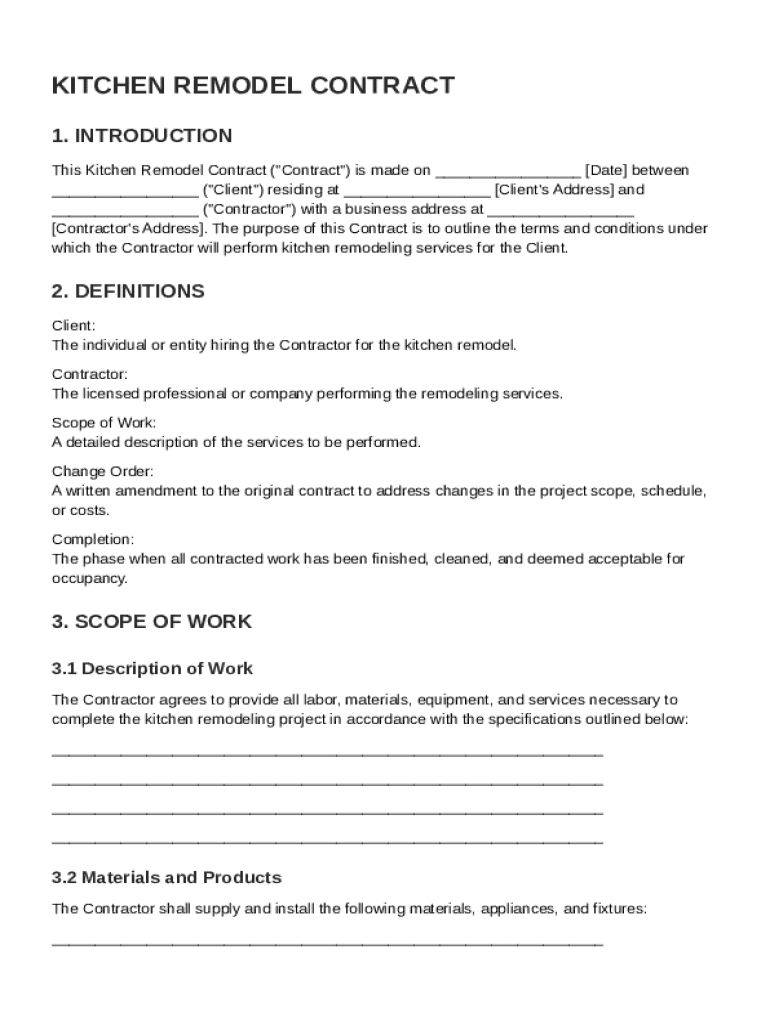
A Kitchen Remodel Contract Template is a document that formalizes the agreement between a client and a contractor regarding kitchen remodeling services. This contract provides a structured outline of the project, detailing each party's responsibilities and expectations. It includes essential components such as scope of work, pricing, timelines, and specific terms and conditions. Using a well-defined contract template helps to prevent misunderstandings and ensures a mutual understanding of the project's objectives and deliverables. This template serves as a legal framework that guides the execution of the remodeling project from start to finish, safeguarding the interests of both parties involved.
Key Elements of the Kitchen Remodel Contract Template
The Kitchen Remodel Contract Template contains several key sections that collectively ensure a comprehensive understanding of the project. Some of the critical components include:
-
Scope of Work: This section outlines the specific tasks and services to be performed during the remodeling process. It details the design elements, materials to be used, and any subcontractors involved.
-
Payment Terms: Clearly defined payment schedules and methods. This section specifies deposit amounts, installment schedules, and any penalties for late payments.
-
Change Orders: A process for handling modifications to the project scope. It outlines how changes are communicated, approved, and how they impact the project's budget and timeline.
-
Warranties and Guarantees: Provides information on the contractor's guarantee concerning the quality of work and materials used. It also details the duration and extent of these warranties.
-
Liability and Insurance: Outlines the insurance requirements and liability responsibilities of the contractor, ensuring protection against accidents and damages during the project.
Steps to Complete the Kitchen Remodel Contract Template
-
Initial Meeting and Consultation: Begin with a detailed discussion between the client and the contractor to establish project goals, timelines, and budget.
-
Drafting the Contract: Use the Kitchen Remodel Contract Template to draft an initial version. The template will guide you in filling out the necessary sections, such as project specifics, pricing, and legal terms.
-
Review and Revise: Both parties should thoroughly review the draft. Amendments might be necessary to address areas like scope modifications or payment terms.
-
Final Approval: Once both parties agree on the contract terms, finalize the document. This includes revising any initial drafts and confirming that all sections align with mutual expectations.
-
Signatures and Execution: Both client and contractor must sign the contract. This can be done electronically using platforms like DocHub, ensuring the document's legal enforceability.
Legal Use of the Kitchen Remodel Contract Template
The Kitchen Remodel Contract Template is a legally binding document that sets the groundwork for the execution of remodeling projects. In the U.S., such contracts must comply with local and federal laws governing construction and home improvement services. Elements like licensing requirements, building codes, and zoning laws are crucial for ensuring legal compliance. Legal professionals often recommend customizing templates to meet specific state regulations and project particulars, ensuring each contract meets jurisdictional standards and protects both parties from legal disputes.
Important Terms Related to the Kitchen Remodel Contract Template
Understanding certain terms can enhance the effective use of this legal document:
-
Retainage: A percentage of payment withheld until project completion to ensure satisfaction and compliance with the contract terms.
-
Substantial Completion: When the project is functional for its intended use, but minor tasks might remain unfinished.
-
Lien Waiver: A document from a contractor indicating they have received payment and waive any future lien rights against the property.
-
Force Majeure: Clauses addressing unforeseen events that could delay the project, such as natural disasters or significant supply chain disruptions.
How to Use the Kitchen Remodel Contract Template
Using the Kitchen Remodel Contract Template effectively involves several strategic steps:
-
Customize for Specific Needs: Adjust the template's sections to fit the unique aspects of the project. This includes tailoring the scope of work and payment terms to reflect specific client and contractor agreements.
-
Include Comprehensive Details: Ensure that no essential project elements are omitted, including special requirements, deadlines, and materials specifications.
-
Communicate Clearly: Use plain language while still capturing all necessary technical details to avoid misinterpretation by any party involved.
-
Regular Updates and Revisions: Keep the contract updated throughout the project lifecycle to encompass any agreed changes or unforeseen circumstances. Regular communication will help prevent contract disputes.
State-Specific Rules for Kitchen Remodel Contracts
Kitchen remodel contracts may be subject to state-specific regulations that can impact the project:
-
Licensing Requirements: Contractors must often hold valid state licenses for construction and remodeling services.
-
Statute of Limitations: Each state may have specific time frames within which claims for breach of contract must be filed.
-
Disclosure Laws: Some states require specific consumer protection disclosures to be included in home improvement contracts.
Understanding these rules ensures compliance and reduces the risk of legal disputes, making it vital to consult local regulations when drafting or modifying a kitchen remodel contract.
Who Typically Uses the Kitchen Remodel Contract Template
The Kitchen Remodel Contract Template is primarily utilized by:
-
Homeowners: Individuals looking to update or enhance their kitchen spaces for improved functionality or aesthetic appeal.
-
Professional Contractors: Companies or independent contractors specializing in kitchen renovations, offering remodeling services to clients.
-
Real Estate Agents and Developers: Professionals managing property renovations to increase market value or appeal.
Using a structured and comprehensive contract template helps streamline the process, ensuring clarity and reducing the potential for misunderstandings between parties.