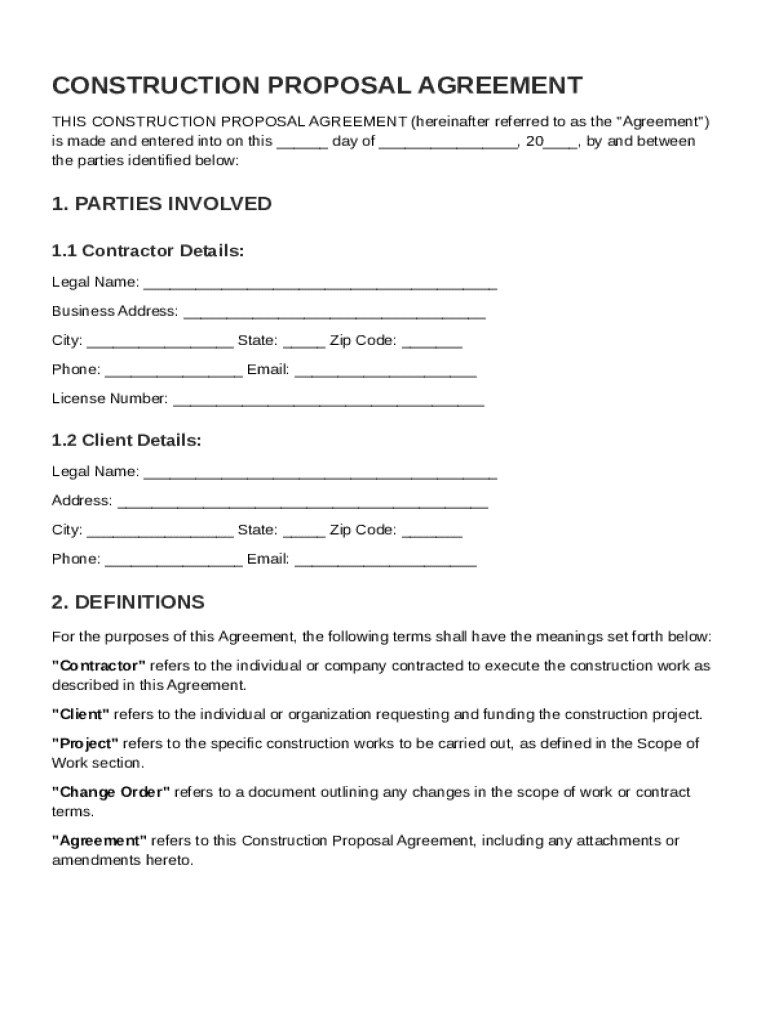







Definition and Purpose of the Construction Proposal Agreement Template
A Construction Proposal Agreement Template serves as a legally binding contract between a contractor and a client for a construction project. The primary purpose of this document is to clearly outline the terms, conditions, and expectations of both parties. It includes key elements such as the scope of work, compensation structure, responsibilities, project timeline, and dispute resolution methods. This template ensures that both parties are fully aware of their obligations and helps prevent misunderstandings during the project's lifecycle. By using a standardized template, contractors and clients can streamline the negotiation process and establish a solid foundation for their working relationship.
Key Elements of the Construction Proposal Agreement Template
The Construction Proposal Agreement Template typically includes a variety of essential components to ensure comprehensive coverage of all project aspects:
- Parties Involved: Clearly identifies the contractor and client, including their contact information and relevant details.
- Scope of Work: Describes the specific tasks and objectives that the contractor will undertake. This section should be detailed to prevent any discrepancies or misunderstandings.
- Compensation Structure: Outlines payment methods, schedules, and any conditions related to financial transactions.
- Project Timeline: Includes start and end dates, along with any significant project milestones.
- Insurance Requirements: Specifies necessary insurance policies that the contractor must maintain throughout the project duration.
Steps to Complete the Construction Proposal Agreement Template
Completing a Construction Proposal Agreement Template involves several methodical steps:
- Review the Template: Familiarize yourself with the entire document to ensure that you understand each section's requirements.
- Input Party Information: Enter accurate details about the contractor and client, including official names and addresses.
- Define the Scope of Work: List the tasks, services, and goals that must be accomplished, ensuring clarity and precision.
- Specify Payment Terms: Detail the compensation structure, ensuring that all payment conditions and schedules are transparent.
- Timeline and Milestones: Establish realistic timeframes for project phases, and note key deadlines or checkpoints.
- Include Legal Terms: Add clauses related to termination, dispute resolution, and governing law, ensuring they align with any state-specific regulations.
Who Typically Uses the Construction Proposal Agreement Template
This template is widely used by professionals within the construction industry, including:
- General Contractors: To formalize agreements with clients for new constructions or renovations.
- Subcontractors: To detail the terms with primary contractors for specific project components.
- Clients: Property owners or developers who engage contractors to ensure project terms are legally binding.
- Project Managers: To track and manage project details in organized, legal documentation.


Legal Use and Considerations for the Construction Proposal Agreement Template
The Construction Proposal Agreement Template must be used within the legal constraints governing construction contracts in the relevant jurisdiction:
- Governing Law: Ensure the agreement complies with the applicable state laws where the project is based.
- Compliance: Verify that all parties meet the necessary licensing and insurance requirements to legally enter a construction contract.
- Dispute Resolution: Include mechanisms for addressing any disputes that may arise, such as mediation or arbitration procedures.
Important Terms Related to the Construction Proposal Agreement Template
A comprehensive understanding of specific terms is crucial for drafting an effective Construction Proposal Agreement:
- Change Order Process: Procedures for making amendments to the original scope of work, which often involve additional costs or time.
- Severability: A clause ensuring that if some portions of the contract are deemed unenforceable, the remainder still stands.
- Force Majeure: Situations where unforeseen events free parties from their legal obligations due to factors beyond their control.
Examples of Using the Construction Proposal Agreement Template
Practical scenarios where the Construction Proposal Agreement Template proves invaluable include:
- Residential Construction: Home builders employing contractors to execute new builds under detailed agreements.
- Commercial Projects: Businesses commissioning office renovations and requiring clear terms to manage costs and timelines.
- Government Contracts: Public sector projects where transparency and accountability in the agreement are critical for compliance and oversight.
Versions and Alternatives to the Construction Proposal Agreement Template
Various alternatives may exist for the Construction Proposal Agreement Template, depending on the project's nature and specific needs:
- Short-Form Agreements: Used for smaller projects or less complex undertakings, focusing on essential terms.
- Master Service Agreements: Set overarching terms for ongoing or multi-phase projects, with specifics detailed in subsequent work orders or appendices.
Software Compatibility for Managing Construction Proposal Agreements
DocHub is an excellent tool for managing these types of documents, featuring seamless compatibility with various file formats for ease of use:
- Interactive Editing: Enables adding annotations, signatures, and comments directly onto the document.
- Cloud Integration: Supports integration with Google Drive and other cloud services for easy file sharing and collaboration.
- Real-Time Sync: Facilitates continuous updates and access to the most current version of documents across devices and contributors.