






Definition & Meaning
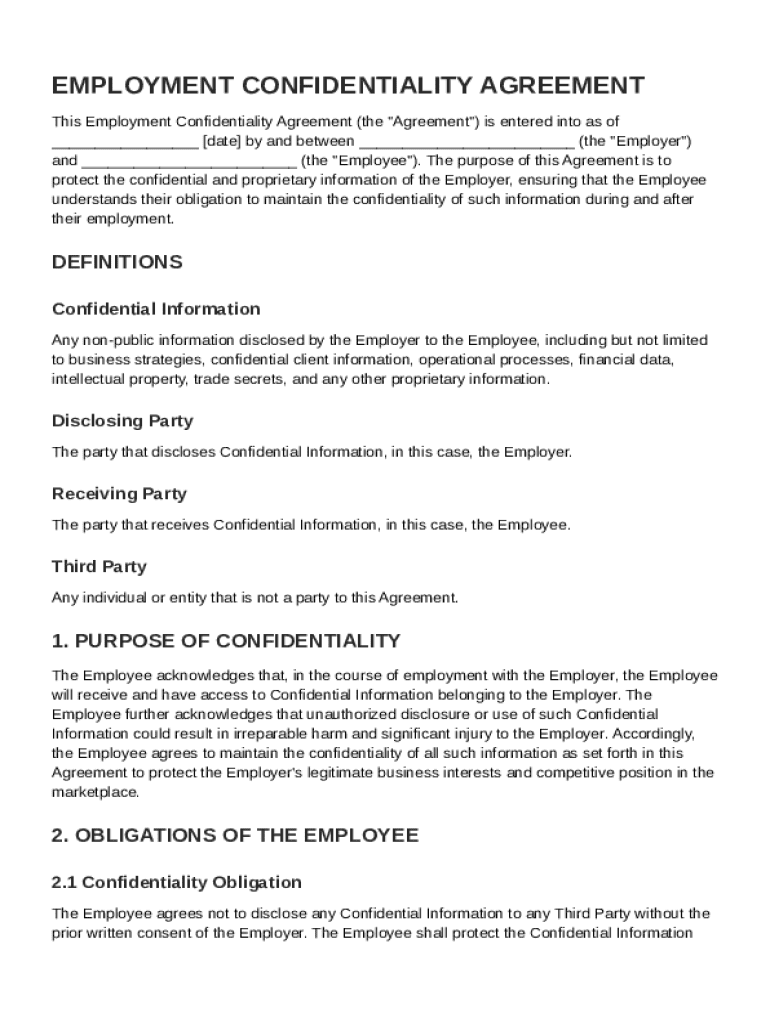
An Employment Confidentiality Agreement Template is a written document designed to protect an employer's confidential and proprietary information from being disclosed by an employee during and after their term of employment. It establishes the obligations and responsibilities of the employee to maintain the confidentiality of sensitive information such as trade secrets, business plans, customer lists, and other critical data. This legally binding agreement aims to safeguard the business interests of the employer by preventing unauthorized dissemination of confidential information.
Key Elements of the Employment Confidentiality Agreement Template
The Employment Confidentiality Agreement Template typically includes several critical components to ensure comprehensive protection of sensitive information:
- Definition of Confidential Information: Clearly outlines what constitutes confidential information, including trade secrets, financial data, strategies, customer records, and intellectual property.
- Obligations of the Employee: Details the responsibilities of the employee to protect confidential information, both during and after employment.
- Exclusions from Confidentiality: Specifies what information is not deemed confidential, such as publicly available data or information obtained independently by the employee.
- Remedies for Breach: Describes the legal actions and penalties the employer can pursue in the event of a confidentiality breach by the employee.
How to Use the Employment Confidentiality Agreement Template
Utilizing an Employment Confidentiality Agreement Template involves understanding its purpose and implementing it effectively to protect business information. Here are the general steps:
- Customization: Modify the template to fit your specific business needs and the nature of the confidential information you wish to protect.
- Legal Review: Consult a legal professional to ensure the agreement complies with relevant laws and adequately addresses your business’s protection needs.
- Employee Discussion: Discuss the agreement’s terms with the employee to ensure they understand their obligations and the importance of confidentiality.
- Execution: Both parties sign the agreement before the employee starts their role or when integrating confidentiality terms into an existing employment relationship.
Who Typically Uses the Employment Confidentiality Agreement Template
The Employment Confidentiality Agreement Template is widely used across various industries and sectors by:
- Employers: To protect proprietary business information and to enforce confidentiality in different roles within the organization.
- Human Resources Professionals: As part of the onboarding process to ensure new hires understand and agree to maintain confidentiality.
- Legal Advisors: To craft and tailor agreements that adhere to legal standards and effectively safeguard sensitive information.
- Business Owners: Particularly startups and technology firms, where intellectual property and trade secrets are key competitive advantages.


Steps to Complete the Employment Confidentiality Agreement Template
Completing the Employment Confidentiality Agreement Template involves several key steps to ensure its effectiveness:
- Identify Confidential Information: Clearly detail the types of information to be protected under the agreement.
- Draft Clear Obligations: Outline the specific responsibilities of the employee regarding the handling and protection of confidential information.
- Specify Duration of Obligations: Define the time period during which the employee's confidentiality obligations remain in effect, often extending beyond employment.
- Outline Consequences of Breach: Clearly articulate the legal and financial repercussions in case the agreement is violated by the employee.
- Legal Verification: Ensure the agreement is legally sound by having it reviewed by a legal expert.
- Signature and Dating: Both parties should sign and date the agreement, confirming their understanding and acceptance of its terms.
Legal Use of the Employment Confidentiality Agreement Template
The legal use of the Employment Confidentiality Agreement Template is crucial to protecting business interests. This includes:
- Compliance with Laws: Ensuring that the agreement complies with applicable federal and state laws, including the Defend Trade Secrets Act.
- Enforceability: Drafting terms that make the agreement enforceable in court, such as reasonable scope and duration of confidentiality obligations.
- Protection of Intellectual Property: Using the agreement to prevent the loss of intellectual property and competitive information through unauthorized disclosure.
State-Specific Rules for the Employment Confidentiality Agreement Template
The enforceability and specific requirements of confidentiality agreements can vary by state in the U.S. Key considerations include:
- Differences in State Laws: Some states impose restrictions on the scope of confidentiality agreements to avoid unreasonable limitations on employment opportunities.
- Legislation Changes: Regular updates in state laws concerning employment and confidentiality agreements necessitate checking for compliance.
- Jurisdiction Clauses: Including clauses that specify which state’s laws apply in interpreting the agreement to ensure clarity in enforcement.
Examples of Using the Employment Confidentiality Agreement Template
Practical examples of employing the Employment Confidentiality Agreement Template include:
- Technology Firms: Protecting proprietary algorithms and software data by requiring employees to maintain confidentiality.
- Healthcare: Safeguarding patient records and medical data with strict confidentiality agreements to comply with HIPAA regulations.
- Financial Institutions: Ensuring that employees do not reveal sensitive financial strategies and client information.
These examples illustrate the template's adaptability across various industries to protect crucial business information.