






Definition & Meaning
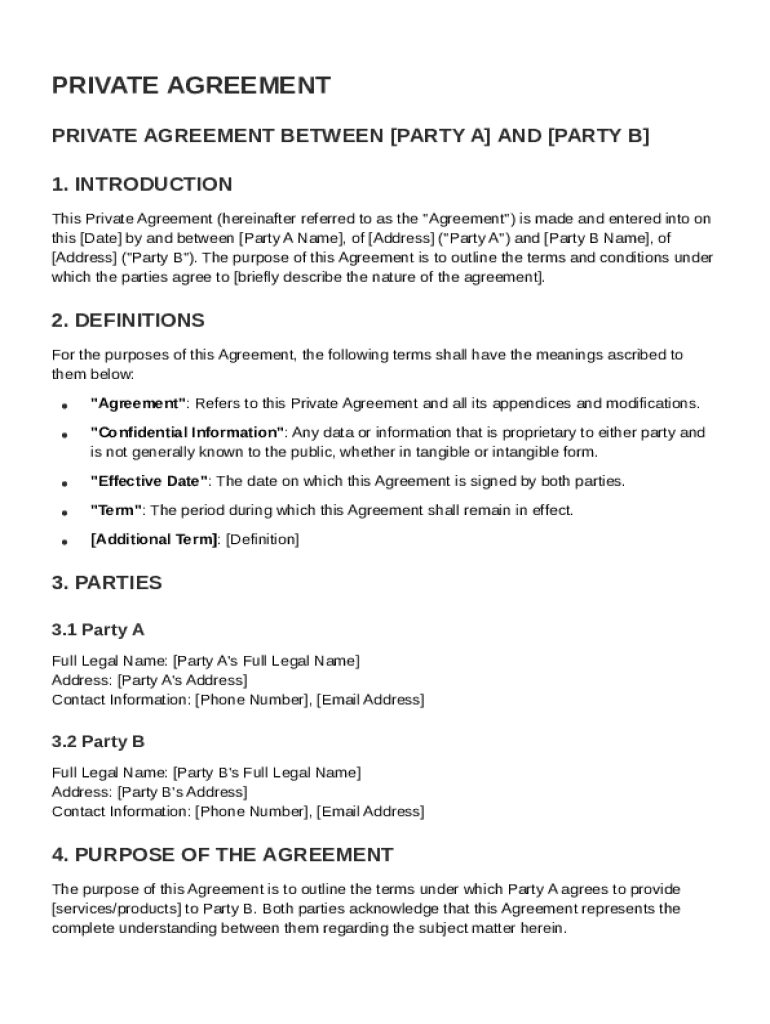
A Private Agreement Template is a pre-designed document that outlines the terms and conditions between two or more parties. It serves as a foundational legal document that defines the responsibilities, rights, and obligations of each party involved. This template typically includes essential components such as definitions, payment terms, confidentiality agreements, termination conditions, and dispute resolution procedures. It is crucial in facilitating mutual understanding and protecting the interests of parties involved in business dealings or service contracts.
Key Elements of the Private Agreement Template
-
Parties Involved: Clearly lists the parties entering into the agreement, typically labeled as Party A and Party B.
-
Scope of Work or Services: Details the specific services or products being provided, ensuring clarity on what is expected from each party.
-
Payment Terms: Specifies the payment structure, including amounts, due dates, and any applicable penalties for late payments.
-
Confidentiality Clauses: Includes provisions to safeguard sensitive information shared between parties.
-
Termination Conditions: Outlines the scenarios under which the agreement can be terminated by either party.
-
Dispute Resolution Procedures: Describes the processes for resolving disagreements, including mediation or arbitration.
-
Governing Law: Identifies the jurisdiction's laws that will apply to the agreement, often determined by the location or preference of one or both parties.
How to Use the Private Agreement Template
-
Select the Template: Start by choosing a template that closely matches your needs, considering the type of transaction or agreement being documented.
-
Customize the Document: Modify sections to align with the specific details of your agreement. Ensure all sections reflect the mutual understanding and stipulations agreed upon by each party.
-
Review Terms: Thoroughly verify that all terms, definitions, and obligations are correct and agreeable. This step is crucial to avoid future disputes.
-
Consult Legal Advice: Consider consulting with a legal advisor to ensure compliance with applicable laws and that the document meets all legal requirements.
-
Final Approval: Once all parties have reviewed the document, make final adjustments based on any feedback before proceeding to signatures.
Legal Use of the Private Agreement Template
Private agreement templates are legally binding once signed by all parties and are used to formalize business deals or services. It is critical to ensure that these documents comply with the legal standards of the jurisdiction in which they are executed. Compliance with the Electronic Signatures in Global and National Commerce Act (ESIGN Act) for electronic signatures and relevant state laws ensures enforceability. The template acts as evidence in case of disputes, making it essential to maintain a clear and comprehensive record.
Steps to Complete the Private Agreement Template
-
Data Collection: Gather all necessary information from each party, including contact details and specific terms related to the deal.
-
Drafting: Use the template to input the data, ensuring that all necessary sections are completed accurately.
-
Review and Edit: Go through the drafted document for any errors or omissions and make necessary corrections.
-
Negotiate Terms: Discuss and clarify any contentious points with the other parties, making amendments where necessary.
-
Finalize and Sign: After all parties are satisfied, finalize the document and obtain all required signatures, whether electronic or handwritten.
Important Terms Related to Private Agreement Template
-
Indemnification: Protects a party against loss or damages from third-party claims.
-
Force Majeure: Frees parties from liability or obligation when an extraordinary event or circumstance beyond their control occurs.
-
Non-disclosure: Ensures confidentiality of the shared information that might otherwise be exposed to third parties.
-
Severability: Ensures that if one part of the agreement is found invalid, the rest remains enforceable.
-
Assignment: Refers to the ability of a party to transfer its rights or obligations under the agreement to another entity.
Who Typically Uses the Private Agreement Template
The Private Agreement Template is commonly utilized by:
-
Business Entities: Corporations, partnerships, and LLCs engaging in transactions, partnerships, or service agreements.
-
Freelancers and Contractors: Individuals providing services and wishing to formalize terms with clients.
-
Startups: Emerging companies establishing clear agreements for investments, equity distributions, or team roles.
-
Individual Consumers and Sellers: For personal transactions, such as selling goods or property.


State-Specific Rules for the Private Agreement Template
Different states may impose specific rules regarding private agreements, affecting components like governing law and regulatory compliance. For instance:
-
Some states require specific language or clauses in agreements to be legally enforceable.
-
The enforceability of non-compete clauses varies significantly from state to state.
-
State laws can dictate mandatory disclosures or forms that must accompany certain types of agreements, such as real estate transactions or employment contracts.
Understanding these variations is essential when drafting a private agreement template, ensuring it aligns with all applicable legal requirements in the relevant state.