
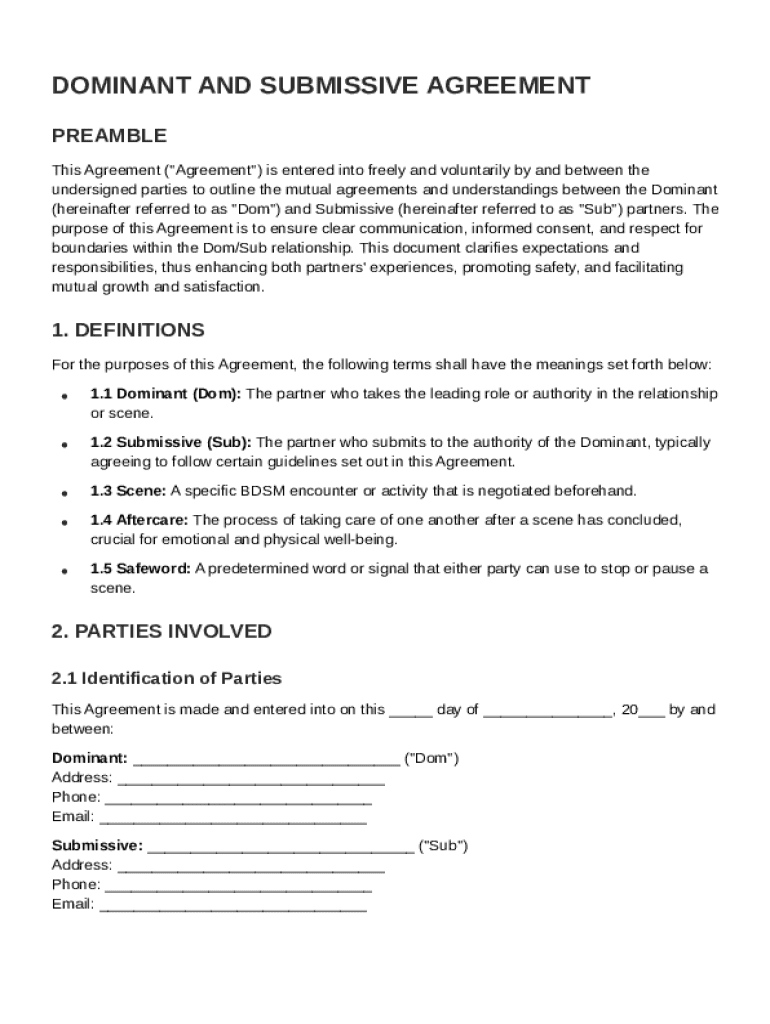







Definition and Meaning
The "Dom Sub Contract Template" refers to a formalized agreement used in BDSM relationships to define roles, responsibilities, and boundaries between a Dominant (Dom) and a Submissive (Sub). This template serves as a guide to ensure that both parties have a mutual understanding and respect for each other's preferences and limits, providing a structure for communicating consent and safety protocols. This document is integral in setting clear expectations and enhancing the relationship by reinforcing boundaries while fostering trust and respect.
Key Elements of the Dom Sub Contract Template
The Dom Sub Contract Template includes several critical elements that outline the specifics of the relationship. These elements are essential to ensure all parties are on the same page regarding the dynamics of the relationship.
- Roles and Responsibilities: Clearly defines what is expected from both the Dominant and Submissive, including their duties and obligations.
- Consent Statements: Both parties agree on what activities are permissible, emphasizing informed consent and mutual understanding.
- Safety Protocols: Details measures to ensure safety during activities, including safe words and boundaries, as well as protocols for aftercare.
- Limits on Activities: Identifies activities that are off-limits or require additional discussion, ensuring that all boundaries are respected.
- Health and Safety Requirements: Covers any relevant health considerations and safety standards that need to be maintained.
- Termination Conditions: Outlines conditions under which the agreement can be modified or terminated by either party.
- Confidentiality Clauses: Ensures privacy by stipulating that details of the agreement and relationship not be shared without consent.
Steps to Complete the Dom Sub Contract Template
To effectively complete the Dom Sub Contract Template, follow these structured steps:
-
Initial Discussion: Begin with a candid conversation to discuss desires, limits, and expectations. This should be a collaborative dialogue that addresses both parties' needs and concerns.
-
Draft the Agreement: Fill in the template with personalized details, reflecting the outcomes of your initial discussions. This includes specifying roles, responsibilities, and limits.
-
Review and Revise: Both parties should review the document for clarity and completeness, revising sections as necessary to ensure mutual agreement and understanding.
-
Consent and Finalization: Conduct a final review of the agreement. Both parties should verify their understanding and consent to all terms before officially signing the contract.
-
Sign and Date: Ensure both parties sign and date the agreement. This step is crucial to signify that each party commits to the terms outlined within the document.
Why Use a Dom Sub Contract Template
There are several reasons why individuals might choose to use a Dom Sub Contract Template:
- Enhance Communication: The template provides a framework for discussing preferences, limits, and expectations, aiming to enhance communication and understanding.
- Promote Safety: Establishes clear safety protocols and guidelines to protect both parties, emphasizing the importance of consent and designated safe words.
- Build Trust: By outlining clear terms and expectations, the template helps build a foundation of trust between the Dom and Sub roles.
- Clarify Boundaries: Ensures that all parties are aware of each other’s boundaries and acceptable activities, preventing misunderstandings and potential conflicts.
- Encourage Commitment: A formal agreement underscores commitment to the relationship by detailing faithful adherence to agreed terms.
Important Terms Related to Dom Sub Contract Template
Understanding the terminology related to the Dom Sub Contract Template is crucial for accurately interpreting and completing the document. Here are some key terms frequently used:
- Dominant (Dom): In a BDSM relationship, the individual who takes on a controlling or leading role.
- Submissive (Sub): The individual who relinquishes control and follows the guidance of the Dominant.
- Safe Words: Pre-agreed words used to interrupt or halt activities when boundaries are being approached or have been crossed.
- Aftercare: The process of care and reassurance provided after a BDSM session to address emotional and physical needs.
- Limits: Defined boundaries that specify which activities are acceptable and which are not.
Legal Use of the Dom Sub Contract Template
The legal usage of a Dom Sub Contract Template should be approached with caution and an understanding of its limitations:
- Enforceability: While this contract emphasizes mutual consent, it may not be legally enforceable in courts due to the nature of personal relationship agreements.
- Consent: It is vital that all provisions of the contract focus on mutual consent and do not include any illegal activities.
- Privacy Laws: The confidentiality section of the contract should align with applicable privacy laws to protect individual rights.
State-Specific Rules for the Dom Sub Contract Template
State-specific rules can impact the applicability or interpretation of a Dom Sub Contract Template:
- State Laws: Laws concerning adult relationships and consent can vary by state, affecting the enforceability and interpretation of the contract.
- Consent Age: Ensure that all parties involved meet the legal age of consent, which may vary from state to state.
- Legal Advice: Consulting with a legal professional within your state can provide personalized guidance and ensure the template aligns with local laws.
Examples of Using the Dom Sub Contract Template
Practical examples can highlight how a Dom Sub Contract Template might be used:
- Enhanced Communication: A couple uses the template to communicate boundaries clearly, facilitating stronger trust and understanding.
- Trust Building: Parties leverage the agreement to establish trust by committing to transparent and consensual practices.
- Boundary Setting: The document serves as a tool for participants to explore their relationship with clearly defined limits, reducing ambiguity and fostering respect for personal boundaries.




