
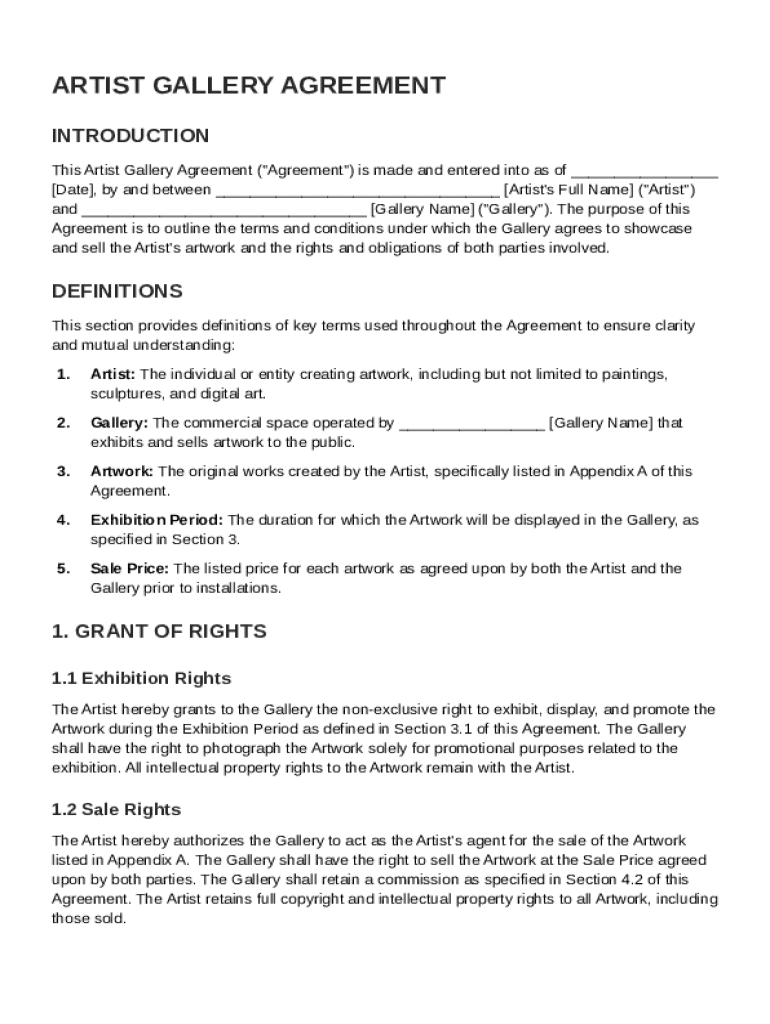







Definition & Meaning
An Artist Gallery Agreement Template is a legally binding document used to outline the terms and conditions between an artist and a gallery. It primarily details how an artist's works will be displayed, marketed, and sold through the gallery. This template serves as a framework to protect the interests of both parties by clearly defining roles, rights, and responsibilities. The agreement typically addresses exhibition rights, pricing structures, promotional activities, and intellectual property rights. By employing this contractual tool, artists and galleries can prevent misunderstandings, manage expectations, and maintain a professional relationship.
Practical Examples
- Exhibition Terms: Specify whether the artwork will be displayed physically in a gallery or online, and for how long.
- Sale Procedures: Define how sales transactions will be handled, including payment methods and commission percentages.
- Marketing Obligations: Outline how and where the gallery will promote the artist's work, such as through social media or exhibitions.
Key Elements of the Artist Gallery Agreement Template
The Artist Gallery Agreement Template encompasses several crucial components that ensure both the artist's and the gallery's interests are safeguarded.
Core Elements
- Exhibition Rights: Clarify the length, location, and conditions under which the artwork will be displayed.
- Sale Provisions: Include details regarding pricing, commission rates, and financial settlement processes.
- Intellectual Property Rights: Establish that the artist retains ownership of their work and outline any licensing terms for reproduction or promotional purposes.
- Insurance and Liability: Determine responsibility for insuring the artwork against damage or theft while under the gallery's care.
Considerations
- Dispute Resolution: Define mechanisms for resolving disagreements, such as mediation or arbitration.
- Termination Conditions: Specify the circumstances under which the agreement can be dissolved by either party.
How to use the Artist Gallery Agreement Template
Utilizing the Artist Gallery Agreement Template involves several key steps to ensure it is correctly adapted to your specific situation.
Step-by-Step Instructions
- Review the Template: Carefully examine each section to understand its implications and relevance to your arrangement.
- Customize Terms: Adjust conditions related to exhibition duration, commission rates, and promotional activities according to mutual agreements.
- Include Additional Provisions: If necessary, add clauses that address unique aspects of the artist-gallery relationship.
- Seek Legal Advice: Consult with a legal professional to verify that the document complies with applicable laws and adequately protects your interests.
- Signature and Approval: Once both parties agree on the terms, sign the document to make it legally enforceable.
Real-World Scenario
An artist may modify the percentage of sales commission based on the gallery's location or reputation, increasing it for high-traffic areas or renowned exhibits.
Steps to complete the Artist Gallery Agreement Template
Completing the Artist Gallery Agreement Template involves a structured process to ensure all necessary details are covered and agreed upon.
Detailed Completion Process
- Gather Information: Collect essential details from both the artist and the gallery, such as contact information and business IDs.
- Define Roles and Expectations: Clearly state the responsibilities of each party in regards to artwork handling, promotion, and sales.
- Draft Initial Terms: Use the template to outline initial terms, including exhibition logistics and financial agreements.
- Negotiate Adjustments: Discuss and adjust terms where necessary to meet both parties' needs, focusing on areas like commission rate and exclusivity.
- Finalize the Agreement: Review the document to ensure accuracy and completeness before proceeding with signatures.
Common Adjustments
Artists may negotiate commission rates based on their individual needs or propose alternative exhibition arrangements, such as pop-up galleries.
Legal Use of the Artist Gallery Agreement Template
The Artist Gallery Agreement Template must adhere to legal standards to be enforceable. Both parties should ensure compliance with relevant laws and regulations.
Legal Compliance Checklist
- Verify Identification: Confirm the legal identities of both the artist and gallery representatives.
- Compliance with State Law: Ensure the agreement aligns with state-specific regulations, which may vary across jurisdictions.
- Adhere to Contractual Laws: The template must meet standard contractual principles, such as mutual consent and consideration.
Importance of Legal Advice
Engaging a legal expert can help identify potential legal issues and ensure that the agreement satisfies statutory requirements, thus mitigating future legal risks.
Important Terms Related to the Artist Gallery Agreement Template
Understanding key terminology within the Artist Gallery Agreement Template facilitates clearer communication and minimizes misunderstandings.
Key Terms and Definitions
- Commission: A fee charged by the gallery for selling the artist's work, typically expressed as a percentage of the sale price.
- Consignment: An arrangement where the artist supplies artwork to the gallery, which then attempts to sell the pieces on the artist's behalf.
- Exclusivity: An agreement that restricts the artist from exhibiting or selling their work through other galleries within a defined period or area.
Nuances and Variations
- Consignment agreements often specify varying payment terms, such as upfront fees or deferred payments after the artwork sells.
- Exclusivity clauses may be adjusted based on the artist’s existing relationships with other galleries or their desire to broaden their market presence.
Who Typically Uses the Artist Gallery Agreement Template
The Artist Gallery Agreement Template is primarily utilized by individuals and entities involved in the art market. Understanding this audience helps tailor the agreement to specific needs.

Primary Users
- Individual Artists: Who wish to showcase their work in a professional setting and seek to protect their interests.
- Art Galleries: That offer exhibition space and sales opportunities to artists while aiming to maximize their own economic returns.
- Art Dealers and Curators: Who manage or facilitate exhibitions and need formal agreements to coordinate collaborations.
Contextual Uses
In scenarios where a gallery hosts seasonal exhibitions, both parties may use the template to define terms for each specific event, considering factors like artwork rotation and curatorial support.
State-Specific Rules for the Artist Gallery Agreement Template
The contents of an Artist Gallery Agreement Template might need to be adapted to comply with specific state laws or customs, which can vary significantly.
Regional Considerations
- State Regulations: Each state may have unique requirements on contractual formalities, such as notarization or witnessing agreements.
- Cultural Institutions: In states with a rich tradition of supporting the arts, public funding or additional benefits like tax incentives might be available.
Examples of Variation
In New York, an artist may include specific clauses related to the resale of their work, taking advantage of the state's robust laws supporting artists' rights. Conversely, California might require additional stipulations related to labor and exhibition safety standards.




