
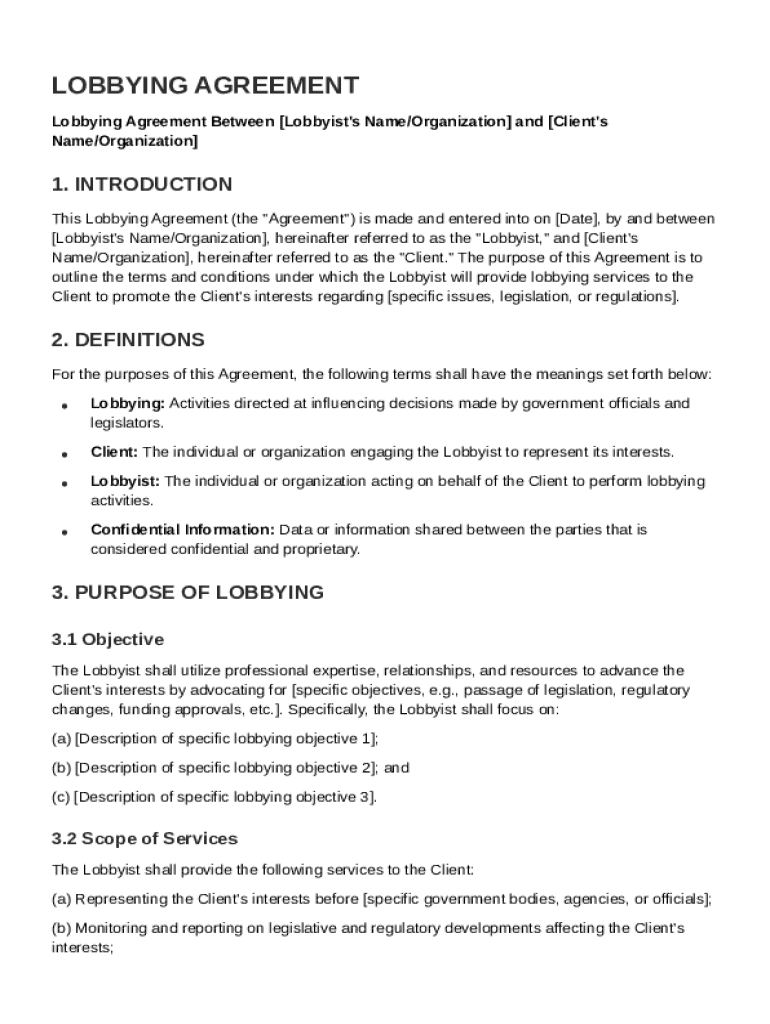







Definition and Meaning
A lobbying agreement template is a legally binding document used to outline the terms and conditions between a lobbyist and a client. Its primary purpose is to clearly define the lobbying services to be provided, the compensation structure, and the expectations of both parties. This document also establishes legal frameworks such as confidentiality, compliance with the relevant laws, and termination conditions, ensuring both parties are aware of their responsibilities and obligations. Ultimately, it sets an ethical foundation for the relationship, categorizing the parties as independent contractors.
Key Elements of the Lobbying Agreement Template
The lobbying agreement template includes several essential components that govern the business relationship. These elements ensure clarity and protect the interests of both the lobbyist and the client:
- Scope of Services: Clearly defined objectives and strategies that the lobbyist will undertake to meet the client's goals.
- Compensation and Payment Terms: Detailed information regarding the compensation structure, payment frequency, and any bonuses or incentives tied to performance milestones.
- Confidentiality Clause: Provisions detailing how sensitive information will be protected and the limitations on information-sharing.
- Responsibilities of the Parties: Duties and obligations of both the lobbyist and the client, including expected conduct and performance standards.
- Ethical Conduct: Enforced compliance with ethical guidelines and legal requirements to maintain professional integrity in lobbying activities.
- Termination Conditions: Conditions under which the agreement can be terminated by either party, including notice periods and any associated penalties.
- Dispute Resolution: Mechanisms to handle disagreements or breaches of contract, often recommending mediation or arbitration.
How to Use the Lobbying Agreement Template
Utilizing a lobbying agreement template requires understanding its components and customizing it to fit specific needs. Here’s how to effectively use the template:
- Review the Template: Thoroughly examine each section to ensure you understand the language and legal implications.
- Customize Details: Enter specific information, such as service scope, fees, and party responsibilities, adapting the template to the unique aspects of the lobbying engagement.
- Legal Considerations: Consult with a legal advisor to verify compliance with all relevant laws and to tailor the template to reflect any state-specific legal requirements.
- Approval and Signing: Ensure both parties review the finalized draft. Make necessary revisions before securing signatures to confirm mutual agreement to the terms.
Legal Use of the Lobbying Agreement Template
The legal enforcement of a lobbying agreement relies on adherence to established laws and ethical guidelines. It's crucial to ensure:
- Compliance with State and Federal Laws: The document must comply with lobbying regulations established by relevant governing bodies to avoid legal penalties.
- Accurate Recordkeeping: Maintain accurate and comprehensive documentation of all activities, communications, and financial transactions as part of due diligence.
- Ethical Transparency: Uphold transparency standards in reporting lobbying activities to appropriate authorities, aligning with both legal and ethical requirements.
Who Typically Uses the Lobbying Agreement Template
Various professionals and organizations might employ a lobbying agreement template to formalize their engagements. Users typically include:
- Professional Lobbyists: Engaged by clients seeking legislative or regulatory influence.
- Corporations and Trade Associations: These entities often hire lobbyists to advocate for policies beneficial to their operations or industry.
- Nonprofits and Advocacy Groups: Organizations that aim to influence public policy in alignment with their mission statements.
- Government Relations Firms: Agencies specializing in lobbying services on behalf of diverse clients.

Examples of Using the Lobbying Agreement Template
Illustrating the real-world application of a lobbying agreement template across different scenarios can be informative:
- Case Study in Healthcare: A pharmaceutical company hires a lobbyist to advocate legislative changes favoring drug pricing structures. The agreement clearly delineates the lobbyist's tasks, ethical constraints, and compliance mandates.
- Energy Sector Advocacy: An environmental group employs a lobbyist to promote renewable energy policies. The agreement underlines advocacy goals, performance metrics, and platforms for regular progress review.
- Local Government Engagement: A city council hires a lobbyist to secure federal funding for infrastructure projects. The contract outlines specific funding goals and lobbying strategies.
Important Terms Related to Lobbying Agreement Template
Understanding the terminology used in lobbying agreements is essential. Key terms include:
- Lobbyist: A professional engaged in influencing government policies on behalf of clients.
- Client: The individual or entity seeking the lobbyist's services.
- Scope of Work: Detailed description of services the lobbyist will perform.
- Conflict of Interest: Situations where personal or financial interests might compromise a party’s duties.
State-Specific Rules for the Lobbying Agreement Template
Different states impose varying regulations or additional requirements for lobbying activities. Practitioners must be aware of state-specific nuances:
- Registration Requirements: Many states necessitate lobbyists to register, specifying services provided and financial expenditures.
- Disclosure Obligations: Some jurisdictions demand regular disclosure of lobbying activities and expenses, accessible to the public to ensure transparency.
- Activity Limitations: There may be restrictions on certain lobbying activities or acceptance of gifts by public officials to prevent conflicts of interest.




