






Definition and Purpose of a UGC Agreement Template
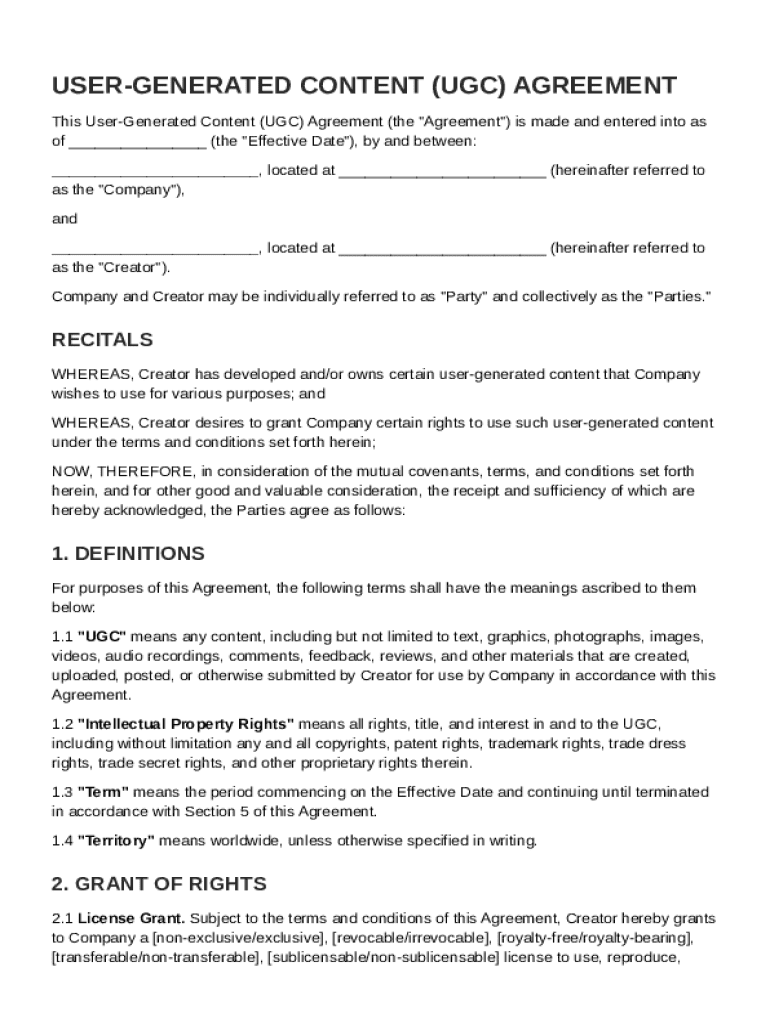
A User-Generated Content (UGC) Agreement Template is an essential document utilized by companies to establish legal terms and conditions surrounding the use of content created by users, often referred to as Creators. This template ensures that both parties—the Creator and the Company—understand their rights and obligations concerning the content's submission, usage, and any compensation agreements. User-generated content can include various forms such as images, videos, text, or any other digital creations. By defining these terms clearly, the UGC Agreement Template provides a structured format for negotiating and documenting the permissions granted to the company for leveraging user-created materials.
Key Elements of a UGC Agreement Template
To ensure clarity and comprehensive coverage, a UGC Agreement Template typically includes several crucial sections:
-
Grant of Rights: Specifies the extent of usage rights granted by the Creator to the Company, detailing whether the rights are exclusive or non-exclusive.
-
Intellectual Property Rights: Defines who retains ownership of the content and how intellectual property rights are managed. The agreement often allows the Company to use, reproduce, distribute, and display the content in predefined contexts.
-
Compensation and Benefits: Outlines any payment, recognition, or other benefits the Creator will receive in exchange for allowing the use of their content.
-
Compliance with Laws: Ensures that content and its use comply with applicable laws, and that neither party will engage in practices that violate legal standards.
How to Use the UGC Agreement Template
Using the UGC Agreement Template effectively involves several practical steps and considerations:
-
Customizing the Template: Tailor the template to fit the specific needs of the project or content exchange. This might include tweaking language to match the nature of the content or specific business needs.
-
Reviewing with Legal Counsel: It's advisable to have the document reviewed by legal professionals to ensure all aspects of the agreement are legally sound and align with both federal and state laws.
-
Mutual Agreement: Both parties should review and discuss the terms thoroughly before signing, ensuring understanding and mutual consent to the outlined terms.
-
Secure Signatures: Use a legally binding electronic signature platform, such as DocHub, to ensure that both parties officially consent to the terms and protect the document’s validity.
Steps to Complete the UGC Agreement Template
Completing a UGC Agreement Template involves a step-by-step process:
-
Identify Parties: Clearly define and list the Creator and the Company involved in the agreement.
-
Define the Content: Specifically describe the user-generated content subject to the agreement. This could include descriptions or digital references to the materials.
-
Outline Usage Rights: Specify how and where the content will be used by the Company. This section should detail all possible platforms and types of usage.
-
Detail Compensation: Clearly articulate the compensation agreement if applicable, including payment amounts, schedules, and methods.
-
Include Legal Clauses: Finalize the agreement with necessary legal clauses addressing liability, indemnification, and jurisdiction.
-
Sign and Date: Ensure the document is signed and dated by both parties to confirm their acceptance of the terms.
Legal Use of the UGC Agreement Template
The legal enforceability of a UGC Agreement Template is rooted in its compliance with relevant laws and regulations:
- ESIGN Act Compliance: Ensures any signatures collected electronically are legally binding.
- Intellectual Property Laws: Guards both parties’ rights to content and any brand-related elements involved.
- Privacy Laws: Ensures that content does not infringe on personal privacy rights.
Important Terms Related to UGC Agreement Template
Understanding specific legal terms is crucial for analyzing and complying with a UGC Agreement Template:
-
Exclusive vs. Non-exclusive Rights: Defines whether the Creator grants the Company sole permission to use the content, or if the Creator retains rights to offer similar permissions to other parties.
-
Indemnification: A commitment by one party to compensate the other for any loss or damage incurred due to specific breaches outlined in the agreement.
-
Termination Conditions: Conditions under which either party can terminate the agreement, including breach of terms or expiration of the agreement period.
State-Specific Rules for the UGC Agreement Template
Due to varying legal requirements, it is crucial to consider state-specific rules when drafting a UGC Agreement Template. Each state may have its own nuances concerning intellectual property and contract law:
-
Local Jurisdiction: Establishes which state’s laws will govern the agreement, which is particularly significant for companies operating in multiple states.
-
Specific Legal Requirements: Some states have unique stipulations regarding content distribution and privacy rights, influencing how a UGC Agreement must be structured.
Examples and Scenarios for UGC Agreement Template Usage
User-Generated Content (UGC) Agreements are commonly used in a variety of business scenarios:
-
Social Media Campaigns: Companies often request to use customer photos or testimonials as part of their marketing strategies. A well-constructed UGC Agreement ensures legal usage and compensates the Creator if necessary.
-
Collaborative Platforms: Digital platforms that enable users to create and share content, such as video or music-sharing sites, utilize UGC Agreements to delineate rights and responsibilities.
-
Brand Co-Creation: When companies collaborate with consumers to develop products or content, a UGC Agreement clarifies ownership and usage rights, protecting both parties' interests.
Each of these examples highlights the adaptive utility of the UGC Agreement Template, showcasing its critical role in safeguarding intellectual property while promoting creative collaboration.