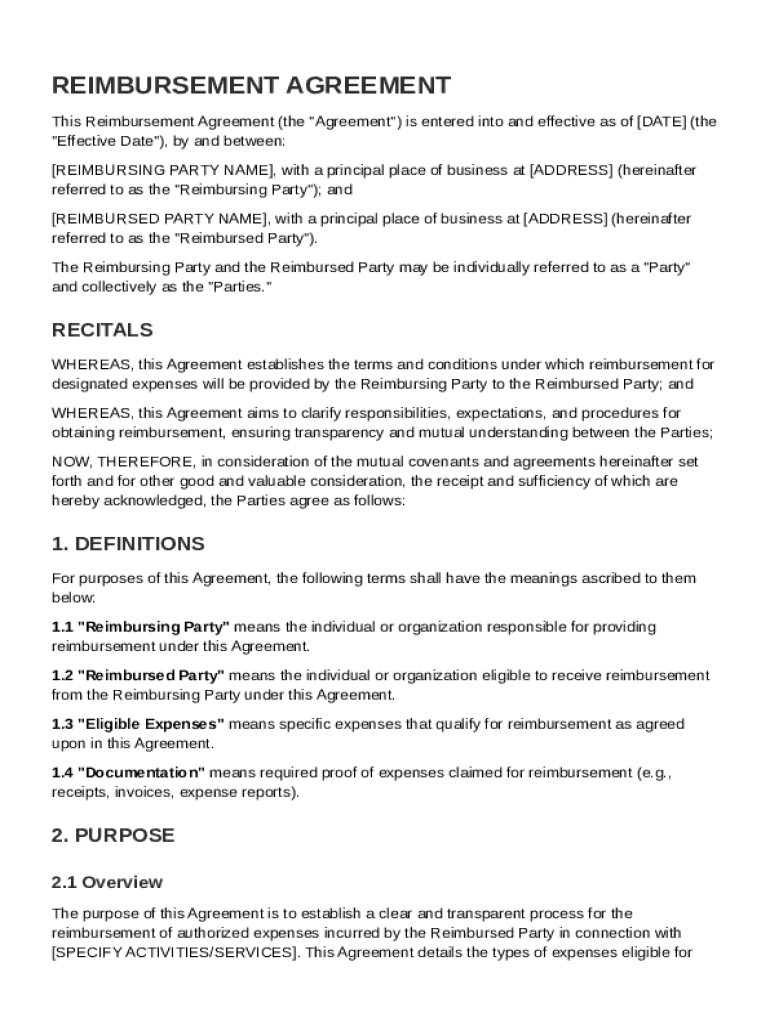







Definition and Meaning
The "Reimbursement Reimbursement Agreement Template" is a formal document used to define and regulate the reimbursement of specific expenses between two parties: the Reimbursing Party, who provides the funds, and the Reimbursed Party, who receives the compensation. This template includes guidelines and protocols that ensure the process is clear and equitable. It delineates eligible and ineligible expenses, outlines the procedures for claims, and specifies the necessary documentation for verification.
Core Components
- Eligible and Ineligible Expenses: The agreement precisely lists the types of expenses eligible for reimbursement and those that are not. For instance, business travel expenses may be reimbursed, while personal purchases are typically excluded.
- Process and Documentation: Details the steps the Reimbursed Party must follow to submit claims, including deadlines for submitting receipts and any required forms. Documentation is crucial for audit purposes and to substantiate claims.
How to Use the Reimbursement Reimbursement Agreement Template
Using the Reimbursement Agreement Template involves leveraging its sections to create a comprehensive agreement tailored to specific needs. This document serves as a guide to ensure clarity and mutual understanding between involved parties.
Step-by-Step Usage
- Customizing the Template: Start by reviewing all sections of the template and customizing it to fit the specifics of the expenses involved. This includes adding specific clauses that address particular business needs.
- Filling Out Required Details: Enter the names and contact details of both the Reimbursing and Reimbursed Parties.
- Expense Details: Clearly define the scope of expenses covered, including any caps or limits.
- Approval Workflow: Establish the workflow and parties involved in approving the reimbursement requests.
Key Elements of the Reimbursement Agreement Template
The template is structured to cover all necessary facets of expense reimbursement, ensuring that both parties are protected and fully understand their obligations.
Key Sections
- Payment Terms: Specifies when and how reimbursements will be paid, including any timelines for issuing payments after approval.
- Confidentiality Clause: Ensures that any sensitive financial information exchanged during the reimbursement process is protected.
- Audit Rights: Grants the Reimbursing Party the right to audit the Reimbursed Party's documentation to verify the legitimacy of claimed expenses.
Important Terms Related to the Reimbursement Agreement Template
Understanding the terminology used within the template is crucial for effectively drafting and interpreting the agreement.
Examples of Terms
- Reimbursing Party: The individual or organization responsible for repaying expenses.
- Reimbursed Party: The recipient of the reimbursement.
- Eligible Expense: Costs that are approved for reimbursement under the terms of the agreement.
Legal Use of the Reimbursement Reimbursement Agreement Template
The legality of the Reimbursement Agreement Template is underpinned by compliance with existing laws and regulations, ensuring the enforceability of the agreement.
Compliance Considerations
- Governing Law: The agreement should specify which jurisdiction's laws will govern the agreement, which is often the state where the Reimbursing Party is headquartered.
- Amendment Clause: Provides a mechanism for altering the agreement in a binding manner, requiring mutual consent from all parties involved.
State-Specific Rules for the Reimbursement Agreement Template
Different states may have unique requirements or considerations in structuring reimbursement agreements due to varying consumer protection laws and employment legislation.
Examples
- California: May require explicit definitions around employee rights concerning expense reimbursements.
- New York: Could have specific mandates on how disputes are mediated under state law.
Steps to Complete the Reimbursement Reimbursement Agreement Template
Completing the template involves gathering necessary information, accurately filling in the required fields, and ensuring legal compliance.
Comprehensive Procedure
- Gather Required Information: Collect all pertinent details such as party names, types of expenses, and payment procedures.
- Fill in the Template Fields: Enter the required information in the specified areas of the template, ensuring accuracy and completeness.
- Review and Revise: Check the completed document thoroughly to ensure all necessary information is correctly entered and any custom clauses are appropriately structured.
- Seek Legal Review: If necessary, obtain a legal review to ensure that the agreement adheres to applicable laws and regulations.
Who Typically Uses the Reimbursement Reimbursement Agreement Template
This form is utilized across various industries and sectors where reimbursement processes are standard.


Primary Users
- Corporations: Use the template to standardize expense reimbursements for employees.
- Nonprofits: Implement the agreement to ensure transparency and compliance in financial dealings.
- Freelancers and Contractors: Use it to validate and formalize reimbursement claims for project-related expenses.
Examples of Using the Reimbursement Agreement Template
Real-world scenarios help illustrate the application of the Reimbursement Agreement Template effectively.
Case Studies
- Corporate Training Expenses: An employee may attend a work-related training program, and the company uses the template to detail the reimbursement process for travel, lodging, and registration costs.
- Consultant Travel Costs: A consulting firm utilizes the template to manage travel reimbursements for on-site work performed by experts at client locations, ensuring all parties agree on covered expenses and limits.