






Key Elements of the Greek Rental Agreement Template
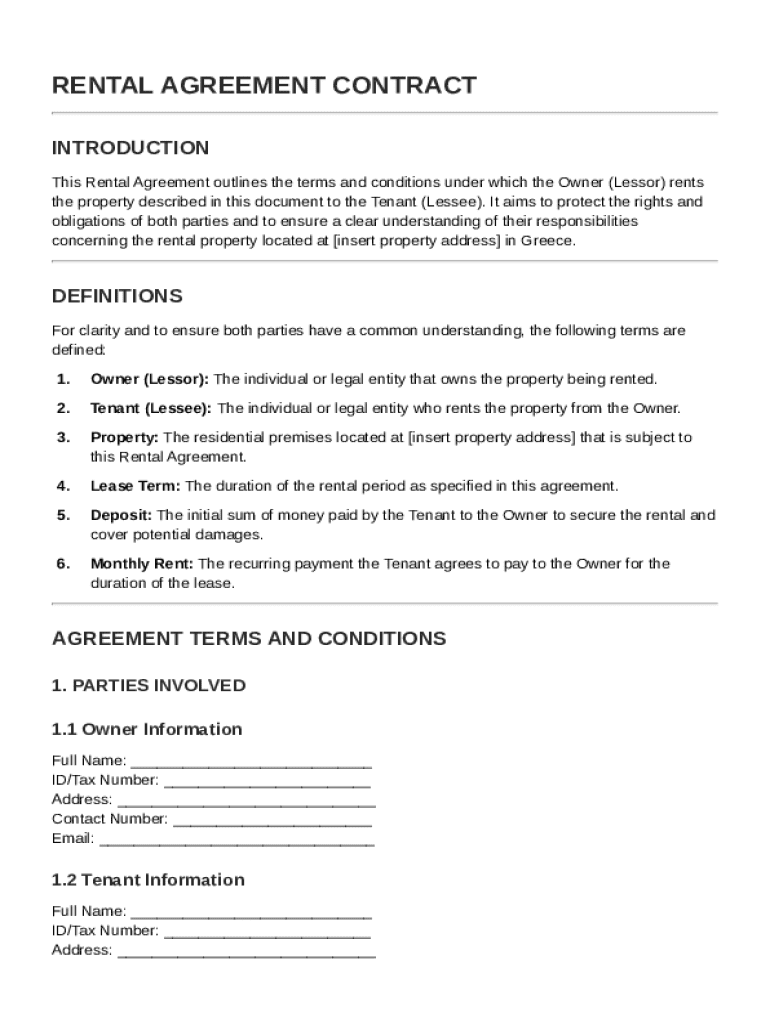
The Greek Rental Agreement Template incorporates various crucial elements that define the mutual obligations of the Lessor (Owner) and Lessee (Tenant). These elements form the backbone of the contract, ensuring clarity and compliance with regional standards.
-
Lessor and Lessee Information: Contains names, addresses, and contact details of the property owner and tenant. This ensures accountability and provides clear contact points for communication.
-
Property Description: Details the specific property being rented, including its address and any unique identifiers like a lot number or apartment unit. This eliminates ambiguity regarding the rental property.
-
Rent Payment Terms: Specifies the amount of rent, due date, and method of payment. It may include terms concerning late fees or interest on overdue payments to discourage delayed transactions and maintain a steady income flow for the Lessor.
-
Security Deposit Details: Outlines the amount of security deposit required, its intended use, and conditions for its return. This section protects both parties by setting expectations about property condition and financial consequences of damages.
-
Utilities and Maintenance Responsibilities: Clarifies which party is responsible for utilities and property maintenance tasks, such as landscape care, snow removal, or repairs, preventing disputes over these financial duties.
-
Lease Duration and Renewal Process: Indicates the start and end dates of the lease and the procedure for renewal. This section allows tenants to plan adequately for contract extensions or relocations.
-
Termination and Eviction Policies: Provides details on conditions that constitute lease termination, both voluntary and involuntary. Having these terms clearly defined helps manage potential conflicts and avoid legal complications.
Steps to Complete the Greek Rental Agreement Template
Successfully completing the Greek Rental Agreement Template requires attentive adherence to a structured process that satisfies all legalities and formalities.
-
Gather Information: Before filling out the agreement, collect all necessary details related to both parties and the property.
-
Complete Personal and Property Details: Input the personal details of both the Lessor and Lessee, along with a precise description of the property to avoid misunderstandings.
-
Define Financial Terms: Clearly document the agreed-upon rent, payment schedule, security deposit, and any other pertinent financial conditions.
-
Specify Responsibilities: Outline responsibilities regarding utilities, maintenance, and any other obligations to both the tenant and landlord to ensure mutual understanding.
-
Outline the Lease Terms: Set the term length, renewal options, and any special conditions like furnishing arrangements or property alterations.
-
Include Regulatory Compliance: Ensure the document complies with Greek laws regarding rental contracts to guarantee legality and enforceability.
-
Review and Sign: Both parties should thoroughly review the completed agreement, make amendments if necessary, and sign the document for it to become legally binding.
Legal Use of the Greek Rental Agreement Template
Ensuring the Greek Rental Agreement Template is legally sound is essential for both parties. Compliance with regional and national laws averts potential disputes and promotes ethical conduct.
-
Greek Civil Code Compliance: The template must align with the Greek Civil Code, which governs rental agreements and related tenant/landlord interactions.
-
Zoning and Property Laws: Must adhere to local zoning laws and regulations which could affect how a property is used, ensuring there are no illegal uses of the property.
-
Taxation Regulations: Document provisions should reflect accurate tax liabilities and claims, such as which party is responsible for property or rent-related taxes.
-
Privacy and Data Protection: Terms should protect the personal data shared between parties, aligning with national and EU privacy regulations.
Who Typically Uses the Greek Rental Agreement Template
The Greek Rental Agreement Template serves a diverse array of individuals and entities engaged in property rental transactions.
-
Property Owners and Real Estate Companies: Utilize the template to create standardized agreements for multiple properties, streamlining the leasing process and ensuring consistency.
-
Tenants Seeking Residence: Benefit from understanding their rights and duties clearly outlined by the template, fostering a trustful relationship with their landlord.
-
Legal Professionals: Often employ this template when drafting or reviewing rental agreements to ensure they meet all legal requirements and advocate effectively for clients.
-
Property Managers: Use it as a baseline to manage leases, maintain uniformity across tenancies, and simplify administrative tasks.


Important Terms Related to the Greek Rental Agreement Template
Understanding key terms within the Greek Rental Agreement Template ensures that all parties share the same comprehension of their obligations.
-
Lessor/Lessee: The parties involved in the rental contract, where the Lessor leases out the property, and the Lessee rents it.
-
Security Deposit: A sum paid by the Lessee upon signing the lease, held by the Lessor as financial assurance against property damage or breach of agreement.
-
Term of Lease: The duration for which the agreement is in effect, including start and end dates, and provisions for renewal or cancellation.
-
Default: A failure to meet legal or contractual obligations, which in the context of rental agreements usually pertains to late rent or violations of lease terms.
-
Joint and Several Liability: A clause where each tenant is both individually and collectively responsible for the lease terms, particularly rent payment.
Examples of Using the Greek Rental Agreement Template
The Greek Rental Agreement Template is adaptable for various scenarios, demonstrating its practical utility across different contexts.
-
Residential Leases: Used for renting homes, apartments, or vacation properties, ensuring both parties have a defined framework of engagement.
-
Commercial Property Rentals: Tailored to lease office spaces, retail outlets, or industrial properties, with additional clauses for industry-specific needs.
-
Short-Term Rentals: Modified for shorter lease terms, like vacation rentals, incorporating specific conditions appropriate to such arrangements.
-
Subleasing Scenarios: In cases where the primary Lessee rents out their leased space to another, the template can be adapted to reflect tripartite agreements.
How to Obtain the Greek Rental Agreement Template
Acquiring a Greek Rental Agreement Template is straightforward, facilitated by various options designed for convenience and compliance.
-
Online Platforms: Trusted online legal service providers host downloadable and customizable templates, ensuring they are up-to-date with legal standards.
-
Legal Aid Clinics: Non-profit organizations or local legal aid services can provide templates as part of their community services to those needing assistance.
-
Property Management Firms: Often supply templates as part of their package to landlords looking for industry-specific agreements.
-
Real Estate Networks: Access through professional networks and associations can connect individuals with vetted, legally robust documents that fit your unique requirements.
State-by-State Differences
Though Greece's laws predominantly centralize rental agreements, understanding any regional adjustments can be crucial for legal accuracy and relevance.
-
Local Regulations: Some municipalities may have added requirements regarding tenant rights, rent control, or housing standards that could affect lease terms.
-
Property Type-specific Rules: Certain areas might enforce stricter codes or additional paperwork for unique properties, like historic apartments or properties within tourist zones.
-
Regional Tax Differences: Variations in regional taxation could impact rent prices or due payment frequencies, requiring careful review of local tax implications.