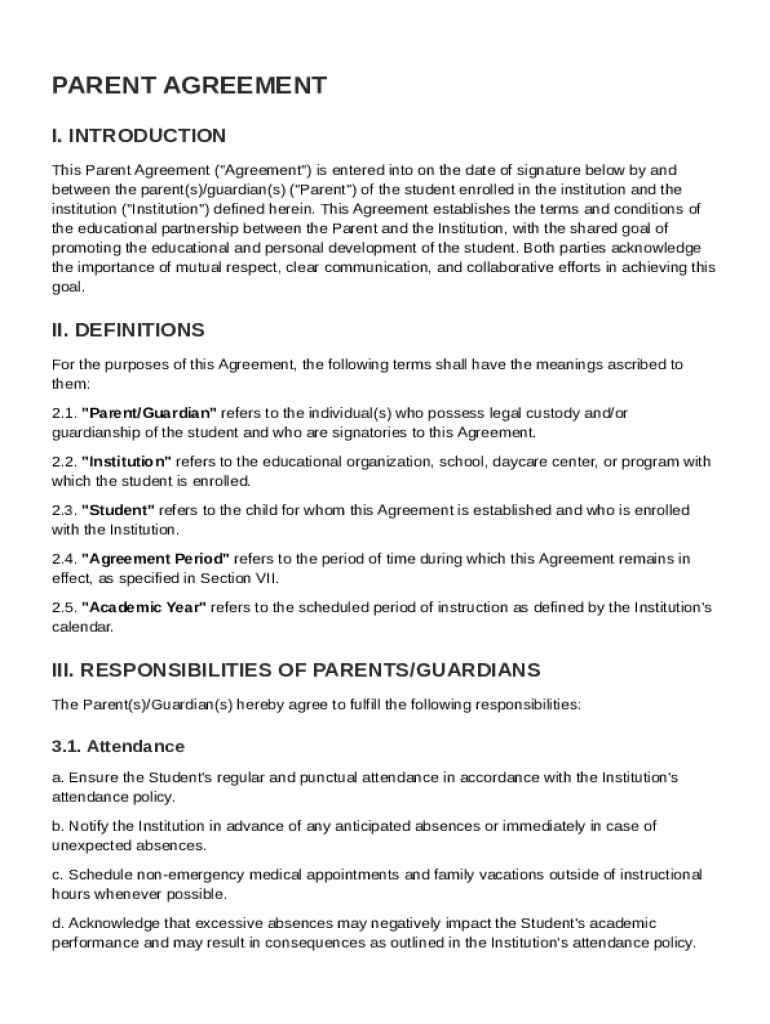







Definition and Meaning
The Parent Agreement Template serves as a formal document that outlines the responsibilities and expectations between parents or guardians and an educational institution. Its primary role is to establish a cooperative relationship focused on enhancing the student's academic and personal growth. By detailing the mutual commitments of both parties, this template aims to foster a positive educational environment rooted in respect, effective communication, and collaboration. Specific areas often covered include attendance obligations, homework support, and mechanisms for resolving conflicts. Additionally, the agreement may specify the duration of the arrangement, conditions under which it may be terminated, and a code of conduct for involved parties.
Key Elements of the Parent Agreement Template
There are several critical components that form the backbone of a comprehensive Parent Agreement Template:
- Responsibilities of Parents/Guardians: Outlines expectations for supporting their child’s education, such as ensuring timely attendance, providing a conducive study environment at home, and communicating with teachers as needed.
- Institutional Commitments: Specifies the educational institution's obligations to provide quality education, maintain a safe learning environment, and facilitate communication with parents.
- Student Expectations: Details what is expected from the student in terms of behavior, effort, and academic performance.
- Communication Channels: Describes how parents and the institution will communicate, whether through regular meetings, digital platforms, or monthly newsletters.
- Conflict Resolution Procedures: Explains steps that will be taken to address disagreements or issues that may arise during the student's enrollment.
- Code of Conduct: Establishes guidelines for behavior, including respect for teachers and peers, adherence to school rules, and participation in assigned activities.
Steps to Complete the Parent Agreement Template
Completing the Parent Agreement Template involves several structured steps to ensure its accuracy and comprehensiveness:
- Initial Review: Both the parents or guardians and the educational institution should independently review the template to understand all sections and requirements.
- Information Input: Fill in relevant information, such as names of parents, the student's name, institution details, and any specific terms agreed upon.
- Customized Adjustments: Amend sections of the template to reflect any unique agreements specific to the student or institution, ensuring all parties have contributed to a shared understanding.
- Review and Discuss: Hold a meeting to discuss each part of the agreement, allowing room for questions, clarifications, and modifications as needed.
- Finalization: Once all changes are agreed upon, prepare the document for final review to check for completion and accuracy.
- Signature Collection: Both parties sign the document. If applicable, include the student’s signature to reinforce their commitment to the agreement.
- Distribution and Storage: Provide copies to all parties and safely store the master document, whether it's in physical form or a digital file secured on an encrypted platform.
Legal Use and Compliance
The Parent Agreement Template is crafted to align with U.S. legal standards. This ensures that all rights and obligations outlined within the template are enforceable:
- Legally Binding Agreement: Once signed, the agreement becomes a legally binding document, provided all parties consented without duress.
- Privacy Compliance: The document should adhere to privacy laws, such as FERPA (Family Educational Rights and Privacy Act), protecting the student's educational records and information.
- Dispute Resolution: Includes legally recognized procedures for resolving disputes through mediation or involvement of a legal mediator, if necessary.
Why Use the Parent Agreement Template
Utilizing a Parent Agreement Template can provide several benefits to both parents and educational institutions:
- Enhanced Clarity: Establishes a clear understanding of roles, reducing potential areas of conflict and confusion.
- Structured Support: Provides a solid framework for supporting the student’s academic and personal growth, aligning home and school efforts.
- Communication Facilitation: Bolsters communication by making structured interaction and feedback part of the documented expectations.
- Conflict Mitigation: Preemptively addresses potential disagreements or misunderstandings by defining resolution processes.
State-Specific Rules for the Parent Agreement Template
While the Parent Agreement Template is designed with general guidelines, it may need adjustments to meet specific state regulations:
- Educational Standards: Each state may have different educational standards that must be incorporated into the agreement.
- Parental Rights: Different states recognize varying rights of parents in educational settings, requiring adjustments to the template.
- Termination Clauses: Some states may have particular rules surrounding the termination of agreements that require inclusion.
- Dispute Procedures: States may differ in their legal procedures for dispute resolution, necessitating localized amendment of these sections in the template.
Software Compatibility
DocHub offers a streamlined experience by ensuring compatibility with various digital platforms and software, which is crucial for completing and sharing the Parent Agreement Template:
- Google Workspace Integration: Allows importing and exporting directly from Google Drive and Gmail, facilitating document sharing and storage.
- Cloud Compatibility: Supports other cloud services like Dropbox and OneDrive, ensuring flexibility in document management and accessibility.
- Cross-Platform Use: The document can be edited and managed from any device with internet access, whether it's a desktop or mobile browser.
Who Typically Uses the Parent Agreement Template
The Parent Agreement Template serves as a fundamental tool for various stakeholders in the education system:
- Parents and Guardians: To formalize their involvement and support in their child’s educational journey.
- Educational Institutions: To document and communicate their commitments and expectations to family members.
- Students: Older students are often included to acknowledge their participation and accountability for their educational responsibilities.
- Legal Advisors: May utilize these templates to review and ensure compliance with legal standards and state regulations.