






Definition and Key Elements
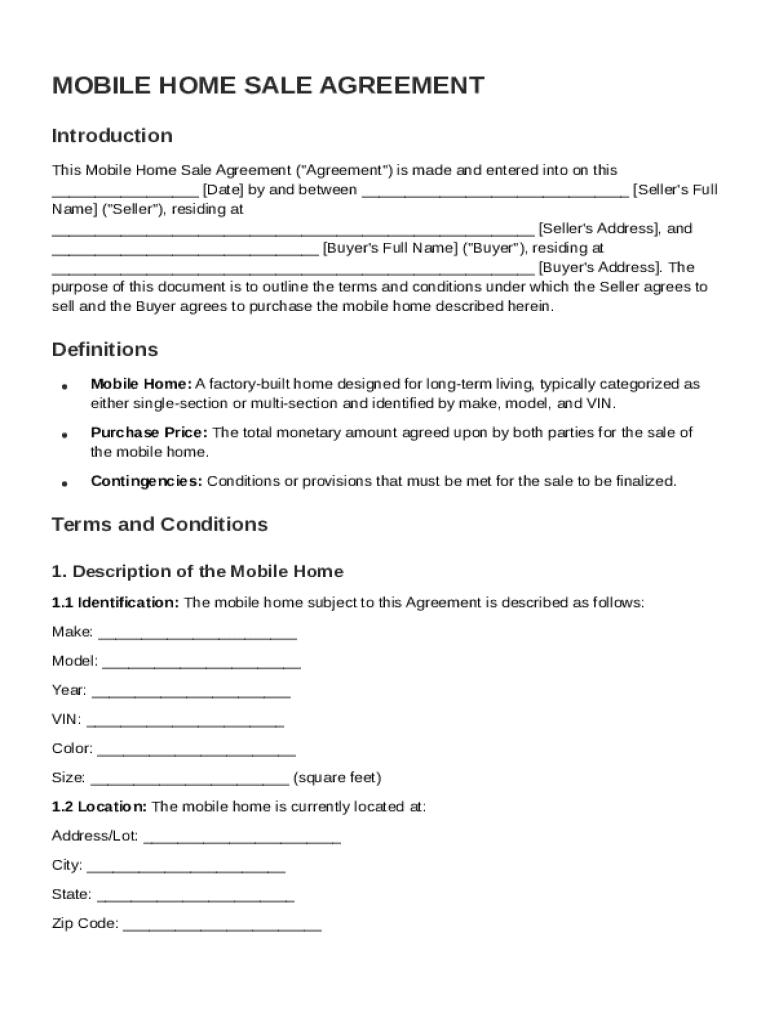
The Mobile Home Sale Agreement Template is a legal document used to outline the terms and conditions of a sale involving a mobile home. It ensures both the Buyer and Seller have a clear understanding of the sale particulars and legal obligations. Key elements usually include:
- Identities of Buyer and Seller: Full legal names and contact information.
- Description of Mobile Home: Details like make, model, year, size, and Vehicle Identification Number (VIN).
- Purchase Price: The agreed amount the Buyer will pay and any deposit requirements.
- Payment Terms: Includes the payment schedule, method of payment, and any financing arrangements.
- Closing Date: The agreed date when the transaction will be finalized, and ownership will transfer.
- Contingencies: Conditions that must be fulfilled for the sale to proceed, such as inspection and financing.
- Representations and Warranties: Guarantees made by both parties regarding the property's condition and legal standing.
- Default Remedies: Actions either party can take if the other fails to comply with the agreement.
- Governing Law and Miscellaneous Provisions: Legal jurisdiction and additional clauses or specific provisions relevant to the sale.
These sections are crucial in ensuring a transparent transaction and protecting the interests of both parties involved.
How to Use the Mobile Home Sale Agreement Template
Utilizing the Mobile Home Sale Agreement Template involves several steps to guarantee that all necessary information is collected and documented accurately. Here is a breakdown:
- Download the Template: Obtain it from a reliable source, ensuring it's updated and relevant to your jurisdiction.
- Fill in Basic Information: Include the names, addresses, and contact details of the Buyer and Seller.
- Describe the Mobile Home: Provide comprehensive details about the mobile home being sold.
- Set Purchase Terms: Agree on the purchase price, payment method, and any financing details.
- Finalize Sale Details: Specify the closing date, and note any contingencies like property inspections or loan approvals.
- Review Legal Terms: Check representations, warranties, and governing laws that apply to the agreement.
- Sign and Date: Ensure all parties sign and date the document to make it legally binding.
Consider consulting with a legal professional to review the completed document, especially for complex sales or if you encounter any uncertainties.
Legal Use and Compliance
The Mobile Home Sale Agreement Template is legally binding once signed by both parties. It complies with the ESIGN Act, which validates electronic signatures. When using this template, ensure:
- Authenticity and Consent: Both parties must voluntarily sign the document electronically.
- Accurate Representation: All provided information should be truthful and accurate.
- State Laws Adherence: The agreement must align with the specific laws and regulations of the state where the mobile home is located.
- Public Record Filing: In some cases, you may need to file the agreement with local agencies, such as a county clerk’s office, to complete the transaction legally.
Legal consultation is advisable to ensure the agreement abides by all local and federal requirements.
State-Specific Rules for the Mobile Home Sale Agreement Template
State regulations can significantly impact the terms of a mobile home sale. Being aware of state-specific rules is essential for compliance:
- Title Transfer: Many states require the title to be transferred similarly to a vehicle sale, necessitating specific forms and fees.
- Property Taxes: Some states may have specific taxation rules for mobile homes, which should be clarified within the agreement.
- Zoning Laws: Mobile homes might be subject to zoning restrictions, affecting where the Buyer can relocate the home.
- Consumer Protection Laws: States may have laws protecting home buyers that additionally regulate sales.
Understanding and integrating these state-specific requirements into your sale agreement ensures validity and legal protection.
Steps to Complete the Mobile Home Sale Agreement Template
Completing the Mobile Home Sale Agreement Template requires attention to detail and precision. Here are the steps to follow:
- Prepare Required Documents: Gather all necessary documentation related to ownership, including the title and identification details of the mobile home.
- Draft Preliminary Terms: Work with the other party to outline basic sale terms such as price, payment, and timelines.
- Input Information: Use the template's structured fields to enter all relevant details meticulously.
- Add Additional Provisions: If needed, include special clauses or amendments specific to your deal.
- Review and Revise: Carefully examine the draft for accuracy and completeness.
- Consult Legal Counsel: Allow a legal expert to offer insights and ensure nothing is overlooked.
- Execute the Agreement: Sign, date, and distribute the final document among all parties involved.
This process ensures a strong agreement foundation, paving the way for a smooth transaction execution.
Important Terms Related to Mobile Home Sale Agreement Template
Understanding the specific terminology within the Mobile Home Sale Agreement Template enhances clarity and prevents misunderstandings.
- "AS-IS" Condition: Indicates that the home is sold in its current state without guarantees.
- "Earnest Money Deposit": A deposit made to demonstrate the buyer's intent to proceed with the purchase.
- "Fixtures": Items attached to the home that are typically included in the sale, like appliances.
- "Lien": Any legal claim or hold on the mobile home that needs resolution prior to sale.
- "Default": Failure to fulfill a contractual obligation, offering grounds for withdrawal or penalties.
- "Contingency": Specific conditions outlined in the agreement that must be met for the sale to proceed.
Familiarity with these terms will help both parties better understand their obligations and expectations.
Who Typically Uses the Mobile Home Sale Agreement Template
This template is versatile and may be used by various individuals and entities engaged in the sale of mobile homes.
- Private Sellers and Buyers: Individuals participating in a private sale without an intermediary.
- Real Estate Agents: Professionals facilitating sales for clients in the residential mobile home market.
- Dealers and Manufacturers: Businesses selling new or pre-owned manufactured homes.
- Legal Practitioners: Lawyers drafting or reviewing agreements for clients involved in mobile home transactions.
Each user category may have unique motivations and needs, but precise documentation benefits all parties involved in protecting their interests.


Integrating Electronic Signatures
The use of electronic signatures in the Mobile Home Sale Agreement Template offers convenience and legal validity. To use electronic signatures:
- Create a Digital Signature: Use tools like DocHub to draw, type, or upload a signature image.
- Set Signing Order: If multiple signers are involved, clearly assign the order in which they should sign.
- Track Progress: Monitor document status and ensure all parties sign within the agreed timeframe.
- Audit Trail: Keep a comprehensive record of when and by whom the document was viewed and signed.
Electronic signatures streamline the completion process and are legally recognized under U.S. law.