






Definition of Army Industrial Operations Command
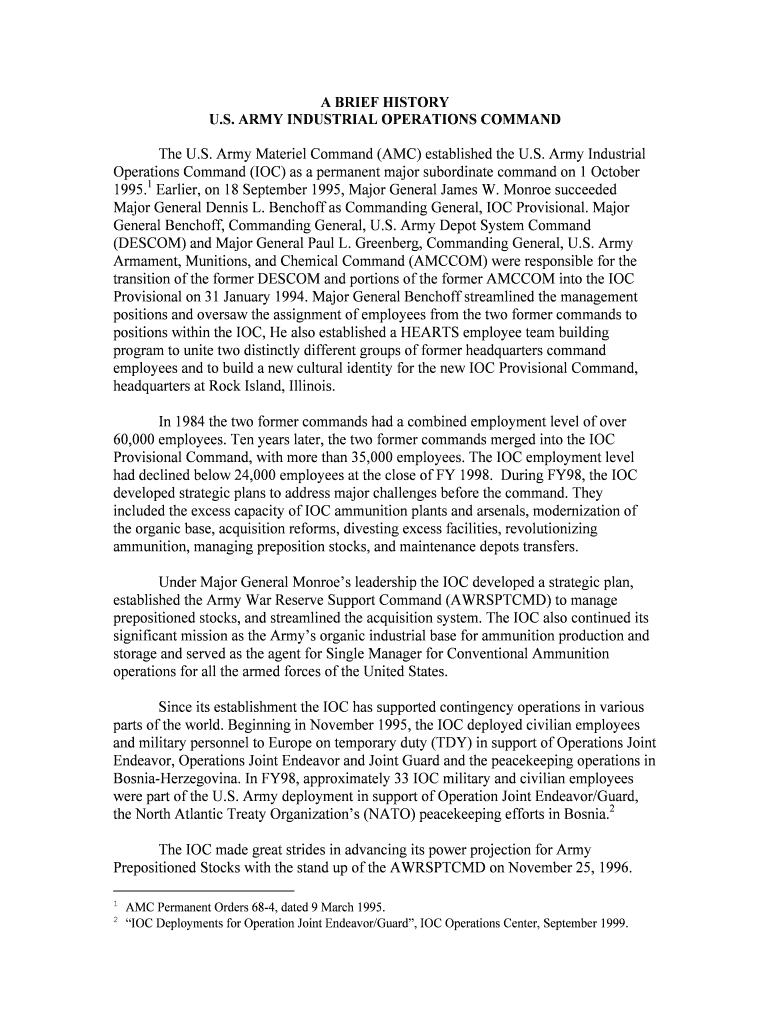
The U.S. Army Industrial Operations Command (IOC) was established in 1995 to streamline and enhance industrial operations within the military framework. It serves as a pivotal command that oversees the manufacturing and logistical aspects essential for army readiness and operations. The IOC focuses on integrating resources, coordinating production processes, and ensuring the efficient delivery of critical military equipment and supplies. This command plays a key role in supporting various military needs, ranging from weapons systems to general supplies, to sustain army missions globally.
How to Use the Army Industrial Operations Command
Utilizing the Army Industrial Operations Command involves understanding its core functions and integrating its processes into military operations. The IOC manages production facilities and logistical operations that are crucial for readiness and force projection. Users, typically military personnel and defense contractors, engage with the IOC to coordinate equipment production, supply chain management, and logistics planning. The IOC's structured approach ensures that operational units receive timely and effective support for their ongoing missions, allowing them to maintain operational superiority.
Steps to Complete Initiatives with the IOC
- Identify Requirements: Military units must first define operational needs and requirements.
- Coordinate with IOC: Establish contact with IOC representatives to align production and logistics plans.
- Plan Production and Distribution: Work with the IOC to devise detailed production schedules and distribution strategies.
- Monitor Progress: Continuously track project milestones and update plans as necessary.
- Evaluate Outcomes: After completion, review the process to understand successes and areas for improvement.
Key Elements of Army Industrial Operations
The Army Industrial Operations Command is built on several essential components that ensure operational success:
- Logistics Coordination: Central to its function, logistics coordination involves synchronizing supply chains and distribution networks.
- Production Management: Oversees manufacturing processes for military goods and services to maintain quality and efficiency.
- Support Commands: Incorporates auxiliary commands such as the Army War Reserve Support Command to enhance operational readiness and sustainment.
- Technological Integration: Utilizes advanced technologies to streamline production and logistics processes.
Who Typically Uses the Army Industrial Operations Command
The primary users of the Army Industrial Operations Command include military personnel responsible for operational logistics, defense contractors engaged in providing military equipment, and strategic planners involved in defense readiness. Additionally, government officials overseeing defense budgets and resource allocations frequently interact with the IOC to ensure that military preparedness aligns with national defense objectives.


Challenges and Strategic Initiatives
The Army Industrial Operations Command has faced challenges such as workforce reductions and the effects of Base Realignment and Closure actions. To address these, the IOC has launched strategic initiatives aimed at modernizing operations, improving efficiency, and overcoming logistical hurdles. These initiatives include the development of advanced manufacturing techniques and the streamlining of supply chain management practices.
Legal and Regulatory Compliance
The operations of the Army Industrial Operations Command are subject to various legal and regulatory standards, both at the national and international levels. Compliance ensures that all operational activities meet safety, environmental, and ethical standards. Military personnel and contractors must be cognizant of these legal requirements to avoid any potential violations during their engagement with the IOC.
Future Trends and Developments
Looking ahead, the Army Industrial Operations Command is focusing on evolving its operations to keep pace with technological advancements and changing military needs. This includes exploring new logistics solutions, incorporating cutting-edge manufacturing technologies, and enhancing collaboration with private industry. Such efforts will bolster the IOC's capacity to support the army's dynamic operational demands effectively and sustainably.