






Definition & Meaning
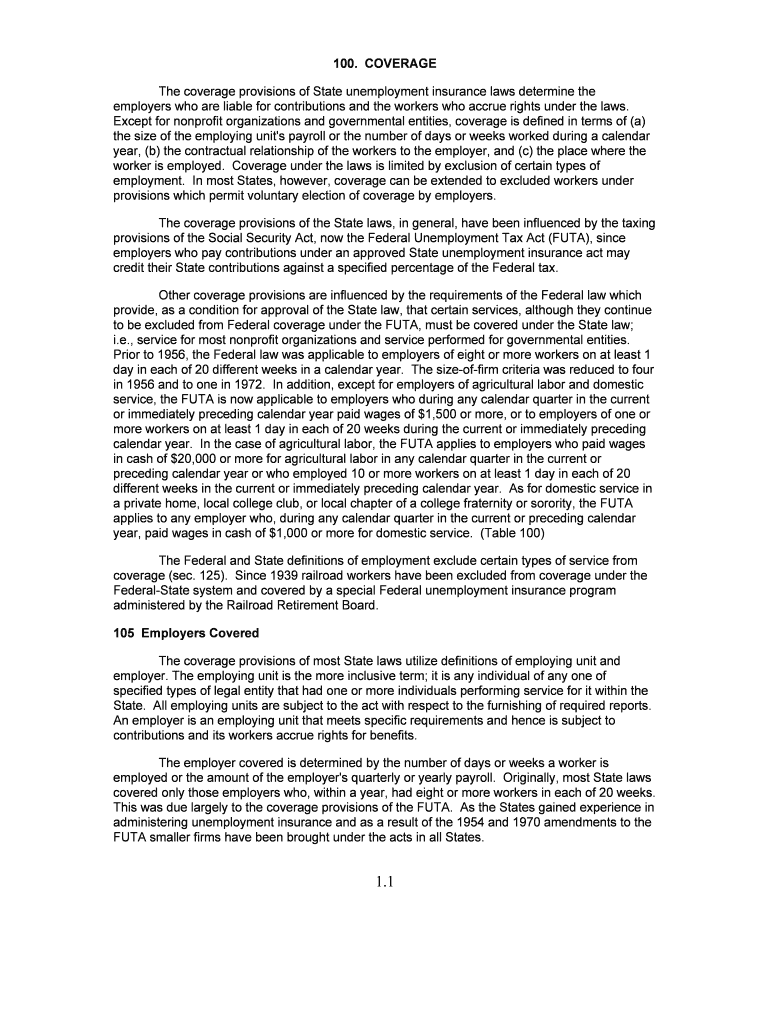
The phrase "The coverage provisions of State unemployment insurance laws determine the" refers to the rules and criteria that outline how unemployment insurance (UI) coverage is applied to employers and employees in various states. These provisions specify which employees are eligible for unemployment benefits and under what conditions employers are required to contribute to the state UI fund. They take into account factors such as payroll size, employment duration, and the nature of the worker-employer relationship. It is a crucial aspect of the unemployment insurance system that guides the determination of liability and rights within the employment sector.
Key Elements of State Unemployment Insurance Coverage
The coverage provisions of State unemployment insurance laws typically address several key elements to determine eligibility and obligations. First, these provisions define which types of employment relationships are covered, often excluding certain categories like agricultural labor, domestic service, and work performed for close relatives. Next, they specify the size of the payroll and employment duration necessary for coverage, which influences whether an employer is subject to making contributions. Additionally, federal guidelines impose requirements on states to extend coverage to nonprofit and governmental entities, further shaping state-specific rules.
State-Specific Rules and Variations
Each state in the U.S. sets its own unemployment insurance laws within the framework allowed by federal guidelines. This means that while there is a general structure to UI laws, each state may have specific rules and variations. For example, some states might require a lower payroll threshold for employer liability than others. Moreover, states can vary in how they implement exclusions, such as determining the classification of domestic workers or agricultural labor in their coverage policies. Understanding these state-by-state differences is crucial for businesses and workers to navigate UI coverage successfully.
Eligibility Criteria for Unemployment Insurance
The eligibility criteria for unemployment insurance coverage under state laws typically depend on several factors. These include the amount of wages earned during a base period, the reason for unemployment (e.g., involuntary job loss), and the individual's ability and availability to work. State provisions also determine whether part-time and seasonal workers can qualify for benefits. Employees must meet specific state requirements to receive UI benefits, and these criteria are designed to ensure that only those who are genuinely unemployed and seeking work receive support.


Legal Use of State Unemployment Insurance Laws
Understanding the legal use of state unemployment insurance laws is essential for both employers and employees. For employers, it determines their financial obligations and helps ensure compliance with state regulations. For employees, these laws protect their rights and provide financial assistance during periods of unemployment. The legal framework of UI laws helps balance the needs of the labor market by encouraging employers to stabilize employment while offering a safety net to workers during job transitions. Legal professionals, HR departments, and workers' advocates often need to be well-versed in both federal and state-specific UI provisions to advise effectively.
Important Terms Related to State UI Laws
Knowing the important terms related to state unemployment insurance laws is crucial for understanding the coverage provisions. Some key terms include "base period," referring to the time frame during which an employee's earnings are calculated for eligibility; "benefit year," which is the period when the eligible unemployed can draw benefits; and "UI trust fund," which is the state-managed reserve that pays out UI benefits. Understanding these and other terms helps stakeholders navigate the system more efficiently.
Examples of State Unemployment Insurance Application
Examples of how state unemployment insurance coverage provisions apply include scenarios where a large company is obliged to contribute to the UI fund due to its payroll size and employment duration. A small family-owned business might only need to pay UI taxes on employees who meet specific thresholds. In another scenario, a nonprofit entity closely examines coverage requirements to ensure compliance. Various real-world examples highlight the application of UI laws and their impact on businesses and individual employment situations.
Steps to Complete Unemployment Insurance Requirements
-
Identify Coverage Needs: Employers should first determine whether their business activities and staff are covered by state UI provisions.
-
Register with State Agency: Businesses likely required to contribute to the UI fund must register with the local unemployment agency to receive an employer account number.
-
Maintain Accurate Payroll Records: Keeping accurate and up-to-date records is essential for compliance, as state agencies periodically review these records to verify contributions.
-
Submit Quarterly Reports: Employers must submit quarterly wage reports, which are used to calculate UI tax liability.
-
Respond to Claims Promptly: Employers must be prepared to respond to unemployment claims documentation for former employees.
-
Monitor Compliance Changes: Stay informed about changes in state and federal UI laws that may affect coverage and obligations.
Adhering to these steps ensures that employers remain compliant and that employees receive the benefits they are entitled to under the law.