






Definition and Meaning
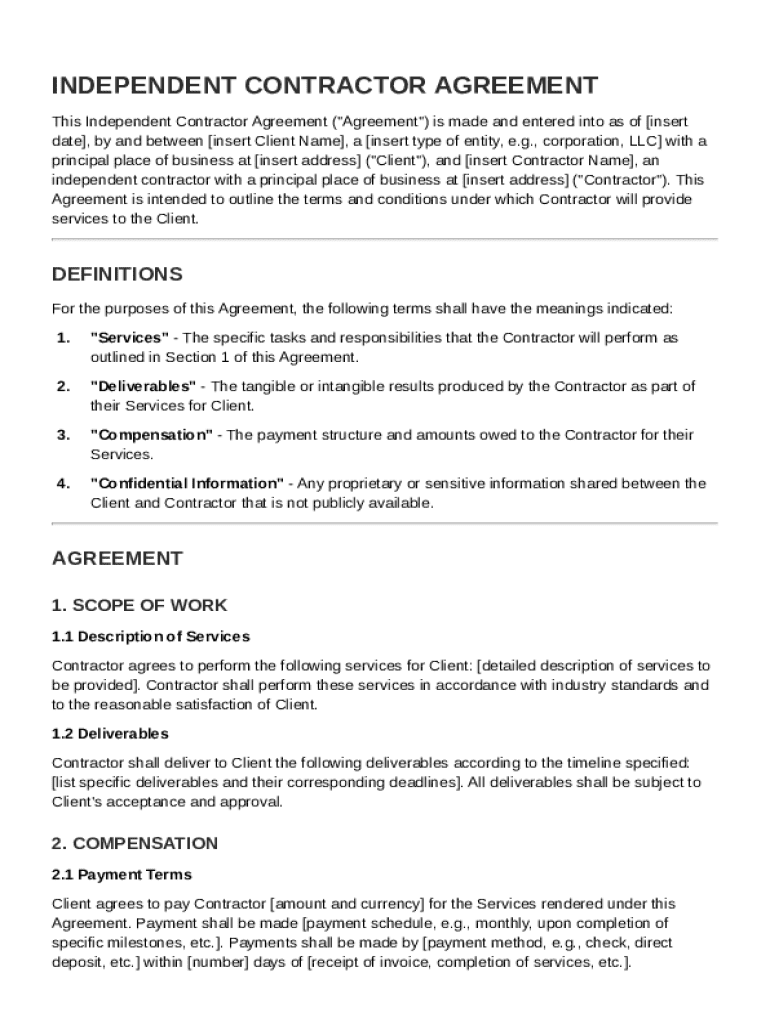
The "Independent Contract Template" is a legal document outlining the terms and conditions under which an independent contractor agrees to perform services for a client. This template is crucial in defining the relationship between the contractor and the client, establishing that the contractor is not an employee but an independent entity. It typically includes various sections, such as the scope of work, payment terms, and confidentiality agreements. By clearly delineating responsibilities and expectations, this document helps both parties avoid potential disputes and misunderstandings.
Important Sections of the Agreement
- Scope of Work: Specifies the services and deliverables the contractor will provide, ensuring both parties have a clear understanding of the project's boundaries.
- Compensation: Details the payment structure, including rates, payment schedules, and any reimbursement terms.
- Term and Termination: Outlines the duration of the contract and the conditions under which either party can terminate the agreement.
- Confidentiality: Protects sensitive information and requires the contractor to maintain discretion during and after the contract.
- Indemnification: Addresses the responsibilities of each party to protect one another from certain risks and liabilities.
Key Elements of the Independent Contract Template
Essential Terms and Conditions
The Independent Contract Template includes several key elements essential for a legally binding and clear agreement:
- Defining Parties: Lists the names and contact information of all involved parties, ensuring clarity on who is entering the contract.
- Performance Milestones: Sets specific targets or deadlines for the delivery of services, which can be tied to payment schedules or project phases.
- Amendment Procedures: Explains how any changes to the contract terms will be handled, including mutual agreement and documentation requirements.
- Dispute Resolution: Provides methods for resolving potential disputes, such as mediation or arbitration, minimizing costly litigation.
- Governing Law: Lists the state laws that will apply to the contract, often influenced by where the client or contractor resides.
Real-World Applications
This template sees extensive use in diverse sectors such as:
- Freelance Work: Graphic designers, writers, and consultants often rely on this document to formalize their agreements with clients.
- Construction Projects: Contractors use these templates to outline the terms of job sites, project timelines, and deliverables.
- Technology Services: IT consultants and software developers require clear contracts to define the scope of their work and intellectual property rights.
How to Use the Independent Contract Template
Step-by-Step Instructions
- Download the Template: Obtain the Independent Contract Template from a reputable site like DocHub.
- Customize Your Agreement: Modify sections relevant to your particular work arrangement, inserting specifics where necessary, such as names, dates, and payment details.
- Review Legal Terminologies: Ensure comprehension of all terms. Consult legal counsel for any clauses that appear unclear or contentious.
- Document Signatures: Both the contractor and client should electronically sign the document for binding effect. DocHub allows easy insertion of digital signatures.
- Store and Distribute: Keep a copy for your records and send a finalized copy to all parties involved for transparency.
Practical Considerations
- Involve Legal Counsel: Legal advice can be invaluable, especially if the contract involves complex terms or significant financial commitments.
- Update Regularly: Keep your contract up-to-date with any changes in laws or working conditions.
Who Typically Uses the Independent Contract Template


Primary Users
- Freelancers and Consultants: Those engaged in short-term or specific projects where they provide specialized skills.
- Businesses Hiring Independent Contractors: Corporations looking to outsource tasks without hiring full-time employees.
- Agencies: Marketing, advertising, and recruitment agencies often hire temporary external experts for projects.
Benefits for Various Professions
- Graphic Designers: Use contracts to formalize client expectations and protect against unauthorized use of designs.
- Software Developers: Outline deliverables and intellectual property rights, maintaining clarity on development milestones and post-project responsibilities.
- Construction Workers: Establish terms for project scope and payment, safeguarding concern over scope creep or unremunerated labor.
Legal Use of the Independent Contract Template
Compliance and Binding Nature
Adhering to the template ensures proper legal recognition of the contractor-client relationship:
- ESIGN Act Compliance: By electronically signing the document via platforms like DocHub, the agreement is legally binding under U.S. law.
- State-Specific Regulations: Modify sections to comply with state laws, which may influence areas like payment terms or dispute resolution mechanisms.
Case Studies
- Tech Startup Agreement: A tech startup used the template to hire remote developers, clearly outlining payment terms structured around project milestones, ensuring project delivery within scope and budget.
- Marketing Agency Collaboration: An agency contracted several freelance videographers for a campaign, protecting client confidentiality and intellectual property through specified clauses in the contract.
Steps to Complete the Independent Contract Template
Detailed Process
- Open and Edit: Launch the template using a document editor like DocHub.
- Enter Information: Fill in the necessary details such as names, agreed service descriptions, timeframes, and financial terms.
- Check Legal Compliance: Ensure all clauses meet required state and federal legal standards.
- Review and Revise: Have both parties respectively examine the document to prevent oversights.
- Finalize Signatures: Complete with electronic signatures for easy and secure signing.
Detailed Explanations
- Customization: Each contract must be tailored to fit the unique requirements and contingencies of the specific arrangement, making generic forms inadequate.
- Proof of Agreement: A completed and signed template serves as an undeniable record of the agreed-upon terms, mitigating risks of future disputes and ambiguities.
This comprehensive breakdown provides all the necessary information related to the form, the uses, the completion process, and real-life applications, ensuring thorough understanding and utility for users.